

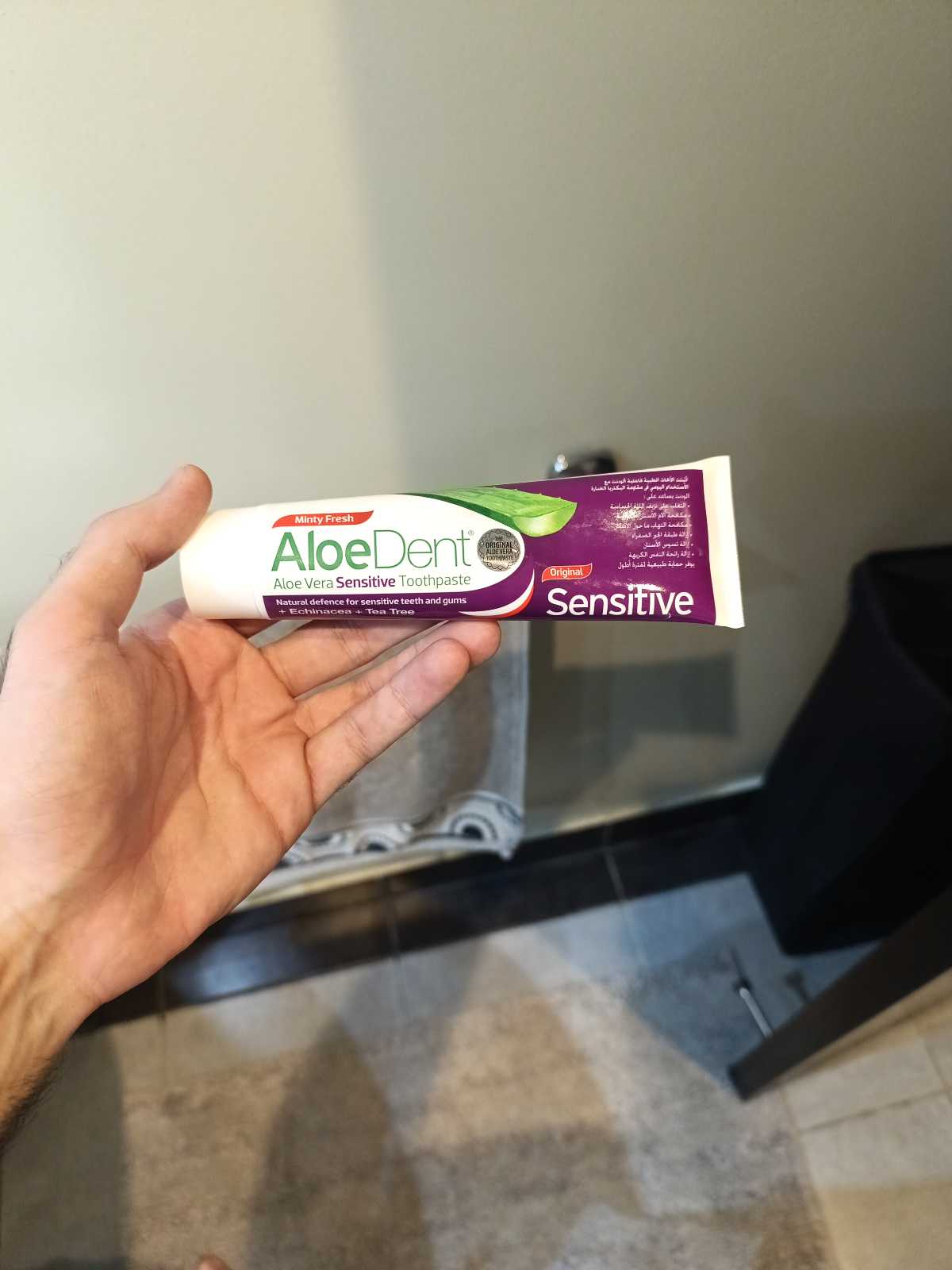

Optima Aloe Dent Aloe Vera Triple Action Toothpaste 100ml
Analysis updated August 2026 · How Scout scores
At a glance
Summary
This toothpaste contains beneficial ingredients such as aloe vera, xylitol, peppermint oil, and tea tree oil, which support oral health by reducing bacteria and promoting gum health. The absence of fluoride, SLS, and other harsh chemicals contributes to its favorable rating. However, the presence of phenoxyethanol, a mild preservative, slightly impacts its overall score.
Key ingredients 17
XylitolVery Good
Xylitol is a natural sweetener that reduces cavity-causing bacteria in the mouth. It is effective in preventing tooth decay and is considered highly beneficial in oral care products. Its use in toothpaste is well-supported by dental research.
Risks
There are no significant risks associated with xylitol in toothpaste.
Benefits
It helps reduce cavity-causing bacteria and prevents tooth decay.
GlycerinGood
Beneficial ingredient — whole-food or functional value in this product class.
Risks
There are no significant risks associated with glycerin in toothpaste.
Benefits
It helps maintain the moisture and consistency of the toothpaste.
Aloe Barbadensis (Aloe Vera) Leaf JuiceGood
Aloe vera is known for its soothing and anti-inflammatory properties, making it beneficial for oral tissues. It can help reduce gum inflammation and promote healing. It is a natural ingredient with a positive impact on oral health.
Risks
There are minimal risks associated with aloe vera in toothpaste.
Benefits
It soothes oral tissues and may help reduce gum inflammation.
Mentha Piperita (Peppermint) OilGood
Peppermint oil provides a fresh flavor and has natural antimicrobial properties. It helps in maintaining fresh breath and can contribute to oral hygiene. It is a beneficial natural ingredient in toothpaste.
Risks
There are minimal risks associated with peppermint oil in toothpaste.
Benefits
It provides fresh breath and has antimicrobial properties.
Melaleuca Alternifolia (Tea Tree) Leaf OilGood
Tea tree oil is known for its natural antimicrobial properties, making it beneficial for oral hygiene. It can help reduce bacteria and support gum health. It is a valuable natural ingredient in toothpaste.
Risks
There are minimal risks associated with tea tree oil in toothpaste.
Benefits
It has antimicrobial properties that help reduce bacteria and support gum health.
SorbitolNeutral
Sorbitol is a sugar alcohol used as a sweetener and humectant in toothpaste. It helps maintain moisture and provides a sweet taste without promoting tooth decay. It is generally considered safe in oral care products.
Risks
Excessive ingestion can cause digestive discomfort, but this is not a concern in toothpaste.
Benefits
It provides sweetness and helps maintain moisture without contributing to cavities.
Hydrated SilicaNeutral
Hydrated silica is used as a mild abrasive to help remove plaque and stains from teeth. It is effective in cleaning but does not provide additional oral health benefits. It is generally safe when used in moderation.
Risks
Overuse of abrasive agents can potentially wear down enamel over time.
Benefits
It helps in cleaning teeth by removing surface stains and plaque.
AquaNeutral
Aqua, or water, is used as a solvent in toothpaste formulations. It helps dissolve other ingredients and provides the necessary consistency. It is a neutral component with no direct impact on oral health.
Risks
There are no risks associated with water in toothpaste.
Benefits
It acts as a solvent and helps maintain the consistency of the toothpaste.
EscinNeutral
Escin is a compound derived from horse chestnut and is used for its anti-inflammatory properties. Its role in toothpaste is not well-defined, but it may help reduce gum inflammation. It is generally considered safe in oral care products.
Risks
There are minimal risks associated with escin in toothpaste.
Benefits
It may help reduce gum inflammation due to its anti-inflammatory properties.
HydroxyethylcelluloseNeutral
Hydroxyethylcellulose is used as a thickening agent to improve the texture and stability of toothpaste. It does not have direct oral health benefits but is important for product consistency. It is considered safe for use in oral care products.
Risks
There are no significant risks associated with hydroxyethylcellulose in toothpaste.
Benefits
It helps maintain the texture and stability of the toothpaste.
MentholNeutral
Menthol provides a cooling sensation and fresh flavor in toothpaste. It contributes to the overall sensory experience but does not have significant oral health benefits. It is commonly used in oral care products for its flavoring properties.
Risks
There are minimal risks associated with menthol in toothpaste.
Benefits
It provides a cooling sensation and fresh flavor.
UbiquinoneNeutral
Ubiquinone, also known as Coenzyme Q10, is included for its antioxidant properties. Its benefits in toothpaste are not well-established, but it may help support gum health. It is generally considered safe in oral care products.
Risks
There are minimal risks associated with ubiquinone in toothpaste.
Benefits
It may support gum health due to its antioxidant properties.
Citric AcidNeutral
Citric acid is used to adjust the pH level of toothpaste. It helps maintain product stability and effectiveness. It does not have direct oral health benefits but is important for formulation purposes.
Risks
Excessive use can erode enamel, but this is not a concern in controlled amounts in toothpaste.
Benefits
It helps maintain the pH balance and stability of the toothpaste.
CI75810Neutral
CI75810, also known as chlorophyllin, is used as a colorant in toothpaste. It provides a green color and does not have direct oral health benefits. It is considered safe for use in oral care products.
Risks
There are no significant risks associated with CI75810 in toothpaste.
Benefits
It provides color to the toothpaste without affecting oral health.
Sodium Lauroyl SarcosinateBad
Processed additive flagged under Scout's ingredient doctrine.
Risks
There are minimal risks associated with this ingredient compared to harsher surfactants.
Benefits
It helps improve the cleaning action of the toothpaste with minimal irritation.
PhenoxyethanolBad
Processed additive flagged under Scout's ingredient doctrine.
Risks
There are minimal risks associated with phenoxyethanol in toothpaste.
Benefits
It helps preserve the toothpaste by preventing microbial growth.
LimoneneBad
Processed additive flagged under Scout's ingredient doctrine.
Risks
There are minimal risks associated with limonene in toothpaste.
Benefits
It provides a pleasant citrus scent and flavor.
Get the full breakdown in the Scout appTake Scout shopping
Scan any product to see lab results, healthy alternatives, and your personalized analysis.
Download on theApp Store GET IT ONGoogle PlayAmazon pricing & content
Amazon price as of . Product prices and availability are accurate as of the date/time indicated and are subject to change. Any price and availability information displayed on Amazon.com at the time of purchase will apply to the purchase of this product.
CERTAIN CONTENT THAT APPEARS ON THIS SITE COMES FROM AMAZON. THIS CONTENT IS PROVIDED “AS IS” AND IS SUBJECT TO CHANGE OR REMOVAL AT ANY TIME.