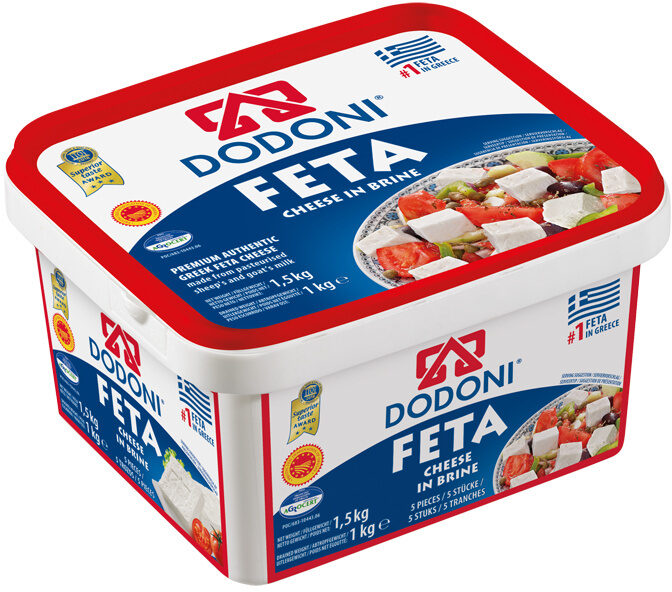
Feta

At a glance
Summary
This feta cheese is made from pasteurized sheep and goat milk, salt, and vegetarian rennet, which are traditional ingredients for cheese. The product is processed but maintains a clean label with no artificial additives or preservatives, contributing to its favorable score. The high sodium content is typical for feta, but the absence of harmful ingredients supports a strong rating within its category constraints. Its plastic packaging can shed microplastics into the food and lowers its score.
Key ingredients 5
Pasteurized sheep milkGood
Sheep milk is rich in protein and essential nutrients like calcium and vitamin B12. Pasteurization ensures safety by eliminating harmful bacteria. It provides a creamy texture and distinct flavor to cheese.
Risks
Potential allergen for individuals with dairy sensitivities.
Benefits
High in protein and essential nutrients, supporting bone health and metabolic functions.
Pasteurized goat milkGood
Goat milk is easier to digest than cow milk and contains beneficial fatty acids. Pasteurization ensures safety by eliminating harmful bacteria. It contributes to the unique taste and nutritional profile of feta cheese.
Risks
Potential allergen for individuals with dairy sensitivities.
Benefits
Contains medium-chain fatty acids that may support heart health and digestion.
SaltNeutral
Salt is used as a preservative and flavor enhancer in cheese. It helps in the fermentation process and extends shelf life. However, excessive consumption can lead to health issues.
Risks
High sodium intake can contribute to hypertension and cardiovascular issues.
Starter cultureNeutral
Starter cultures are essential for cheese fermentation, contributing to flavor and texture. They help in the development of beneficial bacteria. The specific strains used can vary, affecting the final product.
Benefits
Supports the fermentation process, enhancing flavor and texture.
Vegetarian rennetNeutral
Vegetarian rennet is used to coagulate milk in cheese production. It is derived from microbial or plant sources, making it suitable for vegetarians. It does not significantly alter the nutritional profile of cheese.
Benefits
Allows for cheese production without animal-derived rennet, suitable for vegetarians.
Processing
Processed Foods
Get the full breakdown in the Scout appTake Scout shopping
Scan any product to see lab results, healthy alternatives, and your personalized analysis.
Are you Dodoni? Fix an error Get the badge Get tested