
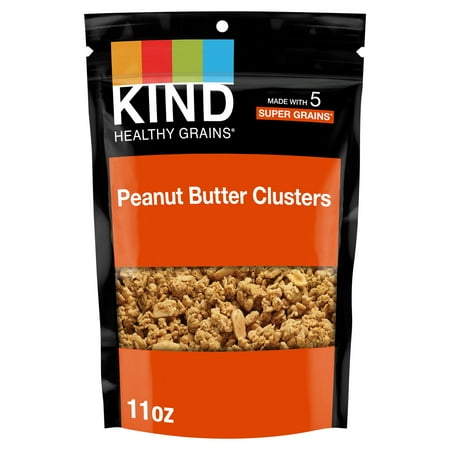

GRANOLA PEANUT BUTTER WHOLE GRAIN CLUSTERS
Summary
This granola contains a beneficial whole grain blend and nutrient-rich ingredients like peanut butter and peanuts, which contribute to its nutritional value. However, the presence of refined sugars such as dried cane syrup and the processed nature of soy crisps detract from its healthiness. The product is moderately processed, which limits its score despite the inclusion of some high-quality ingredients.
At a glance
Key ingredients 11
Whole grain blendVery Good
Whole grains are a rich source of dietary fiber and essential nutrients. They are minimally processed, retaining most of their natural nutrients. This blend includes oats, brown rice, buckwheat, millet, amaranth, and quinoa, providing a diverse nutrient profile.
Benefits
Rich in dietary fiber, vitamins, and minerals, supporting digestive health and providing sustained energy.
Dried cane syrupBad
Dried cane syrup is a refined sugar that contributes to added sugars in the diet. It is processed to remove impurities, resulting in a concentrated sweetener. Excessive consumption can lead to health issues such as obesity and dental cavities.
Risks
High intake of refined sugars can increase the risk of metabolic disorders and dental issues.
Soy crispBad
Soy crisp contains soy protein isolate, which is a highly processed form of soy protein. It is often used to boost protein content but lacks the complete amino acid profile found in animal proteins. The processing can also reduce the bioavailability of certain nutrients.
Risks
May contain anti-nutrients that affect mineral absorption and potential allergens for sensitive individuals.
Benefits
Provides a source of plant-based protein, which can be beneficial for those on vegetarian or vegan diets.
Peanut butterGood
Peanut butter is a nutrient-dense food rich in healthy fats and protein. It is minimally processed when made from roasted peanuts and salt. It provides essential nutrients like vitamin E, magnesium, and potassium.
Risks
Potential allergen for individuals with peanut allergies.
Benefits
Rich in monounsaturated fats and protein, supporting heart health and muscle maintenance.
Peanut oilNeutral
Peanut oil is a plant-based oil with a high smoke point, suitable for cooking. It contains a mix of monounsaturated and polyunsaturated fats. While it is less processed than seed oils, it still lacks the nutrient density of oils like olive or avocado.
Risks
High omega-6 content may promote inflammation when consumed in excess.
Benefits
Provides a source of healthy fats and is suitable for high-temperature cooking.
Tapioca syrupNeutral
Tapioca syrup is a natural sweetener derived from cassava root. It is less processed than refined sugars but still contributes to added sugars in the diet. It is often used as a binding agent in granola products.
Risks
Excessive consumption can contribute to increased sugar intake.
Benefits
Provides a natural alternative to refined sugars with a lower glycemic index.
PeanutsGood
Peanuts are a good source of protein, healthy fats, and various vitamins and minerals. They are minimally processed when roasted and salted. Peanuts provide antioxidants like resveratrol, which may support heart health.
Risks
Potential allergen for individuals with peanut allergies.
Benefits
Rich in protein and healthy fats, supporting heart health and providing sustained energy.
Peanut flourGood
Peanut flour is made by grinding roasted peanuts and removing most of the oil, resulting in a high-protein, low-fat product. It retains the nutritional benefits of peanuts while being lower in calories. It is often used to enhance the protein content of foods.
Risks
Potential allergen for individuals with peanut allergies.
Benefits
High in protein and fiber, supporting muscle maintenance and digestive health.
Brown rice syrupNeutral
Brown rice syrup is a sweetener made from fermented brown rice. It is less processed than refined sugars but still contributes to added sugars in the diet. It has a lower glycemic index compared to some other sweeteners.
Risks
Excessive consumption can contribute to increased sugar intake.
Benefits
Provides a natural alternative to refined sugars with a lower glycemic index.
SaltNeutral
Salt is used to enhance flavor and preserve food. It is a natural mineral composed primarily of sodium chloride. While essential for bodily functions, excessive intake can lead to health issues such as hypertension.
Risks
High sodium intake can increase the risk of hypertension and cardiovascular diseases.
Benefits
Essential for maintaining fluid balance and nerve function in the body.
Vitamin EGood
Vitamin E is an antioxidant used to maintain freshness in food products. It helps prevent the oxidation of fats, extending shelf life. It also provides health benefits by protecting cells from oxidative damage.
Benefits
Acts as an antioxidant, supporting immune function and skin health.
Processing
Processed Foods
Get the full breakdown in the Scout app
Scan any product to see lab results, healthy alternatives, and your personalized analysis.
Download on theApp Store