
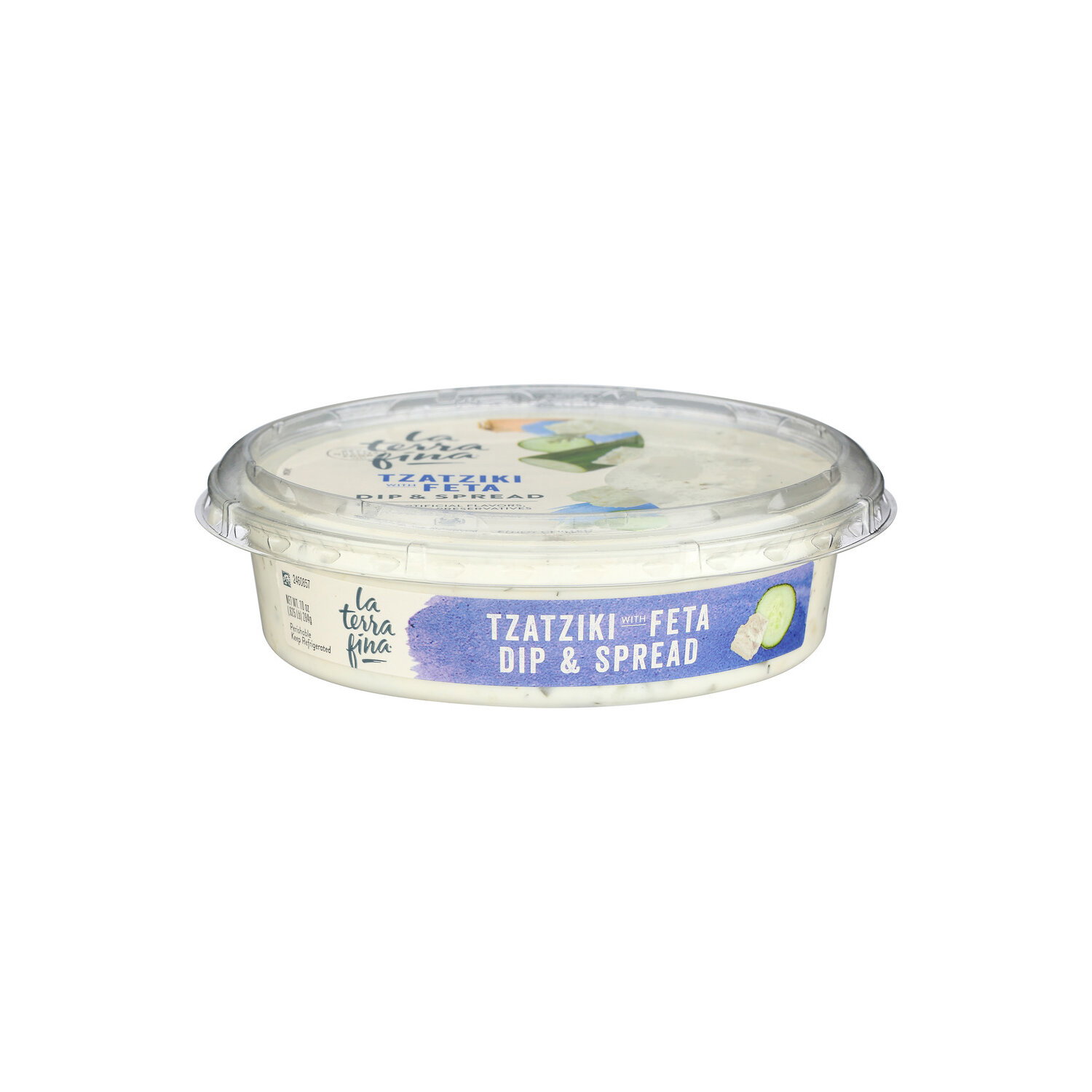
TZATZIKI with FETA DIP & SPREAD
At a glance
Summary
This product contains beneficial ingredients like Greek yogurt and feta cheese, which provide protein and probiotics. However, the presence of canola oil, a heavily processed seed oil, detracts from its nutritional quality. The product is moderately processed, which limits its score despite the inclusion of some whole food ingredients.
Key ingredients 13
Greek YogurtGood
Greek yogurt is a good source of protein and probiotics, which support gut health. It is made from cultured pasteurized milk and cream, providing beneficial bacteria. The presence of pectin is minimal and used as a stabilizer.
Risks
Some individuals may be lactose intolerant and experience digestive discomfort.
Benefits
Rich in protein and probiotics, which can aid digestion and improve gut health.
Feta CheeseGood
Feta cheese is a good source of calcium and protein. Made from pasteurized milk, it contains beneficial cheese cultures. It is a flavorful addition to dishes, though it can be high in sodium.
Risks
High sodium content may be a concern for individuals with hypertension.
Benefits
Rich in calcium and protein, supporting bone health and muscle function.
OnionsGood
Onions are a natural source of vitamins, minerals, and antioxidants. They contain quercetin, which has anti-inflammatory properties. Onions add flavor and nutritional value to dishes.
Benefits
Rich in antioxidants and vitamins, supporting immune health and reducing inflammation.
DillGood
Dill is an herb that provides flavor and some vitamins and minerals. It contains antioxidants that may support health. Dill is used in small amounts but can enhance the nutritional profile of dishes.
Benefits
Contains antioxidants and vitamins that may support overall health.
Sea SaltGood
Sea salt is a natural source of sodium and trace minerals. It is less processed than table salt and can enhance flavor. Sea salt is used in moderation to avoid excessive sodium intake.
Risks
Excessive sodium intake can lead to hypertension and cardiovascular issues.
Benefits
Provides essential minerals and enhances flavor in moderation.
Pickled CucumberNeutral
Pickled cucumber provides a tangy flavor and some vitamins. It is preserved with vinegar and salt, which can be high in sodium. The pickling process may reduce some nutrient content.
Risks
High sodium content may be a concern for individuals with hypertension.
Benefits
Provides a source of vitamins and adds flavor without significant calories.
Dried Garlic and OnionNeutral
Dried garlic and onion provide flavor and some nutrients. They are used in small amounts and are a convenient form of these vegetables. The drying process may reduce some nutrient content.
Benefits
Adds flavor and some nutrients to dishes.
Corn StarchNeutral
Corn starch is used as a thickening agent in foods. It is a refined carbohydrate with no significant nutritional value. It is used in small amounts to improve texture.
Benefits
Improves texture and consistency in food products.
Gum AcaciaNeutral
Gum acacia is a natural emulsifier and stabilizer. It is derived from the sap of acacia trees and is used to improve texture. It is generally recognized as safe in small amounts.
Benefits
Improves texture and stability in food products.
Xanthan GumNeutral
Xanthan gum is a common food additive used as a thickener and stabilizer. It is produced by fermenting sugar with bacteria. It is generally safe but can cause digestive issues in large amounts.
Risks
May cause digestive discomfort in sensitive individuals when consumed in large amounts.
Benefits
Improves texture and consistency in food products.
Cultured SugarNeutral
Cultured sugar is used as a preservative and flavor enhancer. It is sugar that has been fermented to produce beneficial acids. It is used in small amounts to improve shelf life.
Benefits
Enhances flavor and preserves food products.
Cane SugarBad
Processed additive flagged under Scout's ingredient doctrine.
Risks
Excessive consumption can lead to weight gain and metabolic issues.
Benefits
Provides sweetness and energy but should be consumed in moderation.
Canola OilVery Bad
Canola oil is a seed oil high in omega-6 fatty acids, which can promote inflammation. It is heavily processed and often refined, which may reduce its nutritional quality. The extraction process involves high heat and chemicals.
Risks
High omega-6 content may promote inflammation when consumed in excess.
Processing
Processed Foods
Get the full breakdown in the Scout appTake Scout shopping
Scan any product to see lab results, healthy alternatives, and your personalized analysis.
Are you la terra fina? Fix an error Get the badge Get tested


