
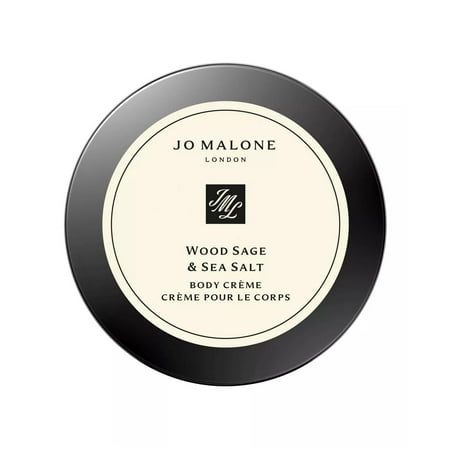


Jo Malone Wood Sage & Sea Salt Body Cream 175ml/5.9oz
Analysis updated October 2026 · How Scout scores
At a glance
Summary
This body cream contains beneficial natural ingredients like jojoba oil, cocoa butter, and aloe vera, which provide moisturizing and soothing properties. However, it also includes several fragrance components and triethanolamine, which can cause skin irritation and allergic reactions. The presence of synthetic fragrance and potential allergens impacts the overall safety and quality of the product.
Key ingredients 27
Simmondsia Chinensis (Jojoba) Seed OilVery Good
Jojoba oil is a natural oil that closely resembles the skin's natural sebum. It is known for its moisturizing and skin-soothing properties.
Risks
There are minimal risks associated with jojoba oil.
Benefits
Jojoba oil helps to moisturize and protect the skin, making it soft and supple.
Theobroma Cacao (Cocoa) Seed ButterVery Good
Cocoa butter is a natural fat extracted from cocoa beans, known for its moisturizing and skin-conditioning properties. It helps to improve skin elasticity.
Risks
There are minimal risks, though it can be comedogenic for some skin types.
Benefits
Cocoa butter deeply moisturizes and nourishes the skin.
Prunus Amygdalus Dulcis (Sweet Almond) OilVery Good
Sweet Almond Oil is a natural oil rich in vitamins and fatty acids, known for its moisturizing and soothing properties. It helps to improve skin tone and texture.
Risks
There are minimal risks, though it can cause allergic reactions in individuals with nut allergies.
Benefits
It moisturizes and nourishes the skin, improving its texture.
Aloe Barbadensis Leaf JuiceVery Good
Aloe Vera is known for its soothing and hydrating properties. It helps to calm irritated skin and provides moisture.
Risks
There are minimal risks, though it can cause irritation in rare cases.
Benefits
Aloe Vera soothes and hydrates the skin, reducing irritation.
GlycerinGood
Glycerin is a humectant that attracts moisture to the skin, helping to keep it hydrated. It is widely used in skincare for its moisturizing properties.
Risks
There are minimal risks associated with glycerin, though it can be sticky.
Benefits
Glycerin helps to maintain skin hydration and improve skin barrier function.
BisabololGood
Bisabolol is a natural compound known for its soothing and anti-inflammatory properties. It helps to calm irritated skin and reduce redness.
Risks
There are minimal risks associated with bisabolol.
Benefits
It soothes and calms irritated skin, reducing redness.
Water\Aqua\EauNeutral
Water is a common solvent used in cosmetics to dissolve other ingredients. It helps in the application and absorption of the product. It does not have any direct benefits or risks.
Risks
There are no significant risks associated with water in cosmetics.
Benefits
Water helps in the application and absorption of the product.
Cetearyl AlcoholNeutral
Cetearyl Alcohol is a fatty alcohol used as an emollient and thickener in cosmetics. It helps to stabilize and thicken formulations.
Risks
It can cause irritation in sensitive individuals, though it is generally considered safe.
Benefits
It provides a smooth, creamy texture and helps to soften the skin.
Glyceryl StearateNeutral
Glyceryl Stearate is an emulsifier that helps to blend water and oils in formulations. It also acts as a lubricant on the skin's surface.
Risks
It is generally considered safe with minimal risks.
Benefits
It helps to stabilize formulations and provides a smooth feel on the skin.
Stearic AcidNeutral
Stearic Acid is a fatty acid used as an emulsifier and thickener in cosmetics. It helps to stabilize formulations and improve texture.
Risks
It can cause irritation in sensitive skin types.
Benefits
It helps to stabilize formulations and provides a creamy texture.
Isopropyl PalmitateNeutral
Isopropyl Palmitate is an emollient that helps to soften and smooth the skin. It is used to enhance the texture of formulations.
Risks
It can cause acne in some individuals with sensitive skin.
Benefits
It provides a smooth, soft feel to the skin.
CaffeineNeutral
Caffeine is used in cosmetics for its potential antioxidant and anti-inflammatory properties. It may help to reduce puffiness and improve skin appearance.
Risks
There are minimal risks, though it can cause irritation in sensitive skin.
Benefits
Caffeine may help to reduce puffiness and improve skin appearance.
Caprylyl GlycolNeutral
Caprylyl Glycol is used as a skin conditioning agent and preservative. It helps to improve the texture and stability of formulations.
Risks
It can cause irritation in sensitive skin types.
Benefits
It helps to condition the skin and improve formulation stability.
Hexylene GlycolNeutral
Hexylene Glycol is used as a solvent and viscosity agent in cosmetics. It helps to improve the texture and spreadability of formulations.
Risks
It can cause irritation in sensitive skin types.
Benefits
It improves the texture and spreadability of formulations.
TriethanolamineBad
Triethanolamine is used to adjust pH and stabilize emulsions. However, it can cause skin irritation and has potential contamination concerns.
Risks
It can cause skin irritation and has potential contamination with nitrosamines.
Benefits
It helps to stabilize formulations and adjust pH.
DimethiconeBad
Occlusive silicone film-former — flagged under clean-beauty doctrine.
Risks
It can cause build-up on the skin, potentially leading to clogged pores.
Benefits
It provides a smooth texture and helps to lock in moisture.
LinaloolBad
Linalool is a fragrance component that can cause allergic reactions and skin irritation. It is a common allergen in cosmetics.
Risks
Linalool can cause skin irritation and allergic reactions.
Benefits
It provides a pleasant scent to the product.
LimoneneBad
Limonene is a fragrance component that can cause skin irritation and allergic reactions. It is prone to oxidation, which increases its allergenic potential.
Risks
Limonene can cause skin irritation and allergic reactions.
Benefits
It provides a citrus scent to the product.
Alpha-Isomethyl IononeBad
Alpha-Isomethyl Ionone is a fragrance ingredient that can cause allergic reactions and skin irritation. It is a common allergen in cosmetics.
Risks
It can cause skin irritation and allergic reactions.
Benefits
It provides a floral scent to the product.
GeraniolBad
Geraniol is a fragrance component that can cause skin irritation and allergic reactions. It is a common allergen in cosmetics.
Risks
Geraniol can cause skin irritation and allergic reactions.
Benefits
It provides a rose-like scent to the product.
Benzyl AlcoholBad
Processed additive flagged under Scout's ingredient doctrine.
Risks
It can cause irritation in sensitive skin types.
Benefits
It helps to preserve the product and prevent microbial growth.
CitronellolBad
Citronellol is a fragrance component that can cause skin irritation and allergic reactions. It is a common allergen in cosmetics.
Risks
Citronellol can cause skin irritation and allergic reactions.
Benefits
It provides a floral scent to the product.
CitralBad
Citral is a fragrance component that can cause skin irritation and allergic reactions. It is a common allergen in cosmetics.
Risks
Citral can cause skin irritation and allergic reactions.
Benefits
It provides a lemon scent to the product.
CoumarinBad
Coumarin is a fragrance component that can cause skin irritation and allergic reactions. It is a common allergen in cosmetics.
Risks
Coumarin can cause skin irritation and allergic reactions.
Benefits
It provides a sweet scent to the product.
Disodium EdtaBad
Processed additive flagged under Scout's ingredient doctrine.
Risks
It can cause irritation in sensitive skin types.
Benefits
It improves product stability and prevents degradation.
PhenoxyethanolBad
Processed additive flagged under Scout's ingredient doctrine.
Risks
It can cause irritation in sensitive skin types.
Benefits
It helps to preserve the product and prevent microbial growth.
Fragrance (Parfum)Very Bad
Fragrance is used to impart scent to products but can cause allergic reactions and skin irritation. It is often a mixture of various chemicals.
Risks
Fragrance can cause skin irritation and allergic reactions.
Benefits
It provides a pleasant scent to the product.
Get the full breakdown in the Scout appTake Scout shopping
Scan any product to see lab results, healthy alternatives, and your personalized analysis.
Download on theApp Store GET IT ONGoogle PlayAmazon pricing & content
Amazon price as of . Product prices and availability are accurate as of the date/time indicated and are subject to change. Any price and availability information displayed on Amazon.com at the time of purchase will apply to the purchase of this product.
CERTAIN CONTENT THAT APPEARS ON THIS SITE COMES FROM AMAZON. THIS CONTENT IS PROVIDED “AS IS” AND IS SUBJECT TO CHANGE OR REMOVAL AT ANY TIME.