
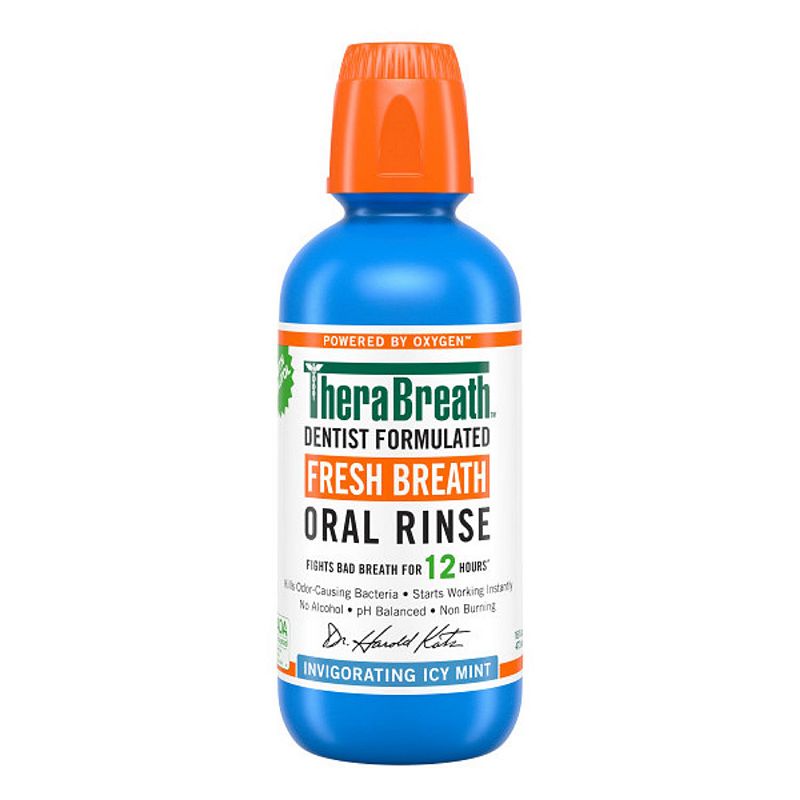

TheraBreath Fresh Breath Alcohol-Free Mouthwash Mouth Rinse for Adults Icy Mint 16 fl oz
Analysis updated August 2026 · How Scout scores
At a glance
Summary
This mouthwash contains beneficial ingredients like xylitol, which helps reduce cavity-causing bacteria, and sodium bicarbonate, which acts as a gentle abrasive. However, the presence of sucralose, an artificial sweetener that can disrupt gut microbiota, slightly detracts from its overall safety profile. The formula is free from alcohol and other major irritants, making it a relatively safe choice for oral care.
Key ingredients 12
XylitolVery Good
Xylitol is a natural sweetener that helps reduce cavity-causing bacteria in the mouth. It is beneficial for oral health as it can help prevent tooth decay. It is widely recognized for its positive effects on dental health.
Risks
In large amounts, xylitol can cause digestive discomfort, but it is generally safe in oral care products.
Benefits
Xylitol helps in reducing the risk of cavities and promotes oral health.
GlycerinGood
Beneficial ingredient — whole-food or functional value in this product class.
Risks
Excessive glycerin can lead to a sticky feeling in the mouth.
Benefits
Glycerin helps in keeping the mouthwash from drying out and provides a pleasant mouthfeel.
WaterNeutral
Water is a common solvent used in many products to dissolve other ingredients. It is essential for the formulation but does not have direct oral health benefits. It helps in diluting the active ingredients for better application.
Risks
There are no significant risks associated with water in oral care products.
Benefits
Water helps in maintaining the consistency and usability of the mouthwash.
PEG-40 Hydrogenated Castor OilNeutral
PEG-40 Hydrogenated Castor Oil is used as an emulsifier to help mix oil and water-based ingredients. It ensures the stability of the mouthwash formulation. It does not have direct oral health benefits.
Risks
There is a potential for mild irritation in sensitive individuals.
Benefits
It helps in maintaining the consistency and stability of the product.
Sodium HydroxideNeutral
Sodium Hydroxide is used to adjust the pH of the mouthwash. It ensures the product is not too acidic or basic, which could irritate the mouth. It does not provide direct oral health benefits.
Risks
In high concentrations, it can be corrosive, but it is used in safe amounts in mouthwash.
Benefits
It helps in maintaining the pH balance of the mouthwash for safe use.
Citric AcidNeutral
Citric Acid is used to adjust the acidity of the mouthwash and can act as a preservative. It helps in maintaining the stability of the product. It does not have direct oral health benefits.
Risks
In high concentrations, citric acid can erode enamel, but it is used in safe amounts in mouthwash.
Benefits
It helps in preserving the product and maintaining its stability.
MentholNeutral
Standard formulation ingredient — neither beneficial nor harmful at typical use.
Risks
In rare cases, menthol can cause irritation in sensitive individuals.
Benefits
Menthol helps in freshening breath and provides a cooling sensation.
Sodium ChlorideNeutral
Sodium Chloride, or salt, is used to enhance the flavor and stability of the mouthwash. It can also help in maintaining the osmotic balance of the product. It does not have significant oral health benefits in this context.
Risks
Excessive sodium chloride can lead to a salty taste, but it is used in safe amounts.
Benefits
It helps in stabilizing the product and enhancing its flavor.
Sodium BicarbonateNeutral
Standard formulation ingredient — neither beneficial nor harmful at typical use.
Risks
Excessive use can lead to enamel wear, but it is safe in controlled amounts.
Benefits
It helps in cleaning teeth and neutralizing acids, promoting oral health.
FlavorBad
Processed additive flagged under Scout's ingredient doctrine.
Risks
Undisclosed flavors can sometimes cause allergic reactions in sensitive individuals.
Benefits
Improves the sensory experience of using the mouthwash.
Sodium BenzoateBad
Synthetic preservative that can form benzene in the presence of vitamin C.
Risks
In rare cases, sodium benzoate can cause allergic reactions.
Benefits
It helps in preserving the product and preventing spoilage.
SucraloseBad
Sucralose is an artificial sweetener used to enhance the taste of the mouthwash without adding sugar. It is non-cariogenic but can disrupt gut microbiota. It is commonly used in oral care products for its sweetening properties.
Risks
Sucralose can potentially disrupt gut microbiota and cause digestive issues in some individuals.
Benefits
It provides sweetness without contributing to tooth decay.
Get the full breakdown in the Scout appTake Scout shopping
Scan any product to see lab results, healthy alternatives, and your personalized analysis.
Download on theApp Store GET IT ONGoogle PlayAmazon pricing & content
Amazon price as of . Product prices and availability are accurate as of the date/time indicated and are subject to change. Any price and availability information displayed on Amazon.com at the time of purchase will apply to the purchase of this product.
CERTAIN CONTENT THAT APPEARS ON THIS SITE COMES FROM AMAZON. THIS CONTENT IS PROVIDED “AS IS” AND IS SUBJECT TO CHANGE OR REMOVAL AT ANY TIME.