
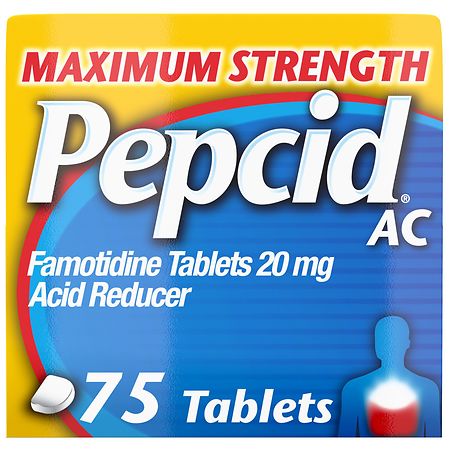


Pepcid AC Digestive Treatment Tablet - 75ct
Analysis updated June 2026 · How Scout scores
At a glance
Summary
This product contains famotidine as the active ingredient, which is effective for digestive treatment. The formulation includes several inactive ingredients such as carnauba wax and titanium dioxide, which are common in tablet manufacturing but do not contribute to health benefits. The processing level is moderate, with no major harmful additives, making it a reasonably safe choice for its intended use.
Key ingredients 9
FamotidineNeutral
Famotidine is an active ingredient used to reduce stomach acid production, providing relief from heartburn and acid indigestion. It is a well-studied H2 blocker with a good safety profile when used as directed. Famotidine does not have significant nutritional benefits but is effective for its intended medicinal purpose.
Benefits
Effective in reducing stomach acid and providing relief from heartburn and acid indigestion.
Carnauba WaxNeutral
Carnauba wax is used as a coating agent to provide a shiny finish and protect tablets. It is derived from the leaves of the carnauba palm and is considered safe for consumption. This ingredient does not contribute nutritional value but is useful for its functional properties in tablet formulation.
Benefits
Provides a protective coating for tablets, enhancing stability and appearance.
Hydroxypropyl CelluloseNeutral
Hydroxypropyl cellulose is used as a binder and stabilizer in tablet formulations. It is a chemically modified cellulose derivative that helps maintain tablet integrity. While it does not offer nutritional benefits, it is essential for ensuring consistent tablet quality.
Benefits
Ensures tablet stability and integrity, contributing to consistent dosage delivery.
HypromelloseNeutral
Hypromellose is a cellulose derivative used as a film former and controlled-release agent in tablets. It is widely used in pharmaceuticals for its ability to control the release of active ingredients. This ingredient does not provide nutritional benefits but is crucial for controlled drug delivery.
Benefits
Facilitates controlled release of active ingredients, enhancing therapeutic efficacy.
Magnesium StearateNeutral
Magnesium stearate is a common lubricant used in tablet manufacturing to prevent ingredients from sticking to equipment. It is a salt of stearic acid and magnesium, considered safe in small amounts. While it does not offer nutritional benefits, it is essential for efficient tablet production.
Benefits
Improves manufacturing efficiency by preventing sticking and ensuring smooth tablet production.
Microcrystalline CelluloseNeutral
Microcrystalline cellulose is used as a bulking agent and binder in tablets. It is a refined wood pulp derivative that provides structure and stability to tablets. This ingredient does not have nutritional benefits but is important for maintaining tablet form and consistency.
Benefits
Provides structural integrity and stability to tablets, ensuring consistent dosage.
StarchNeutral
Starch is used as a filler and disintegrant in tablets, aiding in the breakdown and absorption of the active ingredient. It is a natural carbohydrate derived from plants. While it does not offer significant nutritional benefits in this context, it is crucial for tablet disintegration.
Benefits
Facilitates tablet disintegration and absorption of active ingredients.
TalcNeutral
Talc is used as a glidant to improve the flow of tablet powders during manufacturing. It is a naturally occurring mineral that is considered safe for use in pharmaceuticals. Talc does not provide nutritional benefits but is important for efficient tablet production.
Benefits
Enhances powder flow during manufacturing, ensuring consistent tablet production.
Titanium DioxideVery Bad
Heavily flagged ingredient class under Scout's doctrine.
Benefits
Provides a uniform and appealing appearance to tablets.
Processing
Processed Foods
Get the full breakdown in the Scout appTake Scout shopping
Scan any product to see lab results, healthy alternatives, and your personalized analysis.
Download on theApp Store GET IT ONGoogle PlayAmazon pricing & content
Amazon price as of . Product prices and availability are accurate as of the date/time indicated and are subject to change. Any price and availability information displayed on Amazon.com at the time of purchase will apply to the purchase of this product.
CERTAIN CONTENT THAT APPEARS ON THIS SITE COMES FROM AMAZON. THIS CONTENT IS PROVIDED “AS IS” AND IS SUBJECT TO CHANGE OR REMOVAL AT ANY TIME.