
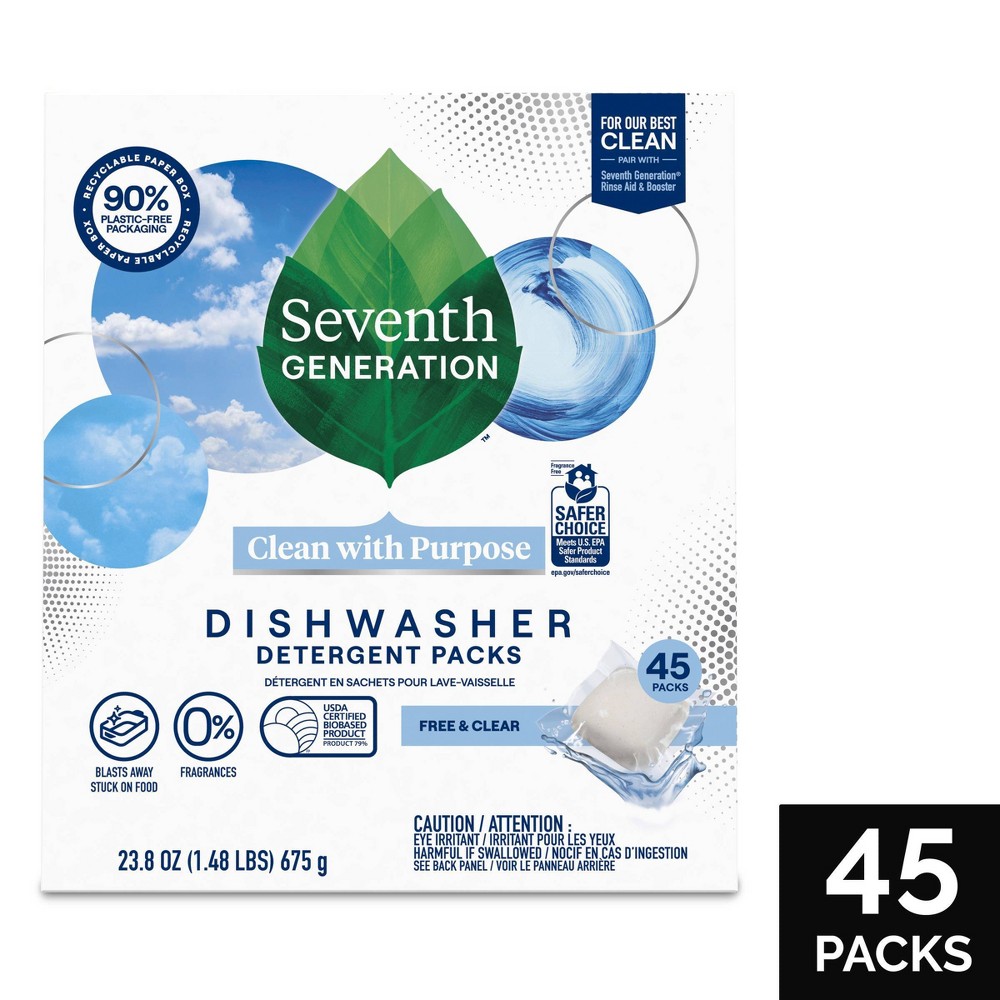
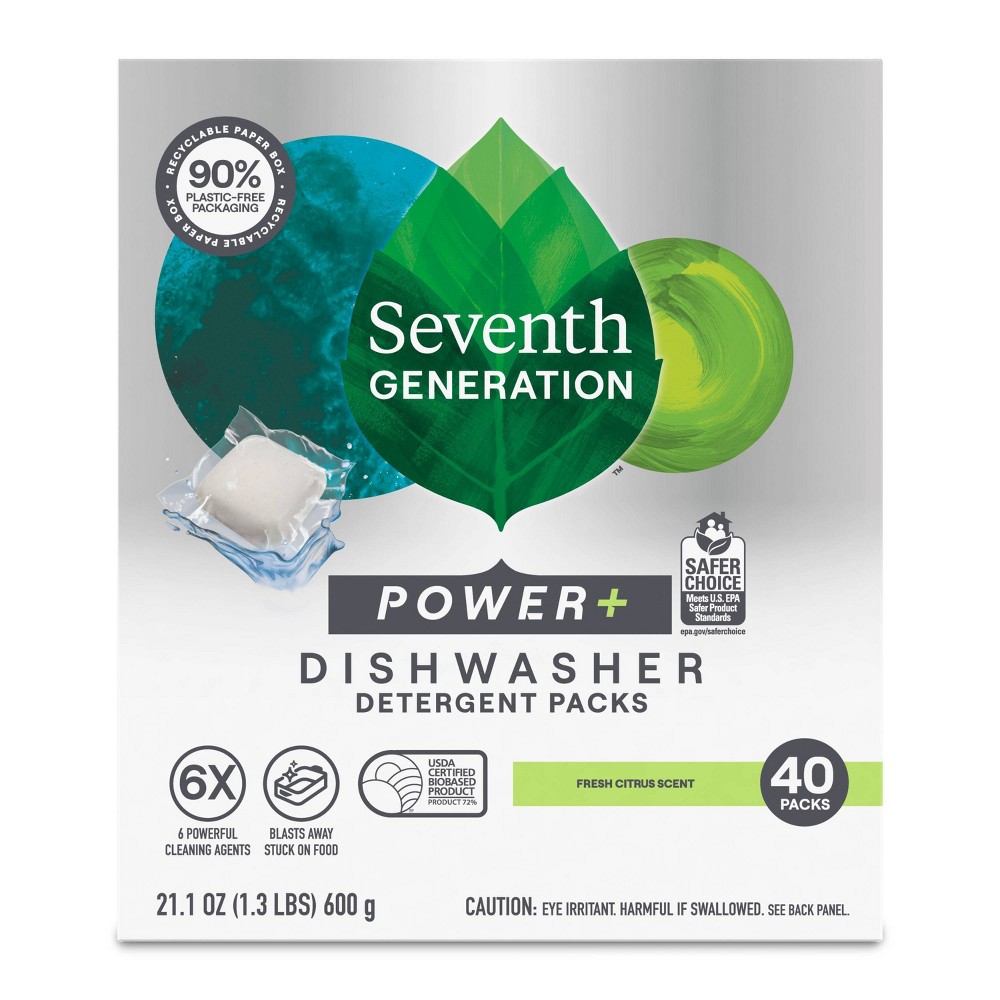
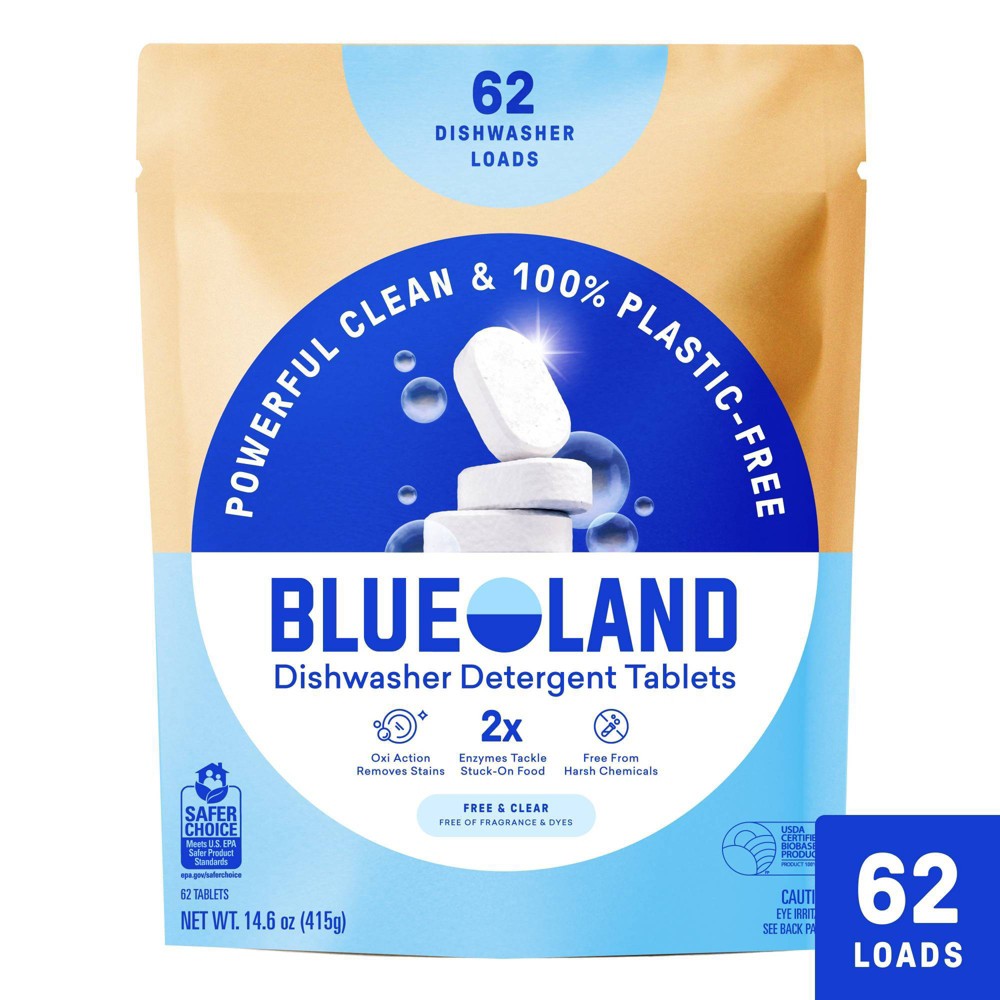
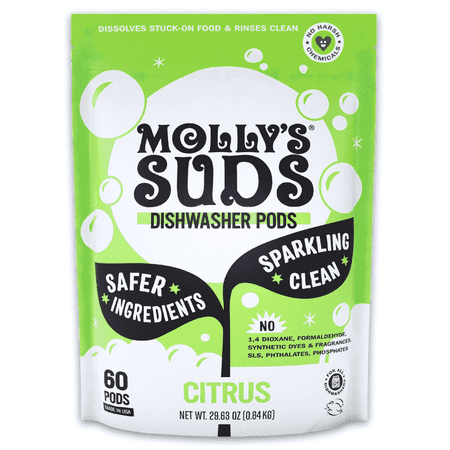

Seventh Generation Free & Clear Natural Dishwasher Detergent Packs - 45ct
Analysis updated August 2026 · How Scout scores
At a glance
Summary
This dishwasher detergent features a blend of environmentally friendly ingredients such as citric acid and sodium percarbonate, which are effective and biodegradable. The inclusion of protease and amylase enzyme blends enhances cleaning power without harsh chemicals. The absence of harmful surfactants like SLS or SLES contributes to its high safety and environmental profile, although the presence of some synthetic components limits the score.
Key ingredients 11
Protease enzyme blendVery Good
Protease enzymes are used in detergents to break down protein-based stains such as food residues. They are highly effective and biodegradable, making them environmentally friendly. They enhance the cleaning power of the detergent without the need for harsh chemicals.
Risks
Minimal risks; may cause mild irritation if in contact with skin or eyes.
Benefits
Highly effective at breaking down protein-based stains and environmentally friendly.
Amylase enzyme blendVery Good
Amylase enzymes are used in detergents to break down starch-based stains such as those from pasta or potatoes. They are biodegradable and enhance the cleaning power of the detergent. They are considered safe and environmentally friendly.
Risks
Minimal risks; may cause mild irritation if in contact with skin or eyes.
Benefits
Highly effective at breaking down starch-based stains and environmentally friendly.
Sodium percarbonateGood
Sodium percarbonate is an oxygen-based bleaching agent that is effective at removing stains and brightening surfaces. It breaks down into water, oxygen, and soda ash, making it environmentally friendly. It is a safer alternative to chlorine bleach.
Risks
Can cause irritation to skin and eyes if not handled properly.
Benefits
Effective stain remover and environmentally friendly.
Sodium carbonateNeutral
Sodium carbonate is a common cleaning agent used to soften water and enhance the effectiveness of detergents. It is generally considered safe for use in cleaning products. However, it can be irritating to the skin and eyes in concentrated forms.
Risks
Potential skin and eye irritation if not handled properly.
Benefits
Helps to soften water, improving cleaning efficiency.
Citric acidNeutral
Common acidulant and preservative — safe at typical use levels, neither beneficial nor harmful.
Risks
Minimal risks; may cause mild irritation if in contact with skin or eyes.
Benefits
Effective at breaking down mineral deposits and is environmentally friendly.
Sodium sulfateNeutral
Sodium sulfate is used as a filler in detergents to help distribute the active ingredients evenly. It is generally considered safe and non-toxic. However, it does not contribute directly to the cleaning power of the product.
Risks
Low risk; generally considered safe in cleaning products.
Benefits
Helps to evenly distribute active ingredients in the detergent.
C12-16 alcohols ethoxylated propoxylatedNeutral
This ingredient is a surfactant used to help remove dirt and grease from surfaces. It is effective in cleaning formulations but can be a mild irritant. It is generally considered safe for use in cleaning products.
Risks
Potential for mild skin irritation.
Benefits
Helps to effectively remove dirt and grease.
Sodium silicateNeutral
Sodium silicate is used in detergents to prevent corrosion and to stabilize the formulation. It is generally considered safe for use in cleaning products. However, it can be irritating to the skin and eyes in concentrated forms.
Risks
Potential skin and eye irritation if not handled properly.
Benefits
Prevents corrosion and stabilizes detergent formulations.
Sodium polyaspartateNeutral
Sodium polyaspartate is used as a water softener and anti-scaling agent in detergents. It is biodegradable and considered safe for the environment. It helps to improve the cleaning efficiency of the detergent.
Risks
Low risk; generally considered safe in cleaning products.
Benefits
Improves cleaning efficiency by softening water and preventing scale buildup.
Polyvinyl alcoholNeutral
Polyvinyl alcohol is used as a film-forming agent in detergent packs to hold the ingredients together. It is water-soluble and generally considered safe for use in cleaning products. However, it does not contribute directly to the cleaning power of the product.
Risks
Low risk; generally considered safe in cleaning products.
Benefits
Helps to form the structure of detergent packs.
GlycerinNeutral
Glycerin is used in detergents as a humectant to help maintain moisture and prevent drying out of the product. It is generally considered safe and non-toxic. However, it does not contribute directly to the cleaning power of the product.
Risks
Low risk; generally considered safe in cleaning products.
Benefits
Helps to maintain moisture and prevent drying out of the product.
Processing
Processed Foods
Get the full breakdown in the Scout appTake Scout shopping
Scan any product to see lab results, healthy alternatives, and your personalized analysis.
Download on theApp Store GET IT ONGoogle PlayAmazon pricing & content
Amazon price as of . Product prices and availability are accurate as of the date/time indicated and are subject to change. Any price and availability information displayed on Amazon.com at the time of purchase will apply to the purchase of this product.
CERTAIN CONTENT THAT APPEARS ON THIS SITE COMES FROM AMAZON. THIS CONTENT IS PROVIDED “AS IS” AND IS SUBJECT TO CHANGE OR REMOVAL AT ANY TIME.