
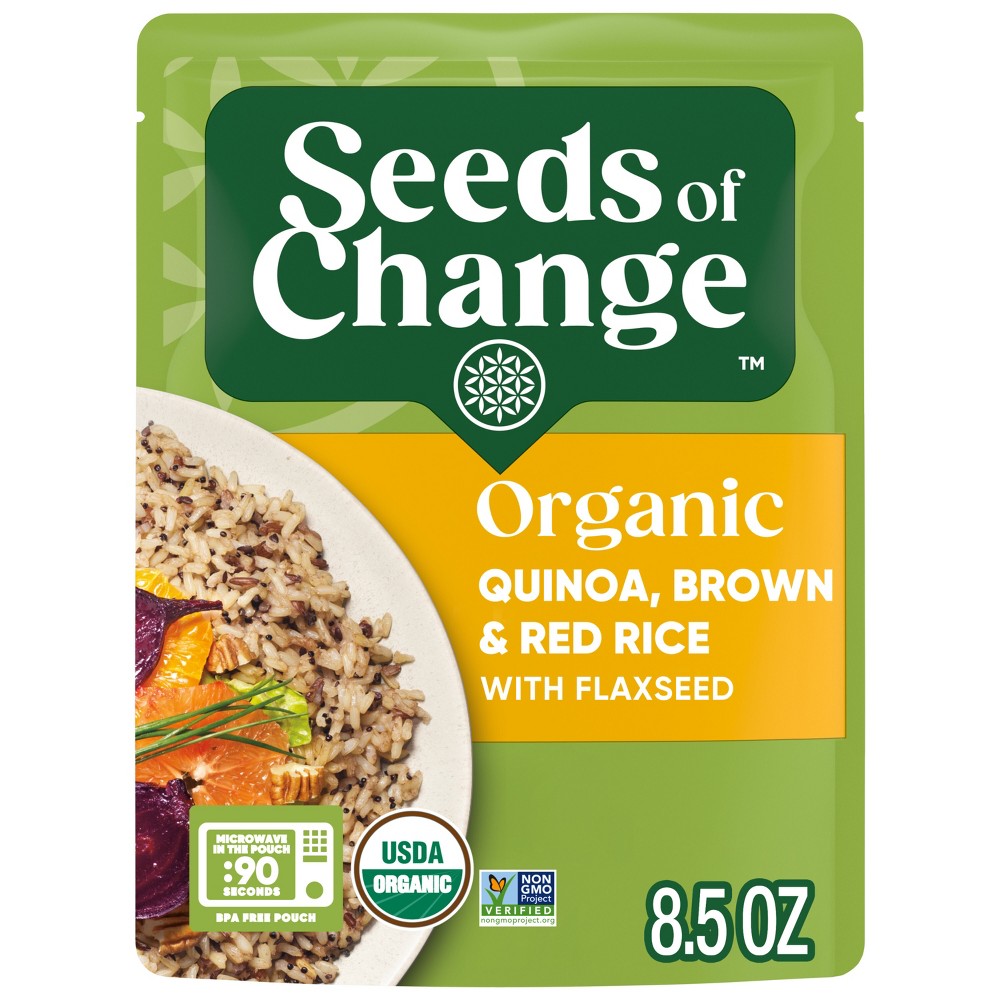


Seeds of Change Organic Quinoa Brown and Red Rice with Flaxseed
Analysis updated June 2026 · How Scout scores
At a glance
Summary
This product contains a mix of organic whole grains and seeds, such as brown rice, red rice, black quinoa, and flaxseed, which are beneficial for their fiber and nutrient content. However, the presence of sunflower oil, a seed oil high in omega-6 fatty acids, is a concern due to its potential to promote inflammation. Despite being organic, the product is processed, which limits its score compared to less processed alternatives.
Key ingredients 7
Whole Grain Brown RiceGood
Whole grain brown rice is a nutritious whole grain that provides essential nutrients and fiber. Being organic, it is free from synthetic pesticides and fertilizers, enhancing its health benefits. It supports digestive health and provides sustained energy.
Benefits
Rich in fiber and essential nutrients like magnesium and selenium, supporting heart health and digestion.
Red RiceGood
Red rice is a whole grain known for its high nutritional value, including fiber and antioxidants. The organic certification ensures it is grown without harmful chemicals, enhancing its health benefits. It contributes to heart health and provides a rich source of energy.
Benefits
Contains antioxidants and fiber, promoting cardiovascular health and aiding in digestion.
Black QuinoaGood
Black quinoa is a nutrient-dense seed that is high in protein and essential amino acids. As an organic ingredient, it is free from synthetic additives, enhancing its nutritional profile. It supports muscle repair and provides a complete protein source for vegetarians.
Benefits
Rich in protein and essential amino acids, supporting muscle health and providing a complete protein source.
Brown FlaxseedGood
Brown flaxseed is a rich source of omega-3 fatty acids and dietary fiber. It is beneficial for heart health and digestion due to its high fiber content. The organic nature ensures it is free from harmful pesticides.
Benefits
High in omega-3 fatty acids and fiber, promoting heart health and aiding in digestion.
Sea SaltGood
Sea salt is a natural source of sodium and trace minerals, providing essential electrolytes. It is minimally processed, retaining beneficial minerals that refined salts lack. It enhances flavor while contributing to electrolyte balance.
Risks
Excessive consumption can lead to high blood pressure and related health issues.
Benefits
Provides essential electrolytes and trace minerals, supporting hydration and nerve function.
WaterNeutral
Water is a neutral ingredient used as a solvent and to maintain moisture in food products. It does not contribute any nutritional value or health risks. Its presence is essential for the preparation and texture of the product.
See more about Water →Sunflower OilVery Bad
Sunflower oil is a seed oil high in omega-6 fatty acids, which can promote inflammation if consumed in excess. Despite being organic, the extraction process often involves high heat, which can degrade beneficial nutrients. It is less favorable compared to oils with a better omega-3 to omega-6 ratio.
Risks
High omega-6 content may promote inflammation when consumed in excess.
Processing
Processed Foods
Get the full breakdown in the Scout appTake Scout shopping
Scan any product to see lab results, healthy alternatives, and your personalized analysis.
Download on theApp Store GET IT ONGoogle PlayAmazon pricing & content
Amazon price as of . Product prices and availability are accurate as of the date/time indicated and are subject to change. Any price and availability information displayed on Amazon.com at the time of purchase will apply to the purchase of this product.
CERTAIN CONTENT THAT APPEARS ON THIS SITE COMES FROM AMAZON. THIS CONTENT IS PROVIDED “AS IS” AND IS SUBJECT TO CHANGE OR REMOVAL AT ANY TIME.