


At a glance
Summary
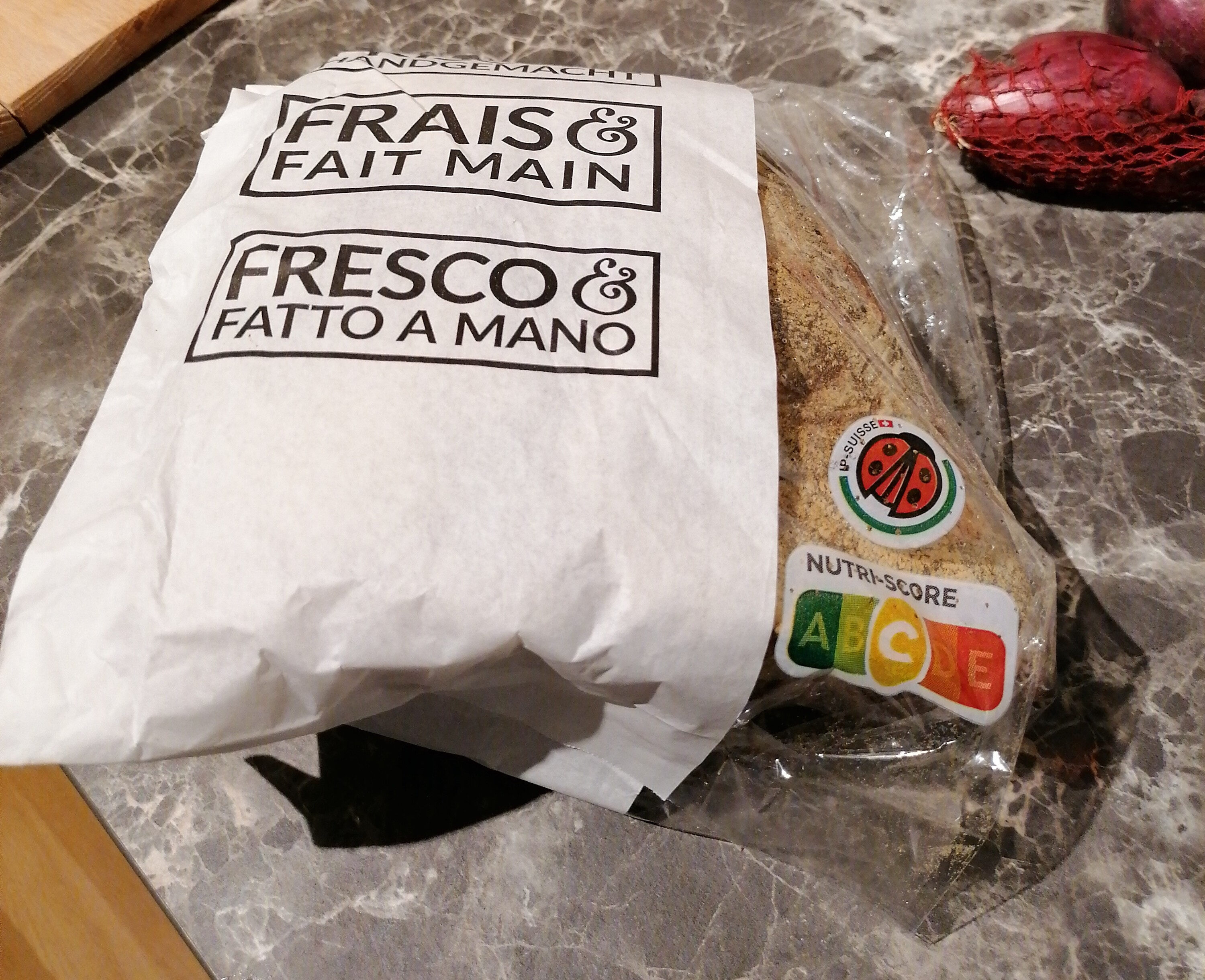
This bread is made with a relatively simple ingredient list, including wheat flour, rye flour, and sourdough, which are generally considered wholesome. However, it contains iodized salt at a high level, which could be a concern for sodium intake. The product is moderately processed, which limits its score, but it avoids major harmful additives or seed oils, making it a better choice compared to more heavily processed breads.
Key ingredients 8
WaterNeutral
Water is a fundamental ingredient in bread-making, hydrating the flour and activating yeast. It is essential for the dough formation process. There are no health concerns associated with water in this context.
Benefits
Essential for hydration and dough formation in bread-making.
Rye flourNeutral
Rye flour adds a distinct flavor and texture to bread and contains more fiber than wheat flour. It is often used in sourdough and other traditional bread recipes. The IP-SUISSE quality suggests sustainable farming practices.
Risks
May cause digestive issues for individuals with gluten sensitivity or celiac disease.
Benefits
Higher in fiber compared to refined wheat flour, which can aid in digestion and provide a feeling of fullness.
Iodized saltNeutral
Iodized salt is used to enhance flavor and preserve the bread. It provides iodine, an essential nutrient for thyroid function. Excessive consumption can lead to high blood pressure.
Risks
Excessive salt intake can contribute to hypertension and cardiovascular issues.
Benefits
Provides iodine, which is essential for thyroid health and metabolic regulation.
Wheat proteinNeutral
Wheat protein, also known as gluten, provides elasticity and structure to bread. It is a plant-based protein source but lacks the complete amino acid profile of animal proteins. It is crucial for the texture of many baked goods.
Risks
Can cause adverse reactions in individuals with gluten intolerance or celiac disease.
Benefits
Contributes to the texture and structure of bread, providing a source of plant-based protein.
YeastNeutral
Yeast is a microorganism used in bread-making to ferment sugars, producing carbon dioxide and causing the dough to rise. It is a natural leavening agent. There are no significant health concerns associated with yeast in bread.
Benefits
Essential for leavening bread, contributing to its texture and flavor.
Barley malt flourNeutral
Barley malt flour is used to enhance flavor and color in bread. It contains enzymes that can aid in the fermentation process. It is a natural ingredient with no significant health concerns.
Risks
May not be suitable for individuals with gluten intolerance or celiac disease.
Benefits
Enhances flavor and color in bread, and can aid in fermentation.
Rye sourdoughNeutral
Rye sourdough is a fermented dough that adds flavor and improves the texture of bread. It can enhance the nutritional profile by increasing mineral availability. The fermentation process can aid in digestion.
Risks
May cause digestive issues for those with gluten sensitivity.
Benefits
Improves flavor and texture, and can enhance mineral absorption due to fermentation.
Wheat flourBad
Refined grain flour stripped of bran and germ.
Risks
Refined wheat flour can contribute to blood sugar spikes and may lack essential nutrients found in whole grains.
Benefits
Provides essential carbohydrates for energy, though it lacks the fiber and nutrients of whole grain alternatives.
Processing
Processed Foods
Get the full breakdown in the Scout appTake Scout shopping
Scan any product to see lab results, healthy alternatives, and your personalized analysis.
Download on theApp Store GET IT ONGoogle Play