
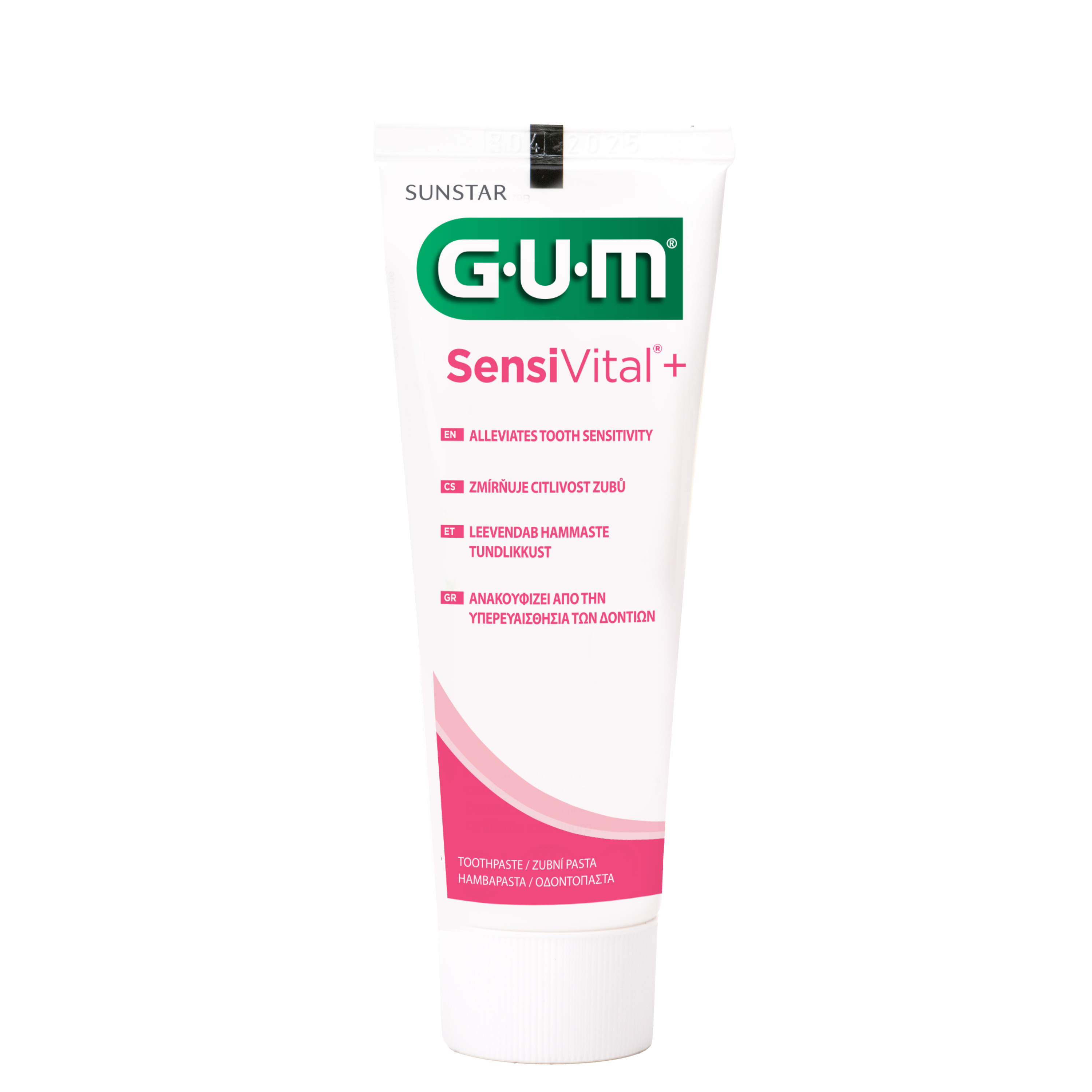


3 * Gum Sensivital + 75ml Toothpaste PZN 14041043 Sensitivity Apple
Analysis updated October 2026 · How Scout scores
At a glance
Summary
This toothpaste contains beneficial ingredients like hydroxyapatite, which helps remineralize and strengthen tooth enamel, and potassium nitrate, which reduces tooth sensitivity. However, it also includes sodium monofluorophosphate, a fluoride compound that can be harmful in excess, and sodium saccharin, an artificial sweetener linked to gut microbiome disruption. The presence of these concerning ingredients alongside beneficial ones results in a mixed evaluation.
Key ingredients 21
HydroxyapatiteVery Good
Hydroxyapatite is a biomimetic mineral that helps remineralize and strengthen tooth enamel. It is highly effective in repairing micro-damage to teeth. It is considered a beneficial ingredient for oral health.
Risks
There are no significant risks associated with hydroxyapatite.
Benefits
It aids in enamel remineralization and strengthens teeth.
GlycerinGood
Beneficial ingredient — whole-food or functional value in this product class.
Risks
There are no significant risks associated with glycerin in toothpaste.
Benefits
Glycerin helps maintain the paste's consistency and prevents it from drying out.
Potassium NitrateGood
Potassium nitrate is used to reduce tooth sensitivity by calming the nerves in the teeth. It is effective in providing relief from sensitivity. It is a common ingredient in sensitivity toothpaste.
Risks
There are minimal risks associated with potassium nitrate in toothpaste.
Benefits
It helps in reducing tooth sensitivity, providing relief to sensitive teeth.
AquaNeutral
Aqua, or water, is used as a solvent in toothpaste formulations. It helps dissolve other ingredients and provides the necessary consistency. It is an inert ingredient with no direct impact on oral health.
Risks
There are no risks associated with water in toothpaste.
Benefits
Water acts as a carrier for other ingredients, ensuring even distribution.
Hydrated SilicaNeutral
Hydrated silica is used as an abrasive to help remove plaque and stains. It is generally considered safe in toothpaste. However, excessive abrasiveness can potentially damage enamel.
Risks
Overuse of abrasive toothpaste can lead to enamel erosion.
Benefits
It helps in cleaning teeth by removing surface stains and plaque.
IsomaltNeutral
Isomalt is a sugar alcohol used as a sweetener in toothpaste. It is non-cariogenic, meaning it does not contribute to tooth decay. It is considered safe for oral care products.
Risks
Excessive consumption of sugar alcohols can cause digestive discomfort.
Benefits
Isomalt provides sweetness without promoting cavities.
PVM/MA CopolymerNeutral
PVM/MA Copolymer is used as a binding agent to help ingredients adhere to teeth. It is generally considered safe in oral care products. It does not have a direct impact on oral health.
Risks
There are no significant risks associated with this copolymer.
Benefits
It helps in maintaining the stability and consistency of the toothpaste.
Lauryl GlucosideNeutral
Lauryl glucoside is a mild surfactant used to help clean teeth. It is derived from natural sources and is considered gentle on the skin and mucous membranes. It is a safer alternative to harsher surfactants.
Risks
There are minimal risks associated with lauryl glucoside.
Benefits
It provides gentle cleansing without irritation.
PEG-40 Hydrogenated Castor OilNeutral
PEG-40 hydrogenated castor oil is used as an emulsifier and solubilizer in toothpaste. It helps mix oil and water-based ingredients. It is generally considered safe for use in oral care products.
Risks
There are minimal risks associated with this ingredient.
Benefits
It helps maintain the consistency and stability of the toothpaste.
AromaNeutral
Aroma refers to the flavoring agents used to improve the taste of toothpaste. These are generally considered safe but do not contribute to oral health. The specific components of the aroma are not disclosed.
Risks
There are no significant risks associated with aroma in toothpaste.
Benefits
It enhances the sensory experience of using the toothpaste.
Cellulose GumNeutral
Cellulose gum is used as a thickening agent in toothpaste. It helps maintain the desired consistency and texture. It is considered safe and inert in oral care products.
Risks
There are no significant risks associated with cellulose gum.
Benefits
It helps in maintaining the toothpaste's texture and stability.
Sodium HydroxideNeutral
Sodium hydroxide is used to adjust the pH of toothpaste. It is used in very small amounts and is generally considered safe. It does not have a direct impact on oral health.
Risks
In high concentrations, it can be corrosive, but it is used in safe amounts in toothpaste.
Benefits
It helps in maintaining the pH balance of the toothpaste.
Cocamidopropyl BetaineNeutral
Cocamidopropyl betaine is a mild surfactant used to help clean teeth. It is derived from coconut oil and is considered gentle. It is a safer alternative to harsher surfactants.
Risks
There are minimal risks associated with cocamidopropyl betaine.
Benefits
It provides gentle cleansing and helps create foam.
HesperidinNeutral
Hesperidin is a flavonoid with antioxidant properties. It is not commonly used in toothpaste and its benefits in oral care are not well-documented. It is generally considered safe.
Risks
There are no significant risks associated with hesperidin in toothpaste.
Benefits
It may provide antioxidant benefits, although its efficacy in oral care is unclear.
Sodium ChlorideNeutral
Sodium chloride, or table salt, is used as a flavoring and thickening agent in toothpaste. It is generally considered safe and inert. It does not have a significant impact on oral health.
Risks
There are no significant risks associated with sodium chloride in toothpaste.
Benefits
It helps in maintaining the toothpaste's texture and flavor.
Cetylpyridinium ChlorideNeutral
Cetylpyridinium chloride is an antimicrobial agent used to reduce plaque and gingivitis. It is effective in reducing oral bacteria. It is generally considered safe for use in oral care products.
Risks
In some cases, it may cause staining of teeth.
Benefits
It helps in reducing plaque and gingivitis by killing bacteria.
CI 42090Neutral
CI 42090, also known as Blue 1, is a synthetic dye used for coloring toothpaste. It is approved for use in food and cosmetics. It does not contribute to oral health.
Risks
There are minimal risks associated with CI 42090 in toothpaste.
Benefits
It provides color to the toothpaste, enhancing its visual appeal.
Sodium MonofluorophosphateBad
Sodium monofluorophosphate is a fluoride compound used to prevent cavities. While effective, excessive fluoride can lead to dental fluorosis. It is important to use fluoride toothpaste as directed.
Risks
Excessive fluoride exposure can cause fluorosis, leading to tooth discoloration.
Benefits
It helps in preventing cavities by strengthening tooth enamel.
Sodium SaccharinBad
Sodium saccharin is an artificial sweetener used to enhance the taste of toothpaste. It has been associated with gut microbiome disruption. It is considered safe in small amounts but is not beneficial for oral health.
Risks
It may disrupt the gut microbiome when consumed in large amounts.
Benefits
It provides sweetness without contributing to tooth decay.
SucraloseBad
Processed additive flagged under Scout's ingredient doctrine.
Risks
There are minimal risks associated with sucralose in toothpaste.
Benefits
It provides sweetness without promoting cavities.
Sodium BenzoateBad
Synthetic preservative that can form benzene in the presence of vitamin C.
Risks
There are no significant risks associated with sodium benzoate in toothpaste.
Benefits
It helps in preserving the product by preventing microbial growth.
Get the full breakdown in the Scout appTake Scout shopping
Scan any product to see lab results, healthy alternatives, and your personalized analysis.
Download on theApp Store GET IT ONGoogle PlayAmazon pricing & content
Amazon price as of . Product prices and availability are accurate as of the date/time indicated and are subject to change. Any price and availability information displayed on Amazon.com at the time of purchase will apply to the purchase of this product.
CERTAIN CONTENT THAT APPEARS ON THIS SITE COMES FROM AMAZON. THIS CONTENT IS PROVIDED “AS IS” AND IS SUBJECT TO CHANGE OR REMOVAL AT ANY TIME.