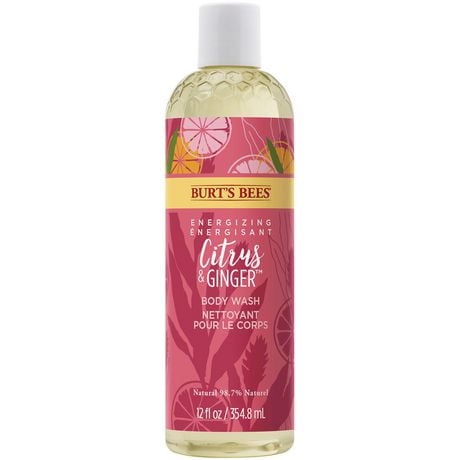
Burt's Bees Body Wash With Citrus & Ginger, 354.8Ml
At a glance
Summary
This body wash contains several beneficial ingredients such as mild surfactants derived from natural sources, which are gentle on the skin and biodegradable. It also includes natural oils like ginger and citrus oils, which provide antioxidant and soothing properties. However, the presence of fragrance and phenoxyethanol, which can cause skin sensitivity and irritation, slightly lowers the overall ingredient safety score.
Key ingredients 27
Lauryl GlucosideGood
Lauryl Glucoside is a mild surfactant derived from natural sources like coconut oil and glucose. It is known for being gentle on the skin and is often used in formulations for sensitive skin. It effectively cleanses without stripping the skin's natural oils.
Risks
There are minimal risks associated with Lauryl Glucoside, though some individuals may experience mild irritation.
Benefits
It provides gentle cleansing and is suitable for sensitive skin types.
Decyl GlucosideGood
Decyl Glucoside is a non-ionic surfactant that is gentle and biodegradable. It is derived from glucose and coconut oil, making it suitable for sensitive skin. It helps in creating a foamy lather without causing irritation.
Risks
There are minimal risks, but it may cause mild irritation in very sensitive individuals.
Benefits
It is gentle on the skin and environmentally friendly.
BetaineGood
Betaine is a natural humectant and anti-irritant derived from sugar beet. It helps in maintaining skin hydration and reducing irritation. It is beneficial for sensitive and dry skin types.
Risks
There are minimal risks associated with Betaine.
Benefits
It helps in moisturizing the skin and reducing irritation.
Coco-GlucosideGood
Coco-Glucoside is a mild, non-ionic surfactant derived from coconut oil and glucose. It is known for its gentle cleansing properties and is suitable for sensitive skin. It helps in creating a stable foam and is biodegradable.
Risks
There are minimal risks, but it may cause mild irritation in very sensitive individuals.
Benefits
It is gentle on the skin and environmentally friendly.
GlycerinGood
Glycerin is a well-known humectant that attracts moisture to the skin. It helps in maintaining skin hydration and improving skin barrier function. It is widely used in skincare for its moisturizing properties.
Risks
There are minimal risks associated with Glycerin.
Benefits
It provides excellent moisturizing benefits and helps in maintaining skin hydration.
Zingiber Officinale (Ginger) Root OilGood
Ginger Root Oil is known for its anti-inflammatory and antioxidant properties. It helps in soothing the skin and providing a refreshing scent. It is beneficial for calming irritated skin.
Risks
In rare cases, it may cause irritation or allergic reactions.
Benefits
It provides anti-inflammatory benefits and a refreshing scent.
Citrus Grandis (Grapefruit) OilGood
Grapefruit Oil is known for its refreshing scent and potential antimicrobial properties. It helps in invigorating the senses and may provide mild antibacterial benefits. It is often used for its aromatic qualities.
Risks
It may cause photosensitivity or irritation in some individuals.
Benefits
It provides a refreshing scent and potential antimicrobial benefits.
Citrus Aurantium Dulcis (Orange) OilGood
Orange Oil is known for its uplifting scent and potential antioxidant properties. It helps in refreshing the skin and providing a pleasant aroma. It is often used for its mood-enhancing effects.
Risks
It may cause photosensitivity or irritation in some individuals.
Benefits
It provides a refreshing scent and potential antioxidant benefits.
Citrus Medica Limonum (Lemon) Peel OilGood
Lemon Peel Oil is known for its refreshing scent and potential astringent properties. It helps in invigorating the senses and may provide mild antibacterial benefits. It is often used for its aromatic qualities.
Risks
It may cause photosensitivity or irritation in some individuals.
Benefits
It provides a refreshing scent and potential astringent benefits.
Citrus Aurantifolia (Lime) OilGood
Lime Oil is known for its refreshing scent and potential antimicrobial properties. It helps in invigorating the senses and may provide mild antibacterial benefits. It is often used for its aromatic qualities.
Risks
It may cause photosensitivity or irritation in some individuals.
Benefits
It provides a refreshing scent and potential antimicrobial benefits.
Citrus Aurantium Bergamia (Bergamot) Fruit OilGood
Bergamot Oil is known for its calming scent and potential antibacterial properties. It helps in soothing the skin and providing a pleasant aroma. It is often used for its mood-enhancing effects.
Risks
It may cause photosensitivity or irritation in some individuals.
Benefits
It provides a calming scent and potential antibacterial benefits.
Hydroxypropyltrimonium HoneyGood
Hydroxypropyltrimonium Honey is a conditioning agent derived from honey. It helps in moisturizing and softening the skin. It is beneficial for maintaining skin hydration and improving texture.
Risks
There are minimal risks associated with this ingredient.
Benefits
It provides moisturizing and softening benefits to the skin.
WaterNeutral
Water is a common solvent used in cosmetics to dissolve other ingredients. It helps in forming the base of the product. It does not have any direct benefits or risks.
Risks
There are no significant risks associated with water in cosmetics.
Benefits
Water helps in dissolving other ingredients and provides a medium for them to interact.
Sucrose LaurateNeutral
Sucrose Laurate is an emulsifier and surfactant derived from sugar and fatty acids. It helps in stabilizing formulations and improving texture. It is generally considered safe and non-irritating.
Risks
There are no significant risks associated with Sucrose Laurate.
Benefits
It helps in stabilizing the product and improving its texture.
Coco-BetaineNeutral
Coco-Betaine is a mild surfactant derived from coconut oil. It is used to enhance the foaming properties of cleansing products. It is generally well-tolerated and non-irritating.
Risks
In rare cases, it may cause mild irritation or allergic reactions.
Benefits
It enhances foaming and is gentle on the skin.
Sodium Cocoyl Hydrolyzed Soy ProteinNeutral
Sodium Cocoyl Hydrolyzed Soy Protein is a surfactant and conditioning agent derived from soy protein. It helps in cleansing and conditioning the skin. It is generally considered safe and non-irritating.
Risks
There are no significant risks associated with this ingredient.
Benefits
It provides conditioning benefits and helps in cleansing the skin.
Glyceryl OleateNeutral
Glyceryl Oleate is an emulsifier and skin-conditioning agent derived from natural oils. It helps in stabilizing formulations and providing a smooth texture. It is generally considered safe and non-irritating.
Risks
There are no significant risks associated with Glyceryl Oleate.
Benefits
It helps in stabilizing the product and conditioning the skin.
Citric AcidNeutral
Citric Acid is used to adjust the pH of cosmetic formulations. It helps in maintaining the stability and effectiveness of the product. It is generally considered safe when used in appropriate concentrations.
Risks
In high concentrations, it may cause irritation or sensitivity.
Benefits
It helps in maintaining the stability and effectiveness of the product.
Sodium ChlorideNeutral
Sodium Chloride, or table salt, is used as a thickening agent in cosmetics. It helps in improving the texture and viscosity of the product. It is generally considered safe and non-irritating.
Risks
There are no significant risks associated with Sodium Chloride.
Benefits
It helps in improving the texture and viscosity of the product.
LactoperoxidaseNeutral
Lactoperoxidase is an enzyme used as a preservative in cosmetics. It helps in preventing microbial growth and extending the shelf life of the product. It is generally considered safe and non-irritating.
Risks
There are no significant risks associated with Lactoperoxidase.
Benefits
It helps in preserving the product and preventing microbial growth.
Glucose OxidaseNeutral
Glucose Oxidase is an enzyme used as a preservative in cosmetics. It helps in preventing microbial growth and extending the shelf life of the product. It is generally considered safe and non-irritating.
Risks
There are no significant risks associated with Glucose Oxidase.
Benefits
It helps in preserving the product and preventing microbial growth.
GlucoseBad
Processed additive flagged under Scout's ingredient doctrine.
Risks
There are no significant risks associated with Glucose.
Benefits
It helps in maintaining skin hydration and improving texture.
PhenoxyethanolBad
Phenoxyethanol is a preservative used to prevent microbial growth in cosmetics. It is effective in low concentrations but can cause irritation or allergic reactions in some individuals. It is often criticized for its potential to cause skin sensitivity.
Risks
It may cause irritation or allergic reactions in sensitive individuals.
Benefits
It helps in preserving the product and preventing microbial growth.
LinaloolBad
Processed additive flagged under Scout's ingredient doctrine.
Risks
It may cause irritation or allergic reactions in sensitive individuals.
Benefits
It provides a pleasant floral scent to the product.
LimoneneBad
Processed additive flagged under Scout's ingredient doctrine.
Risks
It may cause irritation or allergic reactions in sensitive individuals.
Benefits
It provides a refreshing scent and potential antioxidant benefits.
EugenolBad
Processed additive flagged under Scout's ingredient doctrine.
Risks
It may cause irritation or allergic reactions in sensitive individuals.
Benefits
It provides a spicy, clove-like scent to the product.
FragranceVery Bad
Fragrance is a common ingredient used to impart scent to cosmetic products. It can be a mixture of various chemicals, some of which may cause irritation or allergic reactions. It is often criticized for its potential to cause skin sensitivity.
Risks
It may cause irritation, allergic reactions, or skin sensitivity.
Benefits
It provides a pleasant scent to the product.
Get the full breakdown in the Scout appTake Scout shopping
Scan any product to see lab results, healthy alternatives, and your personalized analysis.
Are you Burt's Bees? Fix an error Get the badge Get tested