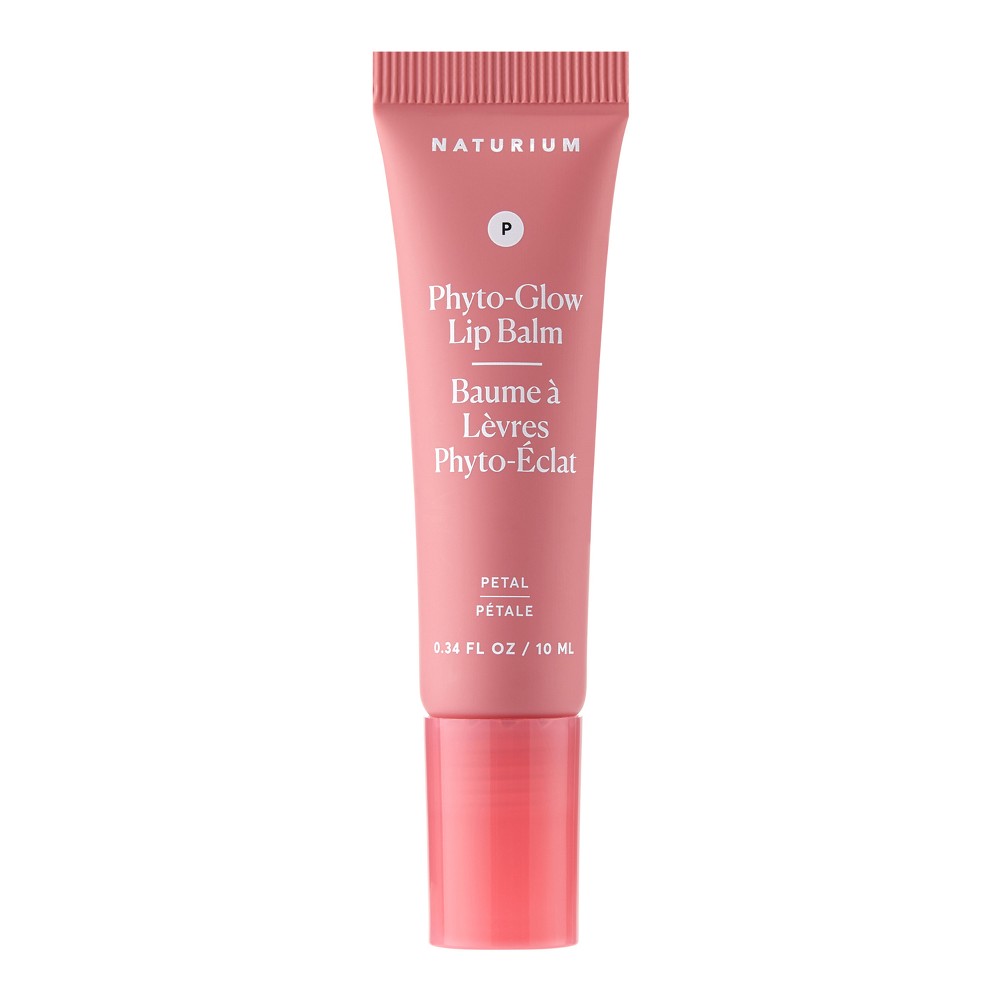
Naturium Phyto-Glow Lip Balm - Petal - 0.34 fl oz: Plumping, Hydrating, Tinted Liquid Formula
At a glance
Summary
This lip balm contains beneficial natural ingredients like shea butter, castor oil, and squalane, which are known for their moisturizing and skin-nourishing properties. However, the presence of synthetic waxes and undisclosed 'flavor' can be concerning due to potential irritation or allergic reactions. The product is moderately processed with a mix of natural and synthetic components, which impacts its overall safety and ingredient quality score. Its plastic packaging can shed microplastics into the product and lowers its score.
Key ingredients 23
Butyrospermum Parkii (Shea) ButterVery Good
Shea Butter is a natural fat extracted from the nuts of the shea tree. It is highly moisturizing and contains vitamins A and E. It is widely used in cosmetics for its nourishing properties.
Risks
There are minimal risks, mainly related to potential allergies in individuals sensitive to nuts.
Benefits
It provides deep hydration and nourishment to the skin, improving its texture and elasticity.
Ricinus Communis Seed OilVery Good
Castor Oil is a natural oil extracted from castor beans. It is highly moisturizing and contains ricinoleic acid, which has anti-inflammatory properties. It is widely used in cosmetics for its emollient properties.
Risks
There are minimal risks, mainly related to potential allergies in sensitive individuals.
Benefits
It provides deep hydration and helps in soothing and nourishing the skin.
SqualaneVery Good
Squalane is a hydrogenated form of squalene, a natural compound found in human sebum. It is highly moisturizing and helps in maintaining skin's barrier function. It is non-comedogenic and suitable for all skin types.
Risks
There are minimal risks associated with this ingredient.
Benefits
It provides excellent hydration and helps in improving skin texture and elasticity.
Theobroma Grandiflorum Seed ButterVery Good
Cupuaçu Butter is a natural fat extracted from the seeds of the cupuaçu tree. It is highly moisturizing and contains phytosterols that help in maintaining skin elasticity. It is used in cosmetics for its nourishing properties.
Risks
There are minimal risks, mainly related to potential allergies in sensitive individuals.
Benefits
It provides deep hydration and helps in improving skin texture and elasticity.
TocopherolVery Good
Tocopherol, also known as Vitamin E, is a powerful antioxidant that helps in protecting the skin from free radical damage. It is widely used in cosmetics for its skin conditioning properties. It is considered safe and beneficial.
Risks
There are minimal risks associated with this ingredient.
Benefits
It provides antioxidant protection and helps in maintaining skin health.
MicaGood
Beneficial ingredient — whole-food or functional value in this product class.
Risks
There are minimal risks, primarily related to potential inhalation concerns during manufacturing.
Benefits
It adds a shimmering effect and enhances the visual appeal of the product.
Iron OxidesGood
Beneficial ingredient — whole-food or functional value in this product class.
Risks
There are minimal risks associated with these pigments.
Benefits
They provide color and enhance the visual appeal of the product.
Phytosteryl/Isostearyl/Cetyl/Stearyl/Behenyl Dimer DilinoleateNeutral
This ingredient is a synthetic ester used for its emollient properties, providing a smooth application. It helps in forming a protective barrier on the skin. It is generally considered safe and non-irritating.
Risks
There are minimal risks associated with this ingredient, primarily related to potential skin sensitivity in rare cases.
Benefits
It offers moisturizing benefits and enhances the texture of the product.
Diisostearyl MalateNeutral
Diisostearyl Malate is an ester that acts as a skin conditioning agent and emollient. It provides a smooth, silky feel to the product. It is widely used in cosmetics and considered safe.
Risks
There are no significant risks associated with this ingredient.
Benefits
It helps in improving the texture and spreadability of the product.
Hydrogenated PolyisobuteneNeutral
Hydrogenated Polyisobutene is a synthetic polymer used as a skin conditioning agent. It provides a non-greasy, lightweight feel. It is considered safe for use in cosmetics.
Risks
There are minimal risks, mainly related to potential skin sensitivity.
Benefits
It enhances the product's texture and provides a smooth application.
PolybuteneNeutral
Polybutene is a polymer used as a binder and viscosity increasing agent. It helps in improving the texture and stability of the product. It is generally considered safe for use in cosmetics.
Risks
There are minimal risks associated with this ingredient.
Benefits
It contributes to the product's consistency and application.
Polyglyceryl-2 DiisostearateNeutral
This ingredient is an emulsifier that helps in blending oil and water components. It is derived from natural sources and is considered safe. It is used to improve the texture and stability of the product.
Risks
There are minimal risks, primarily related to potential skin sensitivity.
Benefits
It helps in maintaining the product's consistency and enhances its application.
Microcrystalline WaxNeutral
Microcrystalline Wax is a refined wax used to thicken and stabilize formulations. It provides a smooth texture and helps in forming a protective barrier on the skin. It is considered safe for use in cosmetics.
Risks
There are minimal risks associated with this ingredient.
Benefits
It enhances the product's texture and stability.
Synthetic WaxNeutral
Synthetic Wax is used to provide structure and stability to cosmetic formulations. It helps in improving the texture and application of the product. It is considered safe for use in cosmetics.
Risks
There are minimal risks associated with this ingredient.
Benefits
It contributes to the product's consistency and enhances its application.
Isopropyl Titanium TriisostearateNeutral
This ingredient is used as a pigment dispersant and helps in improving the spreadability of the product. It is considered safe for use in cosmetics. It enhances the texture and application of the product.
Risks
There are minimal risks associated with this ingredient.
Benefits
It contributes to the product's consistency and enhances its application.
Citric AcidNeutral
Citric Acid is used to adjust the pH of cosmetic formulations. It is derived from citrus fruits and is considered safe for use in cosmetics. It helps in maintaining the stability of the product.
Risks
There are minimal risks, primarily related to potential skin irritation in sensitive individuals.
Benefits
It helps in maintaining the product's pH balance and stability.
Titanium DioxideNeutral
Titanium Dioxide is a mineral used as a pigment and UV filter in cosmetics. It provides opacity and sun protection. It is considered safe for use in cosmetics.
Risks
There are minimal risks, primarily related to potential inhalation concerns during manufacturing.
Benefits
It provides sun protection and enhances the product's color and opacity.
Red 7 LakeNeutral
Red 7 Lake is a synthetic pigment used to add color to cosmetics. It is considered safe for use in cosmetics. It provides vibrant color and is stable and non-reactive.
Risks
There are minimal risks associated with this pigment.
Benefits
It provides color and enhances the visual appeal of the product.
Blue 1 LakeNeutral
Blue 1 Lake is a synthetic pigment used to add color to cosmetics. It is considered safe for use in cosmetics. It provides vibrant color and is stable and non-reactive.
Risks
There are minimal risks associated with this pigment.
Benefits
It provides color and enhances the visual appeal of the product.
Red 6 LakeNeutral
Red 6 Lake is a synthetic pigment used to add color to cosmetics. It is considered safe for use in cosmetics. It provides vibrant color and is stable and non-reactive.
Risks
There are minimal risks associated with this pigment.
Benefits
It provides color and enhances the visual appeal of the product.
Yellow 5 LakeNeutral
Yellow 5 Lake is a synthetic pigment used to add color to cosmetics. It is considered safe for use in cosmetics. It provides vibrant color and is stable and non-reactive.
Risks
There are minimal risks associated with this pigment.
Benefits
It provides color and enhances the visual appeal of the product.
Red 33 LakeNeutral
Red 33 Lake is a synthetic pigment used to add color to cosmetics. It is considered safe for use in cosmetics. It provides vibrant color and is stable and non-reactive.
Risks
There are minimal risks associated with this pigment.
Benefits
It provides color and enhances the visual appeal of the product.
FlavorBad
Flavor in cosmetics can refer to a mixture of aromatic compounds used to impart scent or taste. It can sometimes cause irritation or allergic reactions. The exact composition is often undisclosed, leading to potential concerns.
Risks
There is a risk of skin irritation or allergic reactions, especially in sensitive individuals.
Benefits
It can enhance the sensory experience of the product.
Processing
Processed Foods
Get the full breakdown in the Scout appTake Scout shopping
Scan any product to see lab results, healthy alternatives, and your personalized analysis.
Are you Naturium? Fix an error Get the badge Get tested
Amazon pricing & content
Amazon price as of . Product prices and availability are accurate as of the date/time indicated and are subject to change. Any price and availability information displayed on Amazon.com at the time of purchase will apply to the purchase of this product.
CERTAIN CONTENT THAT APPEARS ON THIS SITE COMES FROM AMAZON. THIS CONTENT IS PROVIDED “AS IS” AND IS SUBJECT TO CHANGE OR REMOVAL AT ANY TIME.