
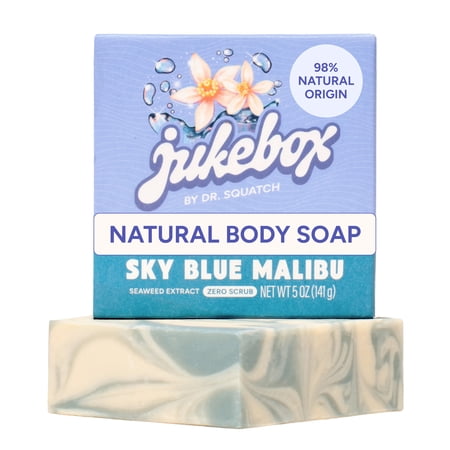



Jukebox Womens Bar Soap Natural Bar Soap for Women Sky Blue Malibu 5 Oz
Summary
This bar soap contains a mix of natural and synthetic ingredients, which places it in the mid-range for ingredient safety. While it may include some beneficial natural components, the presence of synthetic additives and fragrances can pose potential skin irritation risks. The processing level indicates that it is not entirely natural, which affects its overall rating.
At a glance
Key ingredients 6
Saponified Oils of Olive
Saponified olive oil is a natural emollient that helps to moisturize and nourish the skin. It is rich in antioxidants and vitamins, which can help protect the skin from environmental damage. The saponification process turns the oil into soap, making it effective for cleansing.
Risks
There are minimal risks associated with saponified olive oil, though some individuals may experience mild irritation if they have a sensitivity to olive oil.
Benefits
It provides excellent moisturizing properties and is gentle on the skin, making it suitable for sensitive skin types.
Saponified Oils of Sustainable Palm
Saponified palm oil is used for its ability to create a hard bar of soap with a stable lather. It is derived from sustainably sourced palm oil, which is important for environmental conservation. The saponification process ensures it is effective for cleansing.
Risks
The primary concern with palm oil is environmental, as unsustainable sourcing can lead to deforestation. However, sustainable sourcing mitigates this risk.
Benefits
It contributes to a firm soap bar with a creamy lather, enhancing the cleansing experience.
Saponified Oils of Coconut
Saponified coconut oil is known for its excellent cleansing properties and ability to produce a rich lather. It is derived from coconut oil, which is naturally antibacterial and antifungal. The saponification process transforms it into a soap that effectively removes dirt and oil.
Risks
Coconut oil can be drying for some skin types if used in high concentrations, but in balanced formulations, this risk is minimized.
Benefits
It provides a rich lather and deep cleansing action, making it effective for removing impurities.
Shea Butter
Shea butter is a natural fat extracted from the nuts of the shea tree, known for its moisturizing and healing properties. It is rich in vitamins A and E, which help to soothe and hydrate the skin. Its inclusion in soap helps to counteract the drying effects of cleansing.
Risks
There is a low risk of allergic reactions, primarily for individuals with nut allergies, though this is rare.
Benefits
It deeply moisturizes and nourishes the skin, improving elasticity and reducing inflammation.
Kaolin Clay
Kaolin clay is a gentle, natural clay that is used for its ability to absorb excess oil and impurities from the skin. It is suitable for all skin types, including sensitive skin, due to its mild nature. In soap, it helps to provide a smooth texture and gentle exfoliation.
Risks
There are minimal risks associated with kaolin clay, though overuse can lead to dryness in some skin types.
Benefits
It helps to cleanse and purify the skin without causing irritation, making it ideal for sensitive skin.
Natural Fragrance
Natural fragrance is used to impart a pleasant scent to the soap, derived from natural sources such as essential oils. While it enhances the sensory experience, the exact composition can vary. It is generally considered safer than synthetic fragrances.
Risks
Even natural fragrances can cause allergic reactions or sensitivities in some individuals, though this is less common than with synthetic fragrances.
Benefits
It provides a pleasant aroma that can enhance the user's mood and overall experience.
Processing
Processed Foods
Get the full breakdown in the Scout app
Scan any product to see lab results, healthy alternatives, and your personalized analysis.
Download on theApp Store