
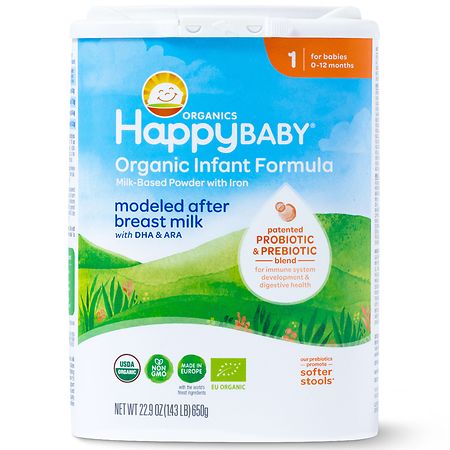


Happy Baby Organic Infant Formula Powder - Stage 1 - 22.9 oz: Milk-Based, Added Prebiotics & Probiotics, Non-GMO
Analysis updated August 2026 · How Scout scores
At a glance
Summary
This infant formula contains several beneficial ingredients such as organic lactose, nonfat milk, and prebiotics that support infant nutrition and gut health. However, it includes organic canola oil, a processed seed oil with potential inflammatory effects, and organic soy lecithin, which is a processed emulsifier. The product is ultra-processed, which limits its score despite the presence of organic and beneficial components.
Key ingredients 13
Organic lactoseGood
Organic lactose is a natural sugar found in milk, providing energy for infants. Being organic, it is free from synthetic pesticides and fertilizers. It supports the growth of beneficial gut bacteria.
Benefits
Provides a source of energy and supports the development of healthy gut flora in infants.
Organic nonfat milkGood
Organic nonfat milk is a source of protein and essential nutrients without added fats. The organic certification ensures it is free from synthetic additives and hormones. It contributes to the nutritional profile of the formula.
Benefits
Provides essential nutrients and proteins necessary for infant growth and development.
Organic galactooligosaccharidesGood
Organic galactooligosaccharides are prebiotics that support digestive health by promoting beneficial gut bacteria. Being organic, they are free from synthetic chemicals. They mimic the function of human milk oligosaccharides.
Benefits
Supports the growth of beneficial gut bacteria and enhances digestive health.
Organic coconut oilGood
Organic coconut oil is a source of medium-chain triglycerides, which are easily digestible fats. The organic certification ensures it is free from synthetic additives. It supports energy production and nutrient absorption.
Benefits
Provides easily digestible fats that support energy production and nutrient absorption.
Organic whey protein concentrateGood
Organic whey protein concentrate is a high-quality protein source that supports muscle and tissue development. Being organic, it is free from synthetic hormones and additives. It provides essential amino acids necessary for infant growth.
Benefits
Rich in essential amino acids that support muscle and tissue development in infants.
Bifidobacterium breve M-16VGood
Bifidobacterium breve M-16V is a probiotic that supports gut health and immune function in infants. It is specifically chosen for its beneficial effects on infant gut flora. It helps in reducing gastrointestinal issues.
Benefits
Supports gut health and enhances immune function in infants.
FructooligosaccharidesGood
Fructooligosaccharides are prebiotics that promote the growth of beneficial gut bacteria. They are included to mimic the function of human milk oligosaccharides. They support digestive health and nutrient absorption.
Benefits
Promotes the growth of beneficial gut bacteria and supports digestive health.
Tuna fish oilGood
Tuna fish oil is a source of DHA, an omega-3 fatty acid crucial for brain and eye development. It is included for its high DHA content, essential for infant cognitive development. It supports overall neurological health.
Risks
Potential risk of mercury contamination, though typically controlled in infant formulas.
Benefits
Rich in DHA, supporting brain and eye development in infants.
Mortierella alpina oilsGood
Mortierella alpina oils are a source of arachidonic acid, an omega-6 fatty acid important for infant growth. It is included to balance the omega-3 and omega-6 fatty acid profile. Supports brain development and immune function.
Benefits
Provides arachidonic acid, supporting brain development and immune function.
Organic palm oilNeutral
Organic palm oil is used for its fat content, providing energy and aiding in nutrient absorption. The organic certification ensures minimal environmental impact and absence of synthetic chemicals. It is a common ingredient in infant formulas for its fatty acid profile.
Risks
Concerns about sustainability and deforestation are associated with palm oil production.
Benefits
Provides essential fatty acids and energy necessary for infant growth.
Organic high oleic sunflower oilNeutral
Organic high oleic sunflower oil is bred to be low in linoleic acid, reducing inflammation risk. The organic certification ensures minimal chemical exposure. It provides a stable source of monounsaturated fats.
Benefits
Provides a stable source of monounsaturated fats with reduced inflammation risk.
Organic soy lecithinBad
Organic soy lecithin is used as an emulsifier to maintain formula consistency. Despite being organic, it is a processed ingredient with potential allergenic concerns. It is not nutritionally beneficial but aids in product stability.
Risks
Potential allergen for individuals sensitive to soy.
Benefits
Aids in maintaining product consistency and stability.
Organic canola oilVery Bad
Organic canola oil is a seed oil high in omega-6 fatty acids, which can promote inflammation when consumed in excess. Despite being organic, it is still a processed oil with potential health concerns. It is used for its fatty acid profile but is not ideal for infant nutrition.
Risks
High omega-6 content may promote inflammation when consumed in excess.
Benefits
Provides essential fatty acids, but the health benefits are outweighed by potential risks.
Processing
Ultra-Processed Foods
Get the full breakdown in the Scout appTake Scout shopping
Scan any product to see lab results, healthy alternatives, and your personalized analysis.
Download on theApp Store GET IT ONGoogle PlayAmazon pricing & content
Amazon price as of . Product prices and availability are accurate as of the date/time indicated and are subject to change. Any price and availability information displayed on Amazon.com at the time of purchase will apply to the purchase of this product.
CERTAIN CONTENT THAT APPEARS ON THIS SITE COMES FROM AMAZON. THIS CONTENT IS PROVIDED “AS IS” AND IS SUBJECT TO CHANGE OR REMOVAL AT ANY TIME.