


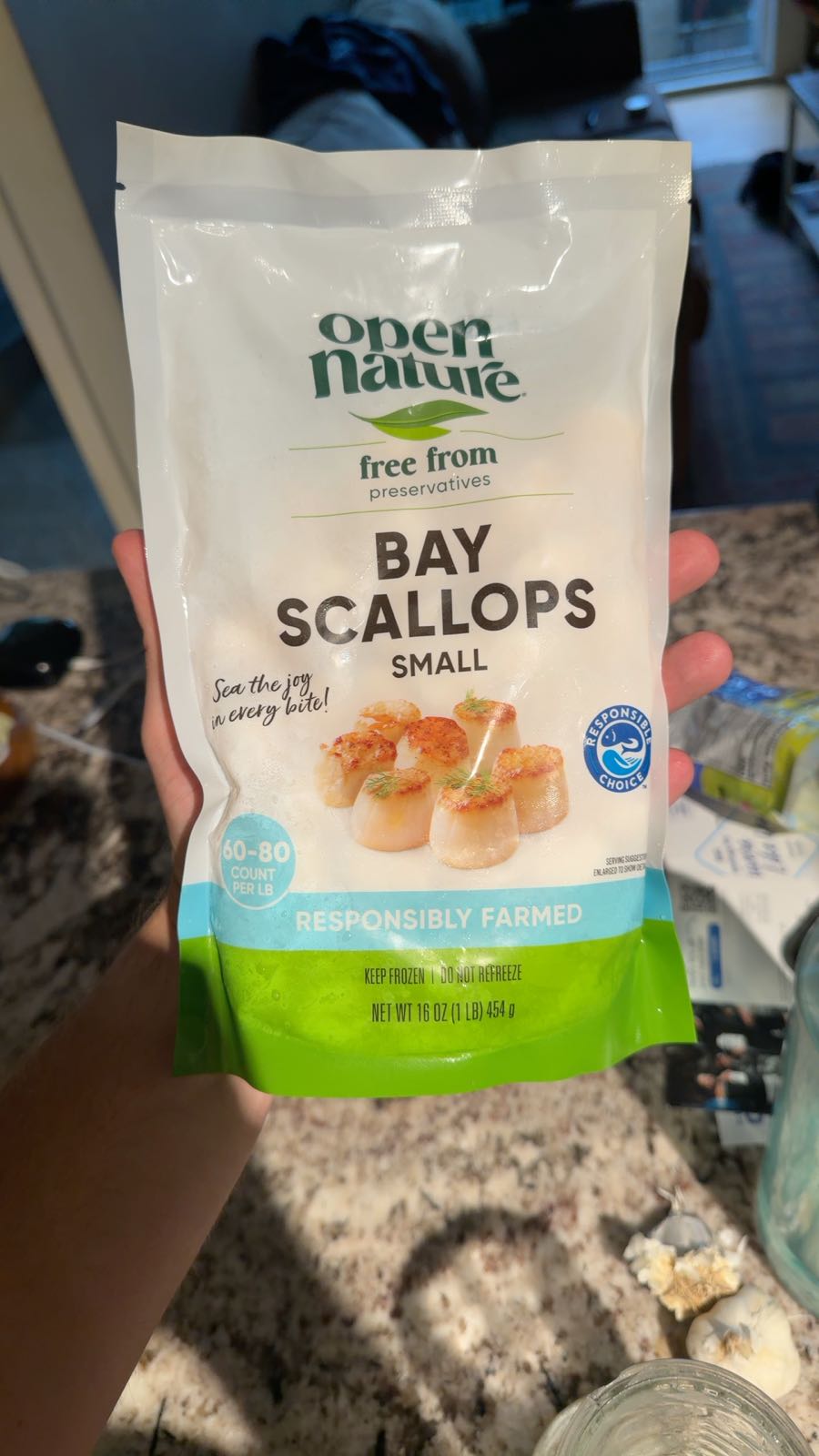

At a glance
Summary
This product contains scallops, which are a high-quality source of protein and essential nutrients, making them a healthy seafood option. However, the presence of sodium tripolyphosphate, a synthetic additive used to retain moisture, increases the sodium content and contributes to its processed nature. The processing level and use of this additive limit the overall health score.
Key ingredients 3
ScallopsGood
Scallops are a high-quality source of protein and essential nutrients like vitamin B12 and omega-3 fatty acids. They are minimally processed and provide a rich amino acid profile. Scallops are considered a healthy seafood option with low levels of contaminants.
Risks
Potential risks include allergies to shellfish and possible contamination with heavy metals or pollutants in certain regions.
Benefits
Scallops are rich in protein and omega-3 fatty acids, which support heart health and cognitive function. They also provide essential vitamins and minerals, contributing to overall nutritional balance.
WaterNeutral
Water is used as a basic ingredient to maintain moisture in food products. It is a neutral component with no direct nutritional impact. Its presence helps in maintaining the texture and weight of the product.
See more about Water →Sodium TripolyphosphateBad
Sodium tripolyphosphate is used as a preservative to retain moisture in seafood products. It is a synthetic additive that can increase sodium content and may cause digestive issues in sensitive individuals. Its use is common in processed seafood to enhance texture and water retention.
Risks
Excessive consumption may lead to increased sodium intake, which can contribute to hypertension and cardiovascular issues.
Processing
Processed Foods
Get the full breakdown in the Scout appTake Scout shopping
Scan any product to see lab results, healthy alternatives, and your personalized analysis.
Download on theApp Store GET IT ONGoogle Play