
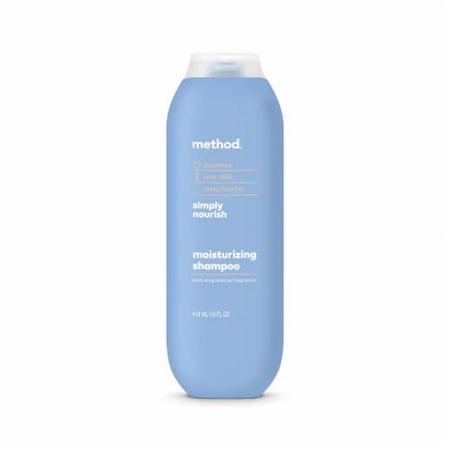


Method Moisturizing Shampoo Simply Nourish with Shea Butter Coconut and Rice Milk Scent Notes Paraben and Sulfate Free 14 oz (Pack of 1)
Analysis updated July 2026 · How Scout scores
At a glance
Summary
This shampoo contains beneficial ingredients like coconut oil, argan oil, and shea butter, which are known for their moisturizing and nourishing properties. However, the presence of 'fragrance' without disclosure of its components can be a concern for those with sensitive skin due to potential allergens. The product is free from parabens and sulfates, which is positive, but the inclusion of synthetic fragrance and other processed ingredients affects its overall rating.
Key ingredients 20
Cocos Nucifera (Coconut) OilVery Good
Coconut Oil is a natural emollient that helps to moisturize and nourish the skin. It is rich in fatty acids and has antimicrobial properties. It is well-tolerated by most skin types.
Risks
May cause breakouts in acne-prone skin due to its comedogenic nature.
Benefits
Provides deep moisturization and nourishment to the skin.
PanthenolVery Good
Panthenol is a form of Vitamin B5 that acts as a moisturizer and skin conditioner. It helps to improve skin hydration and elasticity. It is well-tolerated and beneficial for all skin types.
Benefits
Enhances skin hydration and improves elasticity.
Argania Spinosa Kernel (Argan) OilVery Good
Argan Oil is a natural oil rich in essential fatty acids and antioxidants. It helps to moisturize and nourish the skin and hair. It is well-tolerated and beneficial for all skin types.
Benefits
Provides deep moisturization and nourishment to the skin and hair.
Butyrospermum Parkii (Shea) Butter ExtractVery Good
Shea Butter is a natural fat extracted from the nuts of the shea tree. It is an excellent moisturizer and skin conditioner. It is rich in vitamins and fatty acids, making it beneficial for dry and sensitive skin.
Benefits
Deeply moisturizes and conditions the skin.
Oryza Sativa (Rice) Bran ExtractVery Good
Rice Bran Extract is rich in antioxidants and nutrients that help to nourish and protect the skin. It has moisturizing and anti-aging properties. It is well-tolerated and suitable for all skin types.
Benefits
Nourishes and protects the skin with its antioxidant properties.
Simmondsia Chinensis (Jojoba) Seed OilVery Good
Jojoba Oil is a natural oil that closely resembles the skin's natural sebum. It helps to moisturize and balance the skin. It is non-comedogenic and suitable for all skin types.
Benefits
Moisturizes and balances the skin without clogging pores.
GlycerinGood
Glycerin is a humectant that attracts moisture to the skin. It helps to keep the skin hydrated and soft. It is well-tolerated and suitable for all skin types.
Benefits
Helps to maintain skin hydration and improve texture.
Water (Eau)Neutral
Water is a common solvent used in cosmetic formulations. It helps to dissolve other ingredients and provides a base for the product. It does not have any direct benefits or risks.
Risks
There are no known risks associated with water in cosmetic products.
Benefits
Water acts as a solvent and helps in the application of the product.
Sodium (C14-16) Olefin SulfonateNeutral
Sodium (C14-16) Olefin Sulfonate is a surfactant used for its cleansing properties. It is considered milder than traditional sulfates like SLS. It can be drying for some skin types.
Risks
May cause dryness or irritation in sensitive individuals.
Benefits
Provides effective cleansing and foaming properties.
Cocamidopropyl BetaineNeutral
Cocamidopropyl Betaine is a surfactant and foam booster derived from coconut oil. It is generally considered mild and is used to reduce irritation potential of other surfactants. It can cause allergic reactions in some individuals.
Risks
Potential for allergic reactions in sensitive individuals.
Benefits
Helps to create a rich lather and improve the mildness of the formulation.
CelluloseNeutral
Cellulose is used as a thickening agent in cosmetic products. It helps to stabilize the formulation and improve texture. It is generally considered safe and non-irritating.
Benefits
Improves the texture and stability of the product.
Cellulose GumNeutral
Cellulose Gum is a thickening agent derived from cellulose. It is used to enhance the viscosity of the product. It is considered safe and non-irritating.
Benefits
Enhances the viscosity and stability of the formulation.
Citric AcidNeutral
Citric Acid is used to adjust the pH of cosmetic products. It can also act as a mild exfoliant. It is generally safe but can cause irritation in high concentrations.
Risks
Potential for irritation if used in high concentrations.
Benefits
Helps to maintain the pH balance of the product.
Glycol DistearateNeutral
Glycol Distearate is used as an opacifying agent and emollient in cosmetic products. It helps to improve the texture and appearance of the product. It is generally considered safe.
Benefits
Improves the texture and appearance of the product.
Polyquaternium-10Neutral
Polyquaternium-10 is a conditioning agent used in hair care products. It helps to improve hair texture and manageability. It is generally considered safe and non-irritating.
Benefits
Improves hair texture and manageability.
Tetrasodium Glutamate DiacetateNeutral
Tetrasodium Glutamate Diacetate is a chelating agent used to improve the stability of cosmetic formulations. It helps to prevent the degradation of the product. It is considered safe and non-irritating.
Benefits
Enhances the stability and shelf-life of the product.
Polysorbate 80Bad
Processed additive flagged under Scout's ingredient doctrine.
Risks
Potential for irritation in sensitive individuals.
Benefits
Stabilizes formulations by emulsifying oil and water components.
Potassium SorbateBad
Synthetic preservative — flagged in daily-use products.
Risks
Potential for irritation in sensitive individuals.
Benefits
Prevents microbial growth and extends the shelf-life of the product.
Sodium BenzoateBad
Synthetic preservative that can form benzene in the presence of vitamin C.
Risks
Potential for irritation in sensitive individuals.
Benefits
Helps to preserve the product by preventing microbial growth.
Fragrance (Parfum)Very Bad
Fragrance is used to impart scent to the product. It is a common cause of allergic reactions and skin irritation. The specific components of the fragrance are not disclosed, which can be a concern for sensitive individuals.
Risks
Potential for allergic reactions and skin irritation.
Benefits
Provides a pleasant scent to the product.
Get the full breakdown in the Scout appTake Scout shopping
Scan any product to see lab results, healthy alternatives, and your personalized analysis.
Download on theApp Store GET IT ONGoogle PlayAmazon pricing & content
Amazon price as of . Product prices and availability are accurate as of the date/time indicated and are subject to change. Any price and availability information displayed on Amazon.com at the time of purchase will apply to the purchase of this product.
CERTAIN CONTENT THAT APPEARS ON THIS SITE COMES FROM AMAZON. THIS CONTENT IS PROVIDED “AS IS” AND IS SUBJECT TO CHANGE OR REMOVAL AT ANY TIME.