

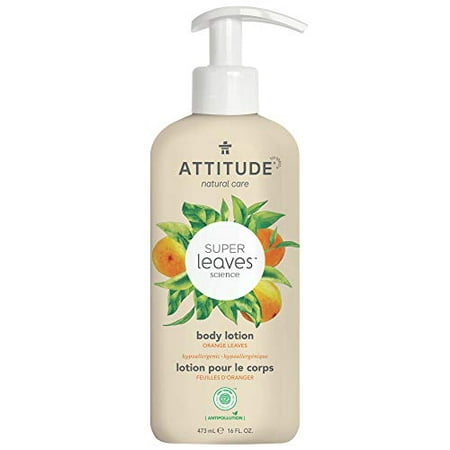


Attitude Body Lotion, Daily Moisturiser
Analysis updated August 2026 · How Scout scores
At a glance
Summary
This body lotion contains several beneficial natural ingredients such as glycerin, sunflower seed oil, coconut oil, and shea butter, which are known for their moisturizing and skin-conditioning properties. However, the presence of fragrance and hexyl cinnamal, which are potential allergens and irritants, slightly detracts from its overall safety profile. The product is moderately processed, which also influences its rating.
Key ingredients 30
Helianthus Annuus (Sunflower) Seed OilVery Good
Sunflower seed oil is rich in linoleic acid, which helps to maintain the skin's natural barrier and reduce moisture loss. It is a natural emollient that is easily absorbed by the skin. It is suitable for all skin types, including sensitive skin.
Risks
There are minimal risks associated with sunflower seed oil; it is generally safe for topical use.
Benefits
It provides essential fatty acids that nourish and protect the skin.
Cocos Nucifera (Coconut) OilVery Good
Coconut oil is a natural emollient that helps to moisturize and soften the skin. It has antimicrobial properties and is rich in fatty acids that nourish the skin. It is widely used in skincare for its hydrating and protective benefits.
Risks
Some individuals may experience comedogenic effects, leading to clogged pores.
Benefits
Coconut oil helps to lock in moisture and provides a protective barrier on the skin.
Butyrospermum Parkii (Shea) ButterVery Good
Shea butter is a natural fat extracted from the nuts of the shea tree. It is known for its moisturizing and anti-inflammatory properties. It is rich in vitamins and fatty acids, making it an excellent skin conditioning agent.
Risks
There are minimal risks associated with shea butter; it is generally safe for all skin types.
Benefits
Shea butter deeply moisturizes the skin and helps to improve skin elasticity.
TocopherolVery Good
Tocopherol, also known as Vitamin E, is a powerful antioxidant that helps to protect the skin from free radical damage. It is widely used in skincare for its moisturizing and protective properties. It is suitable for all skin types.
Risks
There are minimal risks associated with tocopherol; it is generally safe for topical use.
Benefits
It helps to nourish and protect the skin, improving its overall health and appearance.
Olea Europaea (Olive) Leaf ExtractVery Good
Olive leaf extract is rich in antioxidants and has anti-inflammatory properties. It is used in skincare for its soothing and protective effects. It is suitable for all skin types, including sensitive skin.
Risks
There are minimal risks associated with olive leaf extract; it is generally safe for topical use.
Benefits
It helps to protect the skin from environmental stressors and soothes irritation.
GlycerinGood
Glycerin is a well-known humectant that attracts moisture to the skin. It helps maintain skin hydration and improves skin barrier function. It is widely used in skincare for its moisturizing properties.
Risks
There are minimal risks associated with glycerin; it is generally safe for all skin types.
Benefits
Glycerin helps to keep the skin hydrated and soft by drawing moisture from the environment into the skin.
Caprylic/Capric TriglycerideGood
Caprylic/Capric Triglyceride is derived from coconut oil and glycerin. It is used as an emollient and helps to smooth and soften the skin. It is lightweight and non-greasy, making it suitable for various skin types.
Risks
There are no significant risks associated with this ingredient; it is generally considered safe.
Benefits
It provides a silky feel to the skin and helps to lock in moisture without clogging pores.
Glyceryl Stearate CitrateGood
Glyceryl Stearate Citrate is an emulsifier that helps to blend oil and water components in formulations. It also acts as a skin conditioning agent. It is derived from natural sources and is biodegradable.
Risks
There are minimal risks associated with this ingredient; it is generally safe for use.
Benefits
It helps to stabilize formulations and provides a smooth texture to the lotion.
Aqua / Water / EauNeutral
Water is a common solvent used in cosmetic formulations. It helps dissolve other ingredients and provides a base for the lotion. It does not have any direct benefits or risks associated with its use in this context.
Risks
There are no significant risks associated with water in cosmetic products.
Benefits
Water helps in hydrating the skin by acting as a vehicle for other moisturizing ingredients.
C10-18 TriglyceridesNeutral
C10-18 Triglycerides are used as emollients in cosmetic formulations. They help to improve the texture and spreadability of products. They are derived from natural oils and are generally considered safe.
Risks
There are no significant risks associated with this ingredient.
Benefits
They help to enhance the moisturizing properties of the lotion.
Glyceryl StearateNeutral
Standard formulation ingredient — neither beneficial nor harmful at typical use.
Risks
There are minimal risks associated with this ingredient; it is generally safe for use.
Benefits
It helps to stabilize formulations and provides a smooth texture to the lotion.
Zea Mays (Corn) StarchNeutral
Corn starch is used as a thickening agent in cosmetic formulations. It helps to improve the texture and consistency of products. It is derived from corn and is generally considered safe.
Risks
There are no significant risks associated with corn starch.
Benefits
It helps to absorb excess oil and provides a matte finish to the skin.
Caprylyl GlycolNeutral
Caprylyl Glycol is a skin conditioning agent and preservative. It helps to improve the moisture content of the skin and enhances the shelf life of products. It is generally considered safe for use in cosmetics.
Risks
There are minimal risks associated with caprylyl glycol; it is generally safe for use.
Benefits
It helps to keep the skin hydrated and extends the product's shelf life.
BentoniteNeutral
Bentonite is a natural clay that is used as a thickening agent in cosmetic formulations. It helps to improve the texture and consistency of products. It is known for its ability to absorb excess oil and impurities from the skin.
Risks
There are no significant risks associated with bentonite in topical applications.
Benefits
It helps to purify the skin by absorbing excess oil and impurities.
Cetearyl AlcoholNeutral
Cetearyl Alcohol is a fatty alcohol used as an emollient and emulsifier in cosmetic formulations. It helps to stabilize products and improve their texture. It is derived from natural sources and is generally considered safe.
Risks
There are minimal risks associated with cetearyl alcohol; it is generally safe for use.
Benefits
It provides a smooth and creamy texture to the lotion and helps to lock in moisture.
Xanthan GumNeutral
Xanthan Gum is a natural thickening agent used in cosmetic formulations. It helps to stabilize products and improve their texture. It is derived from fermentation and is generally considered safe.
Risks
There are no significant risks associated with xanthan gum.
Benefits
It helps to provide a smooth and consistent texture to the lotion.
Citric AcidNeutral
Citric Acid is used to adjust the pH of cosmetic formulations. It helps to maintain the stability and efficacy of products. It is derived from citrus fruits and is generally considered safe.
Risks
There are minimal risks associated with citric acid; it is generally safe for use.
Benefits
It helps to maintain the pH balance of the lotion, ensuring its stability.
HonokiolNeutral
Honokiol is a compound derived from magnolia bark with antioxidant properties. It is used in cosmetics for its potential skin-soothing effects. It is generally considered safe for topical use.
Risks
There are minimal risks associated with honokiol; it is generally safe for use.
Benefits
It may help to soothe the skin and provide antioxidant protection.
MagnololNeutral
Magnolol is a compound derived from magnolia bark with antioxidant properties. It is used in cosmetics for its potential skin-soothing effects. It is generally considered safe for topical use.
Risks
There are minimal risks associated with magnolol; it is generally safe for use.
Benefits
It may help to soothe the skin and provide antioxidant protection.
Nasturtium Officinale (Watercress) ExtractNeutral
Watercress extract is used in cosmetics for its antioxidant properties. It may help to protect the skin from oxidative stress. It is generally considered safe for topical use.
Risks
There are minimal risks associated with watercress extract; it is generally safe for use.
Benefits
It may provide antioxidant protection to the skin.
Tropaeolum Majus (Indian Cress) ExtractNeutral
Indian cress extract is used in cosmetics for its potential antioxidant and skin-soothing properties. It is generally considered safe for topical use. It may help to protect the skin from environmental stressors.
Risks
There are minimal risks associated with Indian cress extract; it is generally safe for use.
Benefits
It may provide antioxidant protection and soothe the skin.
Sodium HydroxideNeutral
Sodium Hydroxide is used to adjust the pH of cosmetic formulations. It helps to maintain the stability and efficacy of products. It is generally considered safe for use in cosmetics at low concentrations.
Risks
In high concentrations, it can be irritating, but it is used in very low amounts in cosmetics.
Benefits
It helps to maintain the pH balance of the lotion, ensuring its stability.
Alpha-IononeNeutral
Alpha-Ionone is a fragrance ingredient used in cosmetics. It provides a pleasant scent to products. It is generally considered safe for use in cosmetics.
Risks
There are minimal risks associated with alpha-ionone; it is generally safe for use.
Benefits
It contributes to the fragrance profile of the product.
Geranyl AcetateNeutral
Geranyl Acetate is a fragrance ingredient used in cosmetics. It provides a floral scent to products. It is generally considered safe for use in cosmetics.
Risks
There are minimal risks associated with geranyl acetate; it is generally safe for use.
Benefits
It contributes to the fragrance profile of the product.
Hexyl AcetateNeutral
Hexyl Acetate is a fragrance ingredient used in cosmetics. It provides a fruity scent to products. It is generally considered safe for use in cosmetics.
Risks
There are minimal risks associated with hexyl acetate; it is generally safe for use.
Benefits
It contributes to the fragrance profile of the product.
Triethyl CitrateNeutral
Triethyl Citrate is used as a fragrance ingredient and stabilizer in cosmetics. It helps to enhance the scent and stability of products. It is generally considered safe for use in cosmetics.
Risks
There are minimal risks associated with triethyl citrate; it is generally safe for use.
Benefits
It helps to stabilize the fragrance and improve the product's scent profile.
Sodium BenzoateBad
Synthetic preservative that can form benzene in the presence of vitamin C.
Risks
There are minimal risks associated with sodium benzoate; it is generally safe for use.
Benefits
It helps to preserve the product and prevent spoilage.
Potassium SorbateBad
Synthetic preservative — flagged in daily-use products.
Risks
There are minimal risks associated with potassium sorbate; it is generally safe for use.
Benefits
It helps to preserve the product and prevent spoilage.
Hexyl CinnamalBad
Hexyl Cinnamal is a fragrance ingredient that can cause allergic reactions in some individuals. It is a known contact allergen and is regulated in cosmetic products. It is used to impart a floral scent to products.
Risks
It can cause skin irritation and allergic reactions in sensitive individuals.
Benefits
It provides a pleasant floral scent to the product.
Fragrance (Parfum)Very Bad
Fragrance is a common cause of allergic reactions and skin irritation. It is a complex mixture of chemicals that can include allergens. It is used to provide a pleasant scent to products.
Risks
Fragrance can cause skin irritation and allergic reactions, especially in sensitive individuals.
Benefits
It provides a pleasant scent to the product.
Get the full breakdown in the Scout appTake Scout shopping
Scan any product to see lab results, healthy alternatives, and your personalized analysis.
Download on theApp Store GET IT ONGoogle PlayAmazon pricing & content
Amazon price as of . Product prices and availability are accurate as of the date/time indicated and are subject to change. Any price and availability information displayed on Amazon.com at the time of purchase will apply to the purchase of this product.
CERTAIN CONTENT THAT APPEARS ON THIS SITE COMES FROM AMAZON. THIS CONTENT IS PROVIDED “AS IS” AND IS SUBJECT TO CHANGE OR REMOVAL AT ANY TIME.