
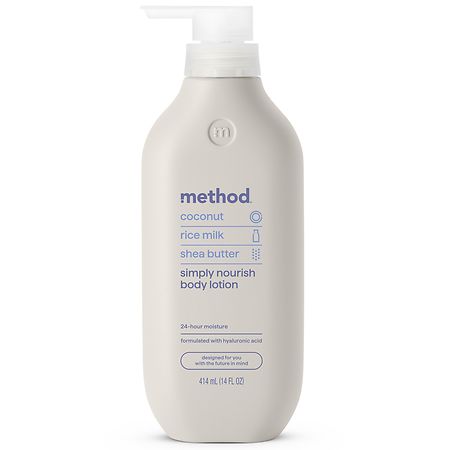


Method Body Lotion Simply MMF7 Nourish Coconut Rice Milk + Shea Butter notes 24 Hours of Moisture 14 oz
Analysis updated August 2026 · How Scout scores
At a glance
Summary
This body lotion contains several beneficial natural ingredients such as sunflower seed oil, shea butter, and aloe vera, which are known for their moisturizing and soothing properties. However, the presence of 'fragrance' as an ingredient is a concern due to potential skin irritation and undisclosed chemicals. The product is moderately processed, which slightly impacts its overall rating.
Key ingredients 30
Helianthus Annuus (Sunflower) Seed OilVery Good
Sunflower seed oil is a natural oil rich in linoleic acid, which helps maintain the skin barrier. It is known for its moisturizing and anti-inflammatory properties. It is beneficial for dry and sensitive skin.
Risks
There are minimal risks, though it may cause allergic reactions in individuals with sunflower allergies.
Benefits
It provides excellent moisturizing and skin barrier support.
Butyrospermum Parkii (Shea) ButterVery Good
Shea Butter is a natural fat extracted from the nuts of the shea tree, known for its moisturizing and anti-inflammatory properties. It is highly beneficial for dry and sensitive skin. It provides deep hydration and helps improve skin elasticity.
Risks
There are minimal risks, though it may cause allergic reactions in individuals with nut allergies.
Benefits
It provides deep hydration and improves skin elasticity.
Tocopherol (Vitamin E)Very Good
Tocopherol, or Vitamin E, is a powerful antioxidant that helps protect the skin from free radical damage. It is known for its moisturizing and anti-inflammatory properties. It is beneficial for maintaining healthy skin.
Risks
There are minimal risks, though it may cause irritation in very sensitive skin.
Benefits
It protects the skin from free radical damage and provides moisture.
Adansonia Digitata (Baobab) Seed OilVery Good
Baobab Seed Oil is a natural oil rich in vitamins and fatty acids, known for its moisturizing and nourishing properties. It helps improve skin elasticity and softness. It is beneficial for dry and aging skin.
Risks
There are minimal risks, though it may cause allergic reactions in individuals with seed allergies.
Benefits
It improves skin elasticity and provides deep nourishment.
Aloe Barbadensis Leaf JuiceVery Good
Aloe Vera is known for its soothing and hydrating properties, making it ideal for sensitive and irritated skin. It helps reduce inflammation and provides moisture. It is widely used for its skin healing benefits.
Risks
There are minimal risks, though it may cause allergic reactions in some individuals.
Benefits
It soothes and hydrates the skin, reducing inflammation.
Limnanthes Alba (Meadowfoam) Seed OilVery Good
Meadowfoam Seed Oil is a natural oil known for its moisturizing and rejuvenating properties. It helps lock in moisture and provides a protective barrier for the skin. It is beneficial for maintaining skin hydration.
Risks
There are minimal risks, though it may cause allergic reactions in individuals with seed allergies.
Benefits
It locks in moisture and provides a protective barrier for the skin.
Simmondsia Chinensis (Jojoba) Seed OilVery Good
Jojoba Oil is a natural oil that closely resembles the skin's natural sebum, making it an excellent moisturizer. It helps balance oil production and provides hydration without clogging pores. It is beneficial for all skin types.
Risks
There are minimal risks, though it may cause allergic reactions in some individuals.
Benefits
It balances oil production and provides hydration without clogging pores.
Astrocaryum Murumuru Seed ButterVery Good
Murumuru Seed Butter is a natural butter known for its moisturizing and emollient properties. It helps soften and smooth the skin, providing deep hydration. It is beneficial for dry and damaged skin.
Risks
There are minimal risks, though it may cause allergic reactions in individuals with nut allergies.
Benefits
It softens and smooths the skin, providing deep hydration.
Oryza Sativa (Rice) Bran ExtractVery Good
Rice Bran Extract is rich in antioxidants and nutrients, known for its moisturizing and anti-aging properties. It helps improve skin texture and elasticity. It is beneficial for maintaining healthy and youthful skin.
Risks
There are minimal risks, though it may cause allergic reactions in some individuals.
Benefits
It improves skin texture and provides anti-aging benefits.
Butyrospermum Parkii (Shea) Butter ExtractVery Good
Shea Butter Extract is derived from shea butter, known for its moisturizing and anti-inflammatory properties. It provides deep hydration and helps improve skin elasticity. It is beneficial for dry and sensitive skin.
Risks
There are minimal risks, though it may cause allergic reactions in individuals with nut allergies.
Benefits
It provides deep hydration and improves skin elasticity.
Cocos Nucifera (Coconut) Fruit ExtractVery Good
Coconut Fruit Extract is known for its moisturizing and nourishing properties. It helps improve skin hydration and texture. It is beneficial for maintaining soft and smooth skin.
Risks
There are minimal risks, though it may cause allergic reactions in individuals with coconut allergies.
Benefits
It improves skin hydration and provides nourishment.
Avena Sativa (Oat) Kernel ExtractVery Good
Oat Kernel Extract is known for its soothing and anti-inflammatory properties, making it ideal for sensitive and irritated skin. It helps reduce redness and provides moisture. It is widely used for its skin calming benefits.
Risks
There are minimal risks, though it may cause allergic reactions in individuals with oat allergies.
Benefits
It soothes and calms the skin, reducing redness.
GlycerinGood
Glycerin is a humectant that attracts moisture to the skin, helping to keep it hydrated. It is widely used in skincare for its moisturizing properties. It is generally well-tolerated by most skin types.
Risks
There are minimal risks, though excessive use can lead to a sticky feeling on the skin.
Benefits
It effectively hydrates and maintains skin moisture levels.
Sodium HyaluronateGood
Sodium Hyaluronate is a form of hyaluronic acid known for its ability to retain moisture and plump the skin. It helps reduce the appearance of fine lines and provides deep hydration. It is beneficial for maintaining youthful and hydrated skin.
Risks
There are minimal risks, though it may cause irritation in very sensitive skin.
Benefits
It retains moisture and plumps the skin, reducing fine lines.
WaterNeutral
Water is a common solvent used in cosmetics to dissolve other ingredients. It helps in the application and absorption of the product. It does not provide direct benefits or risks.
Risks
There are no significant risks associated with water in cosmetics.
Benefits
Water helps in the application and absorption of the product.
Glyceryl Stearate SENeutral
Glyceryl Stearate SE is an emulsifier that helps blend water and oils in formulations. It provides a smooth texture to lotions and creams. It is generally considered safe for use in cosmetics.
Risks
There are minimal risks associated with Glyceryl Stearate SE, though it may cause irritation in very sensitive skin.
Benefits
It helps in creating a smooth and stable emulsion in lotions.
Hydrogenated Ethylhexyl OlivateNeutral
Hydrogenated Ethylhexyl Olivate is an emollient derived from olive oil, providing a silky feel to the skin. It helps in moisturizing and softening the skin. It is considered safe for use in cosmetics.
Risks
There are minimal risks associated with this ingredient.
Benefits
It provides a silky texture and helps in skin moisturization.
Stearic AcidNeutral
Stearic Acid is a fatty acid used as an emulsifier and thickener in cosmetics. It helps stabilize formulations and improve texture. It is generally safe for use in skincare products.
Risks
There are minimal risks, though it may cause irritation in very sensitive skin.
Benefits
It stabilizes formulations and improves texture.
Cetyl AlcoholNeutral
Cetyl Alcohol is a fatty alcohol used as an emollient and thickener in cosmetics. It helps improve the texture and spreadability of lotions. It is generally considered safe and non-irritating.
Risks
There are minimal risks, though it may cause irritation in very sensitive skin.
Benefits
It improves texture and spreadability of lotions.
Citric AcidNeutral
Citric Acid is used to adjust the pH of cosmetics and can also act as a mild exfoliant. It helps maintain the stability and effectiveness of the product. It is generally safe for use in cosmetics.
Risks
There are minimal risks, though it may cause irritation in very sensitive skin.
Benefits
It helps in pH adjustment and product stability.
Potassium Cetyl PhosphateNeutral
Potassium Cetyl Phosphate is an emulsifier that helps blend water and oils in formulations. It contributes to the stability and texture of lotions. It is considered safe for use in cosmetics.
Risks
There are minimal risks associated with this ingredient.
Benefits
It helps in creating stable emulsions in lotions.
Xanthan GumNeutral
Xanthan Gum is a thickening agent used to stabilize and thicken cosmetic formulations. It helps improve the texture and consistency of products. It is generally considered safe for use in cosmetics.
Risks
There are minimal risks associated with Xanthan Gum.
Benefits
It stabilizes and thickens cosmetic formulations.
Hydrogenated Olive Oil UnsaponifiablesNeutral
Hydrogenated Olive Oil Unsaponifiables are derived from olive oil and used as emollients in cosmetics. They help moisturize and soften the skin. They are considered safe for use in cosmetics.
Risks
There are minimal risks associated with this ingredient.
Benefits
They help moisturize and soften the skin.
Sodium GluconateNeutral
Sodium Gluconate is a chelating agent used to improve the stability and efficacy of cosmetic formulations. It helps prevent the degradation of active ingredients. It is generally considered safe for use in cosmetics.
Risks
There are minimal risks associated with Sodium Gluconate.
Benefits
It improves the stability and efficacy of formulations.
Sodium HydroxideNeutral
Sodium Hydroxide is used to adjust the pH of cosmetic formulations. It helps maintain the stability and effectiveness of the product. It is generally safe for use in cosmetics when used in small amounts.
Risks
There are minimal risks, though it may cause irritation in very sensitive skin.
Benefits
It helps in pH adjustment and product stability.
Cocos Nucifera (Coconut) Fruit PowderNeutral
Coconut Fruit Powder is used for its mild exfoliating and moisturizing properties. It helps improve skin texture and hydration. It is generally considered safe for use in cosmetics.
Risks
There are minimal risks, though it may cause irritation in very sensitive skin.
Benefits
It improves skin texture and provides mild exfoliation.
MaltodextrinNeutral
Maltodextrin is used as a binding and stabilizing agent in cosmetics. It helps improve the texture and consistency of formulations. It is generally considered safe for use in cosmetics.
Risks
There are minimal risks associated with Maltodextrin.
Benefits
It improves texture and consistency of formulations.
Sodium BenzoateBad
Synthetic preservative that can form benzene in the presence of vitamin C.
Risks
There are minimal risks, though it may cause irritation in very sensitive skin.
Benefits
It helps in preserving the product and preventing microbial growth.
Potassium SorbateBad
Synthetic preservative — flagged in daily-use products.
Risks
There are minimal risks, though it may cause irritation in very sensitive skin.
Benefits
It helps in preserving the product and preventing microbial growth.
FragranceVery Bad
Fragrance is used to impart scent to cosmetics but can be a common irritant and allergen. It may cause skin irritation and allergic reactions in sensitive individuals. It is often criticized for its potential to cause adverse skin reactions.
Risks
Fragrance can cause skin irritation and allergic reactions.
Benefits
It provides a pleasant scent to the product.
Processing
Processed Foods
Get the full breakdown in the Scout appTake Scout shopping
Scan any product to see lab results, healthy alternatives, and your personalized analysis.
Download on theApp Store GET IT ONGoogle PlayAmazon pricing & content
Amazon price as of . Product prices and availability are accurate as of the date/time indicated and are subject to change. Any price and availability information displayed on Amazon.com at the time of purchase will apply to the purchase of this product.
CERTAIN CONTENT THAT APPEARS ON THIS SITE COMES FROM AMAZON. THIS CONTENT IS PROVIDED “AS IS” AND IS SUBJECT TO CHANGE OR REMOVAL AT ANY TIME.