

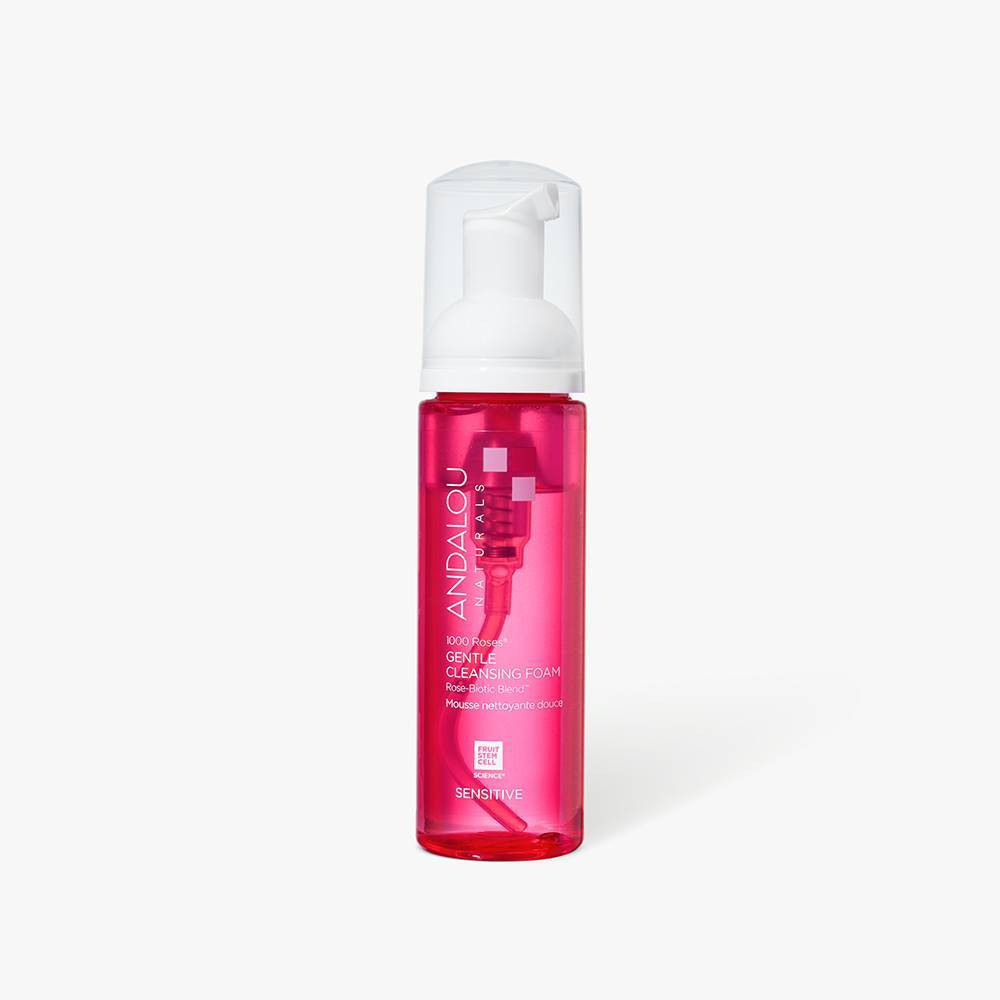

Daily Shade + Blue Light Defense Facial Lotion SPF 30 Deep Hydration 2.7 fl oz (80 ml) Andalou Naturals
Analysis updated July 2026 · How Scout scores
At a glance
Summary
This facial lotion contains beneficial ingredients such as natural oils and skin actives that provide hydration and protection against blue light. However, the presence of synthetic sunscreen agents and potential preservatives may slightly lower its safety profile. The product is moderately processed, balancing effective skincare benefits with some synthetic components.
Key ingredients 41
EctoineVery Good
Ectoine is a natural compound known for its protective and moisturizing properties. It helps to protect the skin from environmental stressors and maintain hydration. It is beneficial for sensitive and dry skin.
Risks
There are no significant risks associated with this ingredient.
Benefits
It protects the skin from environmental stressors and maintains hydration.
Sunflower OilVery Good
Sunflower Oil is a natural oil rich in vitamins and fatty acids. It helps to moisturize and nourish the skin, improving its texture and appearance. It is beneficial for maintaining skin health.
Risks
There are no significant risks associated with this ingredient.
Benefits
It moisturizes and nourishes the skin, improving texture and appearance.
TocopherolVery Good
Tocopherol, also known as Vitamin E, is an antioxidant that protects the skin from free radical damage. It helps to improve skin health and appearance. It is beneficial for maintaining youthful skin.
Risks
There are no significant risks associated with this ingredient.
Benefits
It protects the skin from free radical damage and improves skin health.
SqualeneVery Good
Squalene is a natural emollient that mimics the skin's natural oils. It helps to hydrate and protect the skin, improving its texture and appearance. It is beneficial for maintaining skin moisture and elasticity.
Risks
There are no significant risks associated with this ingredient.
Benefits
It hydrates and protects the skin, improving texture and appearance.
Aloe Vera LeafVery Good
Aloe Vera Leaf is a natural extract known for its soothing and hydrating properties. It helps to calm irritated skin and provide moisture. It is beneficial for sensitive and dry skin.
Risks
There are no significant risks associated with this ingredient.
Benefits
It calms irritated skin and provides moisture.
Shea ButterVery Good
Shea Butter is a natural butter rich in vitamins and fatty acids. It helps to deeply moisturize and nourish the skin, improving its texture and elasticity. It is beneficial for dry and damaged skin.
Risks
There are no significant risks associated with this ingredient.
Benefits
It deeply moisturizes and nourishes the skin, improving texture and elasticity.
Hyaluronate SodiumVery Good
Hyaluronate Sodium, also known as Hyaluronic Acid, is a powerful humectant. It helps to attract and retain moisture in the skin, providing deep hydration. It is beneficial for maintaining skin plumpness and reducing fine lines.
Risks
There are no significant risks associated with this ingredient.
Benefits
It provides deep hydration and helps maintain skin plumpness.
Tea LeafVery Good
Tea Leaf extract is rich in antioxidants, particularly EGCG. It helps to protect the skin from free radical damage and reduce inflammation. It is beneficial for maintaining skin health and reducing signs of aging.
Risks
There are no significant risks associated with this ingredient.
Benefits
It protects the skin from free radical damage and reduces inflammation.
Coconut OilGood
Coconut oil is a natural oil known for its moisturizing properties. It helps to hydrate and nourish the skin, making it soft and smooth. It also has antimicrobial properties that can benefit the skin.
Risks
Coconut oil can be comedogenic for some skin types, potentially leading to clogged pores.
Benefits
It provides deep hydration and has antimicrobial properties.
Coco-GlucosideGood
Coco-Glucoside is a mild surfactant derived from coconut oil and glucose. It helps to cleanse the skin without stripping natural oils. It is gentle and suitable for sensitive skin.
Risks
There are no significant risks associated with this ingredient.
Benefits
It gently cleanses the skin without stripping natural oils.
LevomenolGood
Levomenol, also known as Bisabolol, is a soothing agent derived from chamomile. It helps to calm and soothe irritated skin. It is beneficial for sensitive and inflamed skin.
Risks
There are no significant risks associated with this ingredient.
Benefits
It calms and soothes irritated skin.
GlycerinGood
Glycerin is a humectant that attracts moisture to the skin. It helps to keep the skin hydrated and soft. It is beneficial for maintaining skin moisture balance.
Risks
There are no significant risks associated with this ingredient.
Benefits
It keeps the skin hydrated and soft.
BeetGood
Beneficial ingredient — whole-food or functional value in this product class.
Risks
There are no significant risks associated with this ingredient.
Benefits
It protects the skin from oxidative stress.
WaterNeutral
Water is a common solvent used in cosmetics to dissolve other ingredients. It helps in the application and absorption of the product. It does not provide any direct benefits or risks.
Risks
There are no known risks associated with water in cosmetics.
Benefits
Water helps in the application and absorption of the product.
TetradecaneNeutral
Tetradecane is a hydrocarbon used as a solvent and emollient in cosmetics. It helps to improve the texture and spreadability of the product. It is considered safe for use in cosmetics.
Risks
There are no significant risks associated with this ingredient.
Benefits
It improves the texture and spreadability of the product.
Cetearyl AlcoholNeutral
Standard formulation ingredient — neither beneficial nor harmful at typical use.
Risks
There are no significant risks associated with this ingredient.
Benefits
It softens and smooths the skin, providing a creamy texture.
Sodium Stearoyl GlutamateNeutral
Sodium Stearoyl Glutamate is a mild surfactant and emulsifier. It helps to stabilize emulsions and improve the texture of the product. It is generally considered safe for use in cosmetics.
Risks
There are no significant risks associated with this ingredient.
Benefits
It stabilizes emulsions and improves product texture.
Arachidyl AlcoholNeutral
Arachidyl Alcohol is a fatty alcohol used as an emollient and thickener. It helps to improve the texture and consistency of the product. It is generally considered safe for use in cosmetics.
Risks
There are no significant risks associated with this ingredient.
Benefits
It improves the texture and consistency of the product.
Caprylyl GlycolNeutral
Standard formulation ingredient — neither beneficial nor harmful at typical use.
Risks
There are no significant risks associated with this ingredient.
Benefits
It moisturizes the skin and enhances product shelf life.
Diheptyl SuccinateNeutral
Diheptyl Succinate is used as an emollient and texture enhancer. It helps to improve the feel and spreadability of the product. It is considered safe for use in cosmetics.
Risks
There are no significant risks associated with this ingredient.
Benefits
It improves the feel and spreadability of the product.
Xanthan GumNeutral
Xanthan Gum is a natural thickening agent used to stabilize emulsions. It helps to improve the texture and consistency of the product. It is considered safe for use in cosmetics.
Risks
There are no significant risks associated with this ingredient.
Benefits
It stabilizes emulsions and improves product texture.
Calcium Sodium BorosilicateNeutral
Calcium Sodium Borosilicate is used as a bulking agent and to add shimmer. It helps to enhance the visual appeal of the product. It is considered safe for use in cosmetics.
Risks
There are no significant risks associated with this ingredient.
Benefits
It enhances the visual appeal of the product.
DocosanolNeutral
Docosanol is an antiviral agent used in skincare products. It helps to protect the skin from viral infections. It is considered safe for use in cosmetics.
Risks
There are no significant risks associated with this ingredient.
Benefits
It protects the skin from viral infections.
Capryloyl Glycerin/Sebacic Acid CopolymerNeutral
This copolymer is used as a film-forming agent and emollient. It helps to improve the texture and longevity of the product on the skin. It is considered safe for use in cosmetics.
Risks
There are no significant risks associated with this ingredient.
Benefits
It improves the texture and longevity of the product on the skin.
Anhydrous Citric AcidNeutral
Anhydrous Citric Acid is used to adjust the pH of cosmetic products. It helps to maintain the stability and effectiveness of the formulation. It is considered safe for use in cosmetics.
Risks
There are no significant risks associated with this ingredient.
Benefits
It maintains the stability and effectiveness of the formulation.
Arachidyl GlucosideNeutral
Arachidyl Glucoside is an emulsifier used to stabilize formulations. It helps to improve the texture and consistency of the product. It is considered safe for use in cosmetics.
Risks
There are no significant risks associated with this ingredient.
Benefits
It stabilizes formulations and improves product texture.
Sodium GluconateNeutral
Sodium Gluconate is a chelating agent used to improve the stability of cosmetic formulations. It helps to prevent the degradation of the product. It is considered safe for use in cosmetics.
Risks
There are no significant risks associated with this ingredient.
Benefits
It improves the stability of cosmetic formulations.
Caprylhydroxamic AcidNeutral
Caprylhydroxamic Acid is a preservative used to prevent microbial growth. It helps to extend the shelf life of the product. It is considered safe for use in cosmetics.
Risks
There are no significant risks associated with this ingredient.
Benefits
It prevents microbial growth and extends product shelf life.
Beta-SitosterolNeutral
Beta-Sitosterol is a plant-derived compound used as an emollient. It helps to soothe and moisturize the skin. It is considered safe for use in cosmetics.
Risks
There are no significant risks associated with this ingredient.
Benefits
It soothes and moisturizes the skin.
IsomaltNeutral
Isomalt is a sugar alcohol used as a humectant and bulking agent. It helps to retain moisture in the product. It is considered safe for use in cosmetics.
Risks
There are no significant risks associated with this ingredient.
Benefits
It helps to retain moisture in the product.
Saccharum Officinarum Stem FructooligosaccharidesNeutral
This ingredient is used as a humectant and skin-conditioning agent. It helps to retain moisture and improve skin texture. It is considered safe for use in cosmetics.
Risks
There are no significant risks associated with this ingredient.
Benefits
It retains moisture and improves skin texture.
AppleNeutral
Apple extract is used for its antioxidant properties. It helps to protect the skin from environmental damage. It is considered safe for use in cosmetics.
Risks
There are no significant risks associated with this ingredient.
Benefits
It protects the skin from environmental damage.
Aronia Melanocarpa Fruit JuiceNeutral
Aronia Melanocarpa Fruit Juice is used for its antioxidant properties. It helps to protect the skin from oxidative stress. It is considered safe for use in cosmetics.
Risks
There are no significant risks associated with this ingredient.
Benefits
It protects the skin from oxidative stress.
AcaiNeutral
Acai extract is used for its antioxidant properties. It helps to protect the skin from environmental damage. It is considered safe for use in cosmetics.
Risks
There are no significant risks associated with this ingredient.
Benefits
It protects the skin from environmental damage.
Lycium Barbarum FruitNeutral
Lycium Barbarum Fruit, also known as Goji Berry, is used for its antioxidant properties. It helps to protect the skin from oxidative stress. It is considered safe for use in cosmetics.
Risks
There are no significant risks associated with this ingredient.
Benefits
It protects the skin from oxidative stress.
Arthrospira MaximaNeutral
Arthrospira Maxima, commonly known as Spirulina, is used for its antioxidant and nutrient-rich properties. It helps to nourish and protect the skin. It is considered safe for use in cosmetics.
Risks
There are no significant risks associated with this ingredient.
Benefits
It nourishes and protects the skin.
Podocoryna Carnea Fibrillar CollagenNeutral
This ingredient is used for its skin-conditioning properties. It helps to improve skin texture and elasticity. It is considered safe for use in cosmetics.
Risks
There are no significant risks associated with this ingredient.
Benefits
It improves skin texture and elasticity.
Soybean LecithinNeutral
Soybean Lecithin is used as an emulsifier and skin-conditioning agent. It helps to stabilize formulations and improve skin texture. It is considered safe for use in cosmetics.
Risks
There are no significant risks associated with this ingredient.
Benefits
It stabilizes formulations and improves skin texture.
Vitis Vinifera High Tannin Cultivar Fruit Cell LysateNeutral
This ingredient is used for its antioxidant properties. It helps to protect the skin from oxidative stress. It is considered safe for use in cosmetics.
Risks
There are no significant risks associated with this ingredient.
Benefits
It protects the skin from oxidative stress.
Butyloctyl SalicylateBad
Processed additive flagged under Scout's ingredient doctrine.
Risks
There are no significant risks associated with this ingredient.
Benefits
It enhances the spreadability of sunscreen products.
Sodium BenzoateBad
Sodium Benzoate is a preservative used to prevent microbial growth. While generally recognized as safe, it can form benzene, a carcinogen, under certain conditions. It is used in low concentrations to minimize risks.
Risks
It can form benzene, a carcinogen, under certain conditions.
Benefits
It prevents microbial growth and extends product shelf life.
Get the full breakdown in the Scout appTake Scout shopping
Scan any product to see lab results, healthy alternatives, and your personalized analysis.
Download on theApp Store GET IT ONGoogle PlayAmazon pricing & content
Amazon price as of . Product prices and availability are accurate as of the date/time indicated and are subject to change. Any price and availability information displayed on Amazon.com at the time of purchase will apply to the purchase of this product.
CERTAIN CONTENT THAT APPEARS ON THIS SITE COMES FROM AMAZON. THIS CONTENT IS PROVIDED “AS IS” AND IS SUBJECT TO CHANGE OR REMOVAL AT ANY TIME.