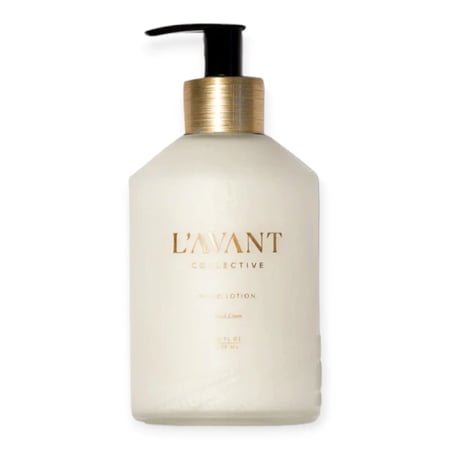
Hand Lotion | Fresh Linen
At a glance
Summary
This hand lotion contains beneficial ingredients like aloe vera, shea butter, and sunflower seed oil, which are known for their moisturizing and soothing properties. However, the presence of 'natural fragrance' can be a concern for those with sensitive skin due to potential irritation or allergic reactions. The overall formulation is mostly safe with a few minor synthetic components, resulting in a balanced score.
Key ingredients 30
aloe barbadensis leaf juiceVery Good
Aloe vera is known for its soothing and moisturizing properties. It is beneficial for calming irritated skin and providing hydration.
Risks
Rarely, aloe vera can cause allergic reactions in sensitive individuals.
Benefits
Aloe vera provides soothing and moisturizing benefits to the skin.
butyrospermum parkii (shea butter)Very Good
Shea butter is a natural fat extracted from the nuts of the shea tree. It is highly moisturizing and helps to protect the skin barrier.
Risks
There is a minimal risk of allergic reactions for individuals with nut allergies.
Benefits
Shea butter is highly moisturizing and helps protect the skin barrier.
helianthus annuus (sunflower) seed oilVery Good
Sunflower seed oil is rich in vitamin E and fatty acids, making it an excellent emollient for the skin. It helps to maintain the skin's natural barrier and prevent moisture loss.
Risks
There is a low risk of allergic reactions.
Benefits
Sunflower seed oil is rich in vitamin E and helps maintain the skin's natural barrier.
tocopherolVery Good
Tocopherol, or vitamin E, is an antioxidant that helps to protect the skin from free radical damage. It also provides moisturizing benefits.
Risks
It is generally considered safe, with minimal risk of irritation.
Benefits
Tocopherol protects the skin from free radical damage and provides moisturizing benefits.
allantoinGood
Allantoin is known for its soothing and skin-conditioning properties. It helps to calm irritated skin and promote healing.
Risks
It is generally considered safe, with minimal risk of irritation.
Benefits
Allantoin soothes and conditions the skin, promoting healing.
ocimum basilicum (basil) oilGood
Basil oil is known for its antibacterial and anti-inflammatory properties. It can help to soothe and protect the skin.
Risks
There is a low risk of allergic reactions.
Benefits
Basil oil has antibacterial and anti-inflammatory properties that soothe and protect the skin.
citrus limon (lemon) peel oilGood
Lemon peel oil is rich in antioxidants and has a refreshing scent. It can help to brighten the skin and provide a pleasant aroma.
Risks
It can increase photosensitivity, leading to a higher risk of sunburn.
Benefits
Lemon peel oil brightens the skin and provides a refreshing scent.
lavandula angustifolia (lavender) oilGood
Lavender oil is known for its calming and soothing properties. It can help to reduce skin irritation and promote relaxation.
Risks
There is a low risk of allergic reactions.
Benefits
Lavender oil calms and soothes the skin, promoting relaxation.
pelargonium graveolens (geranium) oilGood
Geranium oil is known for its balancing and astringent properties. It can help to improve skin tone and reduce inflammation.
Risks
There is a low risk of allergic reactions.
Benefits
Geranium oil balances and improves skin tone, reducing inflammation.
salvia sclarea (clary sage) oilGood
Clary sage oil is known for its calming and anti-inflammatory properties. It can help to soothe irritated skin and promote relaxation.
Risks
There is a low risk of allergic reactions.
Benefits
Clary sage oil soothes irritated skin and promotes relaxation.
waterNeutral
Water is a common solvent used in cosmetics to dissolve other ingredients. It helps in the application and absorption of the product. It does not provide direct benefits or risks.
Risks
There are no significant risks associated with water in cosmetics.
Benefits
Water helps in the application and absorption of the product.
cetyl alcoholNeutral
Cetyl alcohol is a fatty alcohol used as an emollient and thickener in cosmetics. It helps to improve the texture and spreadability of the product.
Risks
It is generally considered safe, with minimal risk of irritation.
Benefits
Cetyl alcohol improves the texture and spreadability of the product.
C13-15 alkaneNeutral
C13-15 alkane is used as an emollient and solvent in cosmetics. It helps to improve the texture and feel of the product on the skin.
Risks
There are no significant risks associated with its use in cosmetics.
Benefits
C13-15 alkane improves the texture and feel of the product.
propanediolNeutral
Propanediol is a glycol used as a solvent and humectant in cosmetics. It helps to improve the absorption of other ingredients.
Risks
It is generally considered safe, with minimal risk of irritation.
Benefits
Propanediol improves the absorption of other ingredients.
undecaneNeutral
Undecane is used as an emollient and solvent in cosmetics. It helps to improve the texture and feel of the product on the skin.
Risks
There are no significant risks associated with its use in cosmetics.
Benefits
Undecane improves the texture and feel of the product.
glyceryl stearateNeutral
Glyceryl stearate is an emulsifier that helps to blend water and oil components in cosmetics. It improves the stability and texture of the product.
Risks
It is generally considered safe, with minimal risk of irritation.
Benefits
Glyceryl stearate improves the stability and texture of the product.
tridecaneNeutral
Tridecane is used as an emollient and solvent in cosmetics. It helps to improve the texture and feel of the product on the skin.
Risks
There are no significant risks associated with its use in cosmetics.
Benefits
Tridecane improves the texture and feel of the product.
sodium stearoyl glutamateNeutral
Sodium stearoyl glutamate is an emulsifier used to stabilize cosmetic formulations. It helps to blend water and oil components.
Risks
It is generally considered safe, with minimal risk of irritation.
Benefits
Sodium stearoyl glutamate stabilizes cosmetic formulations.
sorbitan caprylateNeutral
Sorbitan caprylate is an emulsifier and preservative used in cosmetics. It helps to maintain the stability and shelf life of the product.
Risks
It is generally considered safe, with minimal risk of irritation.
Benefits
Sorbitan caprylate maintains the stability and shelf life of the product.
behenyl alcoholNeutral
Behenyl alcohol is a fatty alcohol used as an emollient and thickener in cosmetics. It helps to improve the texture and spreadability of the product.
Risks
It is generally considered safe, with minimal risk of irritation.
Benefits
Behenyl alcohol improves the texture and spreadability of the product.
glyceryl behenateNeutral
Glyceryl behenate is an emulsifier and thickener used in cosmetics. It helps to stabilize formulations and improve texture.
Risks
It is generally considered safe, with minimal risk of irritation.
Benefits
Glyceryl behenate stabilizes formulations and improves texture.
xanthan gumNeutral
Xanthan gum is a thickening agent used in cosmetics to improve texture and stability. It helps to create a smooth and consistent product.
Risks
It is generally considered safe, with minimal risk of irritation.
Benefits
Xanthan gum improves texture and stability of the product.
lactic acidNeutral
Lactic acid is an alpha hydroxy acid used in cosmetics for its exfoliating properties. It helps to improve skin texture and hydration.
Risks
In high concentrations, it can cause skin irritation.
Benefits
Lactic acid improves skin texture and hydration.
tetrasodium glutamate diacetateNeutral
Tetrasodium glutamate diacetate is a chelating agent used to enhance the efficacy of preservatives in cosmetics. It helps to stabilize formulations.
Risks
It is generally considered safe, with minimal risk of irritation.
Benefits
Tetrasodium glutamate diacetate enhances preservative efficacy and stabilizes formulations.
sodium hydroxideNeutral
Sodium hydroxide is used to adjust the pH of cosmetic formulations. It helps to ensure the product is safe and effective for use.
Risks
In high concentrations, it can cause skin irritation.
Benefits
Sodium hydroxide adjusts the pH of formulations to ensure safety and efficacy.
Iodopropynyl butylcarbamateNeutral
Iodopropynyl butylcarbamate is a preservative used to prevent microbial growth in cosmetics. It helps to extend the shelf life of the product.
Risks
In rare cases, it can cause skin irritation.
Benefits
Iodopropynyl butylcarbamate prevents microbial growth and extends shelf life.
natural fragranceBad
Fragrances, even when labeled as natural, can cause skin irritation and allergic reactions. They are often complex mixtures that can trigger sensitivities.
Risks
Fragrances can cause skin irritation and allergic reactions.
Benefits
Fragrances provide a pleasant scent to the product.
sodium benzoateBad
Synthetic preservative that can form benzene in the presence of vitamin C.
Risks
In rare cases, it can cause skin irritation.
Benefits
Sodium benzoate prevents microbial growth and extends shelf life.
lecithinBad
Processed additive flagged under Scout's ingredient doctrine.
Risks
It is generally considered safe, with minimal risk of irritation.
Benefits
Lecithin improves the stability and texture of the product.
potassium sorbateBad
Synthetic preservative — flagged in daily-use products.
Risks
In rare cases, it can cause skin irritation.
Benefits
Potassium sorbate prevents microbial growth and extends shelf life.
Get the full breakdown in the Scout appTake Scout shopping
Scan any product to see lab results, healthy alternatives, and your personalized analysis.
Are you L'AVANT? Fix an error Get the badge Get tested
Amazon pricing & content
Amazon price as of . Product prices and availability are accurate as of the date/time indicated and are subject to change. Any price and availability information displayed on Amazon.com at the time of purchase will apply to the purchase of this product.
CERTAIN CONTENT THAT APPEARS ON THIS SITE COMES FROM AMAZON. THIS CONTENT IS PROVIDED “AS IS” AND IS SUBJECT TO CHANGE OR REMOVAL AT ANY TIME.