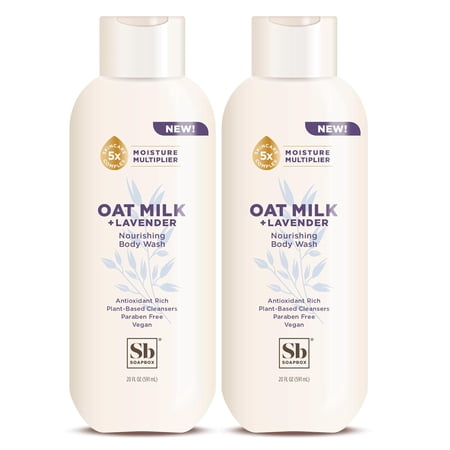
Soapbox Body Wash Oatmilk & Lavender Liquid Body Wash Moisturizing Soap with Shea Butter Vegan Duo Pack of 2 Soap Bottles 20oz Each
At a glance
Summary
This body wash contains beneficial ingredients like shea butter, aloe vera, and hyaluronic acid, which are known for their moisturizing and soothing properties. However, the presence of phenoxyethanol as a preservative and undisclosed fragrance components, which may include irritants, slightly lowers its safety profile. The product is moderately processed with a mix of natural and synthetic ingredients, resulting in a balanced score. Its plastic packaging can shed microplastics into the product and lowers its score.
Key ingredients 26
Avena Sativa (Oat) Meal ExtractVery Good
Oatmeal extract is known for its soothing and anti-inflammatory properties. It is beneficial for sensitive and irritated skin.
Risks
Generally considered safe with minimal risk.
Benefits
Provides soothing and moisturizing benefits to the skin.
Butyrospermum Parkii (Shea) ButterVery Good
Shea butter is a natural fat extracted from the nuts of the shea tree. It is highly moisturizing and nourishing for the skin.
Risks
Generally safe, but may cause allergic reactions in those with nut allergies.
Benefits
Deeply moisturizes and nourishes the skin.
Aloe Barbadensis (Aloe Vera) Leaf JuiceVery Good
Aloe Vera is known for its soothing and hydrating properties. It is beneficial for calming irritated skin.
Risks
Rarely causes allergic reactions.
Benefits
Soothes and hydrates the skin effectively.
Acetyl Hexapeptide-8 (Peptide)Very Good
Acetyl Hexapeptide-8 is a peptide that helps reduce the appearance of wrinkles. It is often used for its anti-aging benefits.
Risks
Generally considered safe with minimal risk.
Benefits
Reduces the appearance of fine lines and wrinkles.
Lavandula Hybrida OilGood
Lavandula Hybrida Oil is used for its fragrance and potential calming effects. It is a hybrid of lavender with similar properties.
Risks
May cause irritation in sensitive individuals.
Benefits
Offers a pleasant scent and potential calming effects.
Lavandula Angustifolia (Lavender) OilGood
Lavender oil is known for its calming and soothing properties. It is often used for its fragrance and potential skin benefits.
Risks
Can cause irritation or allergic reactions in some people.
Benefits
Provides a calming aroma and may soothe the skin.
Sodium Hyaluronate (Hyaluronic Acid)Good
Hyaluronic Acid is a powerful humectant that attracts and retains moisture in the skin. It is highly beneficial for hydration.
Risks
Generally considered safe with minimal risk.
Benefits
Provides intense hydration and plumps the skin.
NiacinamideGood
Niacinamide is a form of Vitamin B3 that improves skin texture and tone. It is known for its anti-inflammatory and brightening effects.
Risks
Rarely causes irritation or redness.
Benefits
Improves skin texture, reduces inflammation, and brightens the complexion.
Tocopheryl Acetate (Vitamin E)Good
Vitamin E is an antioxidant that protects the skin from free radical damage. It is also moisturizing and soothing.
Risks
May cause irritation in very sensitive skin.
Benefits
Protects against environmental damage and moisturizes the skin.
GlycerinGood
Glycerin is a humectant that attracts moisture to the skin. It is widely used for its hydrating properties.
Risks
Generally considered safe with minimal risk.
Benefits
Provides hydration and improves skin barrier function.
Water (Aqua)Neutral
Water is a common solvent used in cosmetics to dissolve other ingredients. It helps in forming the base of the product.
Risks
There are no significant risks associated with water in cosmetics.
Benefits
Water hydrates and helps in the application of the product.
Sodium Coco-sulfateNeutral
Sodium Coco-sulfate is a surfactant derived from coconut oil, used for its cleansing properties. It is considered milder than Sodium Lauryl Sulfate.
Risks
It may cause irritation in sensitive skin types.
Benefits
Provides effective cleansing and foaming properties.
Cocamidopropyl BetaineNeutral
Cocamidopropyl Betaine is a surfactant and foam booster derived from coconut oil. It is used to reduce irritation from other surfactants.
Risks
May cause allergic reactions in some individuals.
Benefits
Helps in creating a rich lather and reduces irritation.
Sodium ChlorideNeutral
Sodium Chloride, or table salt, is used to thicken the consistency of the product. It is a common ingredient in personal care products.
Risks
Excessive use can lead to dryness.
Benefits
Helps in adjusting the viscosity of the product.
Acetic AcidNeutral
Acetic Acid is used to adjust the pH of cosmetic products. It is a common ingredient in formulations.
Risks
High concentrations can cause irritation.
Benefits
Helps maintain the stability and effectiveness of the product.
Glycol DistearateNeutral
Glycol Distearate is used as an opacifying agent and emollient. It gives the product a pearlescent appearance.
Risks
Generally considered safe with minimal risk.
Benefits
Improves the texture and appearance of the product.
Guar Hydroxypropyltrimonium ChlorideNeutral
This ingredient is a conditioning agent derived from guar gum. It is used to improve the texture and feel of the product.
Risks
Generally considered safe with minimal risk.
Benefits
Enhances the conditioning properties of the product.
Dehydroacetic AcidNeutral
Dehydroacetic Acid is a preservative used to prevent microbial growth. It is often used in combination with other preservatives.
Risks
Generally considered safe with minimal risk.
Benefits
Helps maintain the product's integrity and safety.
GeraniolNeutral
Geraniol is a fragrance component naturally found in essential oils. It is used for its pleasant scent.
Risks
May cause allergic reactions in sensitive individuals.
Benefits
Provides a floral fragrance to the product.
Hexyl CinnamalNeutral
Hexyl Cinnamal is a fragrance ingredient used for its floral scent. It is commonly found in personal care products.
Risks
Can cause allergic reactions in sensitive individuals.
Benefits
Adds a pleasant fragrance to the product.
Citric AcidNeutral
Citric Acid is used to adjust the pH of cosmetic products. It is a common ingredient in formulations.
Risks
High concentrations can cause irritation.
Benefits
Helps maintain the stability and effectiveness of the product.
PhenoxyethanolBad
Phenoxyethanol is a preservative used to prevent microbial growth. It is a common alternative to parabens.
Risks
Can cause irritation and allergic reactions in some individuals.
Benefits
Helps preserve the product and extend its shelf life.
Potassium SorbateBad
Synthetic preservative — flagged in daily-use products.
Risks
May cause irritation in sensitive skin.
Benefits
Prevents spoilage and extends the shelf life of the product.
Benzyl AlcoholBad
Processed additive flagged under Scout's ingredient doctrine.
Risks
Can cause irritation and allergic reactions in some individuals.
Benefits
Preserves the product and enhances its stability.
LinaloolBad
Processed additive flagged under Scout's ingredient doctrine.
Risks
May cause allergic reactions in sensitive individuals.
Benefits
Contributes a pleasant aroma to the product.
Fragrance (Parfum)Very Bad
Fragrance is used to impart a pleasant scent to products. However, it can contain undisclosed chemicals that may cause irritation.
Risks
Potential allergen and irritant, especially for sensitive skin.
Benefits
Provides a pleasant scent to the product.
Get the full breakdown in the Scout appTake Scout shopping
Scan any product to see lab results, healthy alternatives, and your personalized analysis.
Are you Soapbox? Fix an error Get the badge Get tested
Amazon pricing & content
CERTAIN CONTENT THAT APPEARS ON THIS SITE COMES FROM AMAZON. THIS CONTENT IS PROVIDED “AS IS” AND IS SUBJECT TO CHANGE OR REMOVAL AT ANY TIME.