
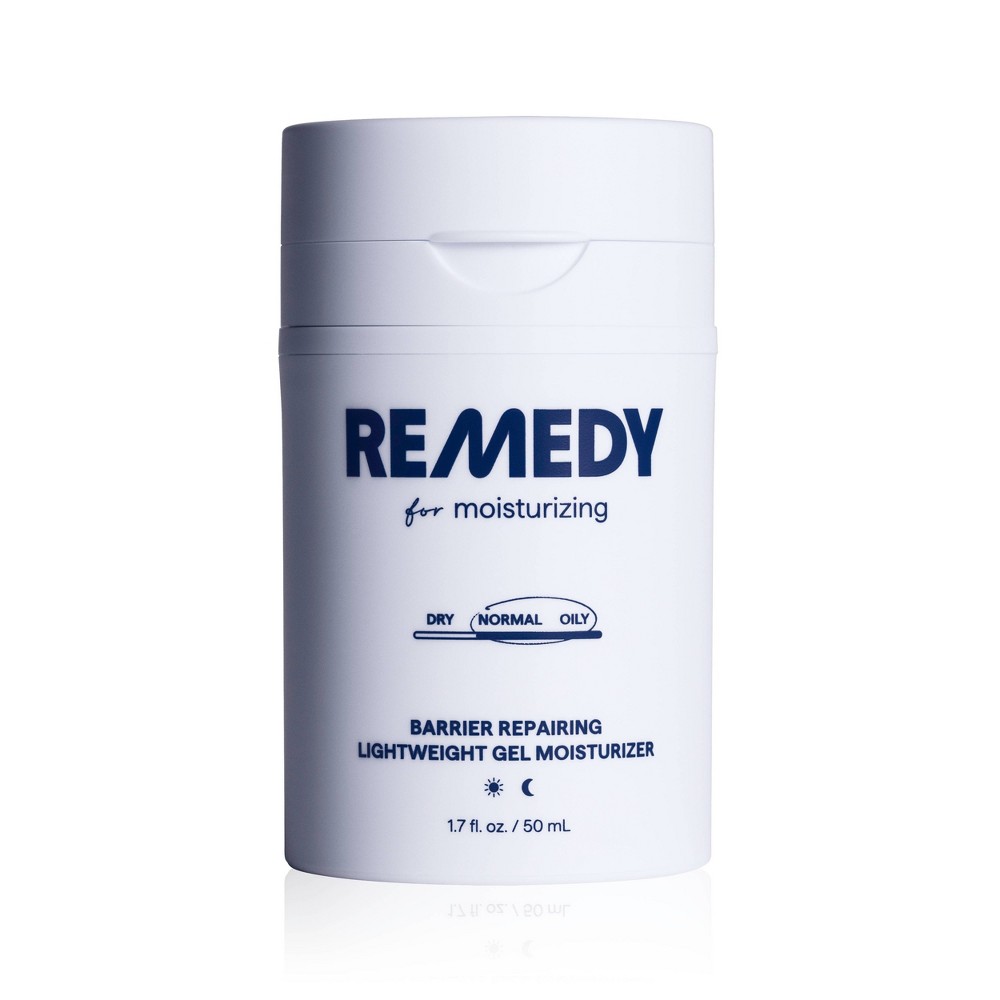

Remedy Skin Lightweight Gel Moisturizer, Repairs & Strengthens Skin Barrier with Squalane, Ceramide, Niacinamide - 1.7 fl oz
Summary
This moisturizer contains beneficial skin actives such as squalane, ceramide, and niacinamide, which are known for their skin-repairing and strengthening properties. The product avoids harsh chemicals and synthetic fragrances, contributing to its safety profile. However, as a processed cosmetic product, it includes some synthetic emulsifiers and preservatives, which slightly lower its overall rating.
At a glance
Key ingredients 15
Water
Water is a universal solvent and is used as a base in many cosmetic formulations. It helps dissolve other ingredients and provides hydration to the skin. It is essential for the consistency and application of the product.
Risks
There are no significant risks associated with water in cosmetic formulations.
Benefits
Water hydrates the skin and helps in the absorption of other beneficial ingredients.
Glycerin
Glycerin is a humectant that attracts moisture to the skin, helping to keep it hydrated. It is commonly used in skincare products for its moisturizing properties. It also helps to improve the skin barrier function.
Risks
Glycerin is generally considered safe, but in rare cases, it may cause irritation in sensitive individuals.
Benefits
Glycerin helps maintain skin hydration and improves skin barrier function.
Squalane
Squalane is a highly effective emollient and natural antioxidant. It mimics the skin's natural oils, making it an excellent moisturizer. It is known for its ability to penetrate the skin quickly and deeply.
Risks
Squalane is generally safe, but overuse may lead to clogged pores in some individuals.
Benefits
Squalane provides deep hydration and helps to improve skin elasticity.
Hyaluronic Acid
Hyaluronic Acid is a powerful humectant that can hold up to 1000 times its weight in water. It helps to hydrate the skin and reduce the appearance of fine lines and wrinkles. It is widely used in skincare for its anti-aging benefits.
Risks
Hyaluronic Acid is generally safe, but in rare cases, it may cause irritation or allergic reactions.
Benefits
Hyaluronic Acid provides intense hydration and helps to plump the skin, reducing the appearance of fine lines.
Niacinamide
Niacinamide is a form of Vitamin B3 that offers multiple skin benefits, including improving skin tone and texture. It helps to reduce inflammation and redness, making it suitable for sensitive skin. It also strengthens the skin barrier and improves moisture retention.
Risks
Niacinamide is generally well-tolerated, but high concentrations may cause mild irritation in sensitive skin.
Benefits
Niacinamide improves skin texture, reduces inflammation, and strengthens the skin barrier.
Ceramide NP
Ceramide NP is a lipid that is naturally found in the skin and is essential for maintaining the skin's barrier function. It helps to retain moisture and protect the skin from environmental damage. It is beneficial for dry and sensitive skin types.
Risks
Ceramide NP is generally safe, but in rare cases, it may cause irritation if used in high concentrations.
Benefits
Ceramide NP helps to restore the skin barrier and retain moisture, improving skin hydration and resilience.
Panthenol
Panthenol, also known as Provitamin B5, is a moisturizing agent that helps to improve skin hydration and elasticity. It has anti-inflammatory properties that can soothe irritated skin. It is commonly used in skincare for its ability to enhance skin softness and smoothness.
Risks
Panthenol is generally safe, but in rare cases, it may cause mild irritation or allergic reactions.
Benefits
Panthenol improves skin hydration, elasticity, and soothes irritation.
Sodium Hydroxide
Sodium Hydroxide is used in small amounts to adjust the pH of cosmetic formulations. It helps to maintain the stability and effectiveness of the product. It is a common ingredient in skincare products for pH balancing.
Risks
In high concentrations, Sodium Hydroxide can be irritating to the skin, but it is generally used in safe amounts in cosmetics.
Benefits
Sodium Hydroxide helps to maintain the pH balance of the product, ensuring its stability and effectiveness.
Potassium Sorbate
Potassium Sorbate is a preservative used to prevent the growth of mold and bacteria in cosmetic products. It helps to extend the shelf life of the product. It is considered a mild preservative and is widely used in skincare formulations.
Risks
Potassium Sorbate can cause mild skin irritation in sensitive individuals, but it is generally considered safe.
Benefits
Potassium Sorbate helps to preserve the product and prevent microbial growth, ensuring product safety.
Tapioca Starch
Tapioca Starch is used as a thickening agent and texture enhancer in cosmetic formulations. It helps to absorb excess oil and provides a smooth, matte finish. It is derived from the cassava plant and is considered a natural ingredient.
Risks
Tapioca Starch is generally safe, but in rare cases, it may cause mild irritation or allergic reactions.
Benefits
Tapioca Starch helps to improve product texture and provides a matte finish by absorbing excess oil.
Curcuma Longa (Turmeric) Root Extract
Turmeric Root Extract is known for its anti-inflammatory and antioxidant properties. It helps to soothe the skin and reduce redness and irritation. It is a natural ingredient that is beneficial for improving skin tone and texture.
Risks
Turmeric Root Extract is generally safe, but in rare cases, it may cause mild irritation or allergic reactions.
Benefits
Turmeric Root Extract provides anti-inflammatory and antioxidant benefits, improving skin tone and reducing redness.
Butyrospermum Parkii (Shea) Butter
Shea Butter is a natural fat extracted from the nuts of the shea tree. It is known for its moisturizing and emollient properties, making it ideal for dry and sensitive skin. It helps to improve skin elasticity and provides a protective barrier against environmental damage.
Risks
Shea Butter is generally safe, but in rare cases, it may cause mild irritation or allergic reactions.
Benefits
Shea Butter deeply moisturizes the skin and improves elasticity, providing a protective barrier.
Carbomer
Carbomer is a thickening agent used to create gel-like textures in cosmetic formulations. It helps to stabilize emulsions and improve product consistency. It is a synthetic polymer that is widely used in skincare products.
Risks
Carbomer is generally safe, but in rare cases, it may cause mild irritation or allergic reactions.
Benefits
Carbomer helps to stabilize formulations and improve product texture and consistency.
Cetearyl Alcohol
Cetearyl Alcohol is a fatty alcohol used as an emollient and emulsifier in cosmetic formulations. It helps to soften and smooth the skin, providing a creamy texture to the product. It is derived from natural sources and is considered safe for use in skincare.
Risks
Cetearyl Alcohol is generally safe, but in rare cases, it may cause mild irritation or allergic reactions.
Benefits
Cetearyl Alcohol softens and smooths the skin, improving product texture and consistency.
Dicaprylyl
Dicaprylyl is an emollient that helps to improve the spreadability and absorption of cosmetic products. It provides a lightweight, non-greasy feel and enhances the skin's smoothness. It is commonly used in skincare formulations for its moisturizing properties.
Risks
Dicaprylyl is generally safe, but in rare cases, it may cause mild irritation or allergic reactions.
Benefits
Dicaprylyl improves product spreadability and absorption, providing a lightweight, non-greasy feel.
Processing
Processed Foods
Get the full breakdown in the Scout app
Scan any product to see lab results, healthy alternatives, and your personalized analysis.
Download on theApp Store