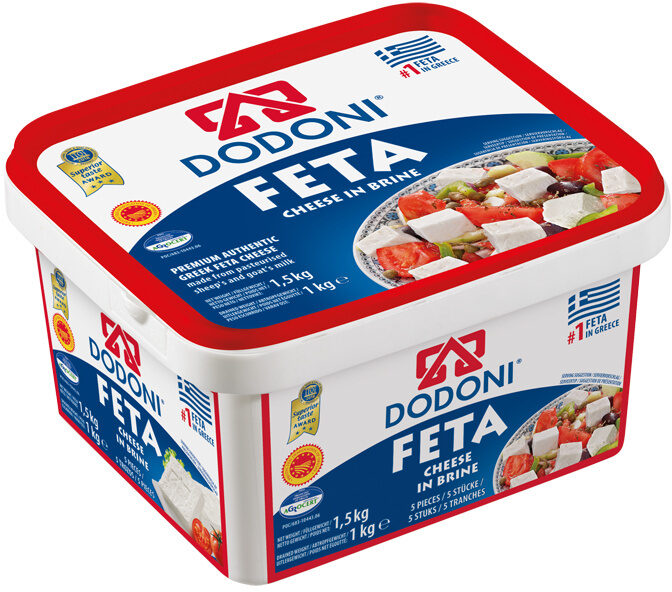
Dodoni Halloumi cheese

At a glance
Summary
Dodoni Halloumi cheese is made from a blend of cow's, goat's, and sheep's milk, which provides a rich source of protein and essential nutrients. The ingredient list is clean and traditional, with only milk, salt, mint, and rennet, reflecting minimal processing. Despite being classified as processed, the absence of harmful additives and the use of high-quality milk contribute to its high rating within the processed cheese category. Its plastic packaging can shed microplastics into the food and lowers its score.
Key ingredients 6
Pasteurized Cow's MilkGood
Cow's milk is a rich source of high-quality protein and essential nutrients like calcium and vitamin D. Pasteurization ensures safety by eliminating harmful bacteria while retaining nutritional value. It is a staple in dairy products, providing a creamy texture and flavor.
Risks
Some individuals may be lactose intolerant or allergic to cow's milk proteins.
Benefits
Provides essential nutrients such as calcium and vitamin D, which are important for bone health. High-quality protein supports muscle maintenance and growth.
Goat's MilkGood
Goat's milk is known for its digestibility and nutritional profile, offering a good source of protein, calcium, and medium-chain fatty acids. It is often easier to digest than cow's milk due to its smaller fat globules and different protein structure. Goat's milk can be a suitable alternative for those with cow's milk sensitivities.
Risks
Potential allergen for those with dairy allergies, though generally less allergenic than cow's milk.
Benefits
Easier to digest for some individuals and provides essential nutrients like calcium and protein. Contains beneficial fatty acids that may support metabolic health.
Sheep's MilkGood
Sheep's milk is nutrient-dense, offering higher levels of protein, calcium, and vitamins compared to cow's and goat's milk. It has a rich, creamy texture and is often used in specialty cheeses. The milk's unique composition makes it suitable for cheese production, enhancing flavor and texture.
Risks
May cause allergic reactions in individuals sensitive to dairy proteins.
Benefits
Rich in protein and essential nutrients, supporting bone health and muscle function. Its creamy texture enhances the quality of cheese products.
SaltNeutral
Salt is used as a preservative and flavor enhancer in cheese production. It helps control microbial growth and contributes to the cheese's taste profile. While essential in moderation, excessive salt intake can lead to health issues.
Risks
High sodium intake can contribute to hypertension and cardiovascular issues.
Benefits
Essential for flavor and preservation in cheese, contributing to its taste and shelf life.
MintNeutral
Mint is used for its aromatic properties, adding a fresh flavor to the cheese. It is a natural ingredient with minimal processing. While it enhances flavor, it does not significantly impact the nutritional profile of the cheese.
Benefits
Adds a refreshing flavor to the cheese, enhancing its sensory appeal.
RennetNeutral
Rennet is an enzyme used in cheese-making to coagulate milk, forming curds. It is essential for the cheese production process but does not contribute significant nutritional value. Rennet can be derived from animal or microbial sources.
Benefits
Crucial for cheese production, enabling the formation of curds and whey separation.
Processing
Processed Foods
Get the full breakdown in the Scout appTake Scout shopping
Scan any product to see lab results, healthy alternatives, and your personalized analysis.
Are you Dodoni? Fix an error Get the badge Get tested
Amazon pricing & content
Amazon price as of . Product prices and availability are accurate as of the date/time indicated and are subject to change. Any price and availability information displayed on Amazon.com at the time of purchase will apply to the purchase of this product.
CERTAIN CONTENT THAT APPEARS ON THIS SITE COMES FROM AMAZON. THIS CONTENT IS PROVIDED “AS IS” AND IS SUBJECT TO CHANGE OR REMOVAL AT ANY TIME.