
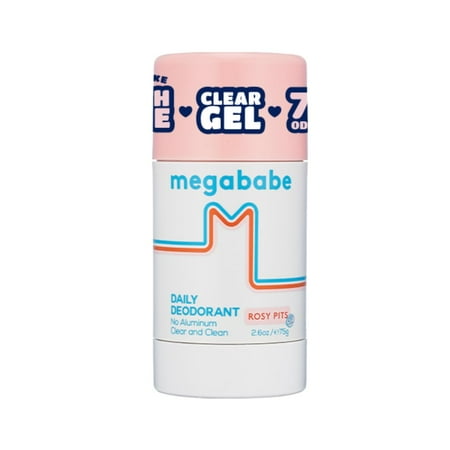
Megababe Rosy Pits Daily Deodorant Stick Aluminum-Free Clear & Clean 2.6 oz
Analysis updated August 2026 · How Scout scores
At a glance
Summary
This deodorant is aluminum-free, which is a positive aspect, but it contains both propylene glycol and synthetic fragrance, which are known to cause skin irritation and potential allergic reactions. While it includes beneficial ingredients like coconut oil and aloe vera for skin nourishment, the presence of these synthetics limits its overall rating. The product's processing level also suggests a moderate degree of formulation complexity.
Key ingredients 33
Saccharomyces FermentGood
Saccharomyces ferment is a probiotic ingredient that can help balance the skin's microbiome. It is known for its potential to improve skin health and reduce odor. It is derived from yeast fermentation.
Risks
Rarely, it may cause irritation in sensitive skin.
Benefits
Balances skin microbiome and reduces odor.
GlycerinGood
Glycerin is a humectant that attracts moisture to the skin, helping to keep it hydrated. It is widely used in skincare for its moisturizing properties. It is generally well-tolerated and non-irritating.
Risks
Very low risk of irritation.
Benefits
Moisturizes and hydrates the skin.
Zea Mays (Corn) StarchGood
Corn starch is a natural absorbent used to control moisture and reduce friction. It is a common alternative to talc in cosmetics. It is generally safe and non-irritating.
Risks
Low risk of irritation.
Benefits
Absorbs moisture and reduces friction.
Avena Sativa (Oat) Kernel FlourGood
Oat kernel flour is known for its soothing and anti-inflammatory properties. It is often used to calm irritated skin and provide moisture. It is derived from oats and is generally well-tolerated.
Risks
Very low risk of irritation.
Benefits
Soothes and calms irritated skin.
Salvia Officinalis (Sage) Leaf ExtractGood
Sage leaf extract is known for its antimicrobial and antioxidant properties. It helps reduce odor and protect the skin from oxidative stress. It is derived from sage leaves and is generally well-tolerated.
Risks
Low risk of irritation.
Benefits
Reduces odor and provides antioxidant protection.
Aloe Barbadensis Leaf JuiceGood
Aloe vera juice is renowned for its soothing and moisturizing properties. It helps calm irritated skin and provides hydration. It is derived from the aloe plant and is widely used in skincare.
Risks
Very low risk of irritation.
Benefits
Soothes and hydrates the skin.
Cocos Nucifera (Coconut) OilGood
Coconut oil is a natural emollient known for its moisturizing and antimicrobial properties. It helps nourish and protect the skin. It is derived from coconuts and is widely used in natural skincare products.
Risks
May cause breakouts in acne-prone skin.
Benefits
Moisturizes and protects the skin.
SqualaneGood
Squalane is a highly effective moisturizer that mimics the skin's natural oils. It helps maintain skin hydration and improve texture. It is derived from olives or sugarcane and is well-tolerated by most skin types.
Risks
Very low risk of irritation.
Benefits
Moisturizes and improves skin texture.
Camellia Sinensis Leaf ExtractGood
Green tea extract is rich in antioxidants and has anti-inflammatory properties. It helps protect the skin from oxidative stress and reduce irritation. It is derived from the leaves of the tea plant and is widely used in skincare.
Risks
Very low risk of irritation.
Benefits
Provides antioxidant protection and reduces irritation.
Salix Alba (Willow) Bark ExtractGood
Willow bark extract contains salicin, which has anti-inflammatory and exfoliating properties. It helps improve skin texture and reduce irritation. It is derived from the bark of the willow tree and is generally well-tolerated.
Risks
Low risk of irritation.
Benefits
Improves skin texture and reduces irritation.
Leuconostoc/Radish Root Ferment FiltrateGood
This ferment filtrate is a natural preservative with antimicrobial properties. It helps protect the product from microbial contamination. It is derived from radish root fermentation and is considered safe for use.
Risks
Very low risk of irritation.
Benefits
Provides natural antimicrobial protection.
Hydrogenated Olive Oil UnsaponifiablesGood
This ingredient is derived from olive oil and is used for its emollient properties. It helps moisturize and soften the skin. It is generally considered safe and non-irritating.
Risks
Very low risk of irritation.
Benefits
Moisturizes and softens the skin.
Water (Aqua)Neutral
Water is a common solvent used in cosmetic formulations. It helps dissolve other ingredients and provides a base for the product. It is generally considered safe and non-irritating.
Benefits
Acts as a solvent and hydrates the skin.
Sodium StearateNeutral
Sodium stearate is a salt derived from stearic acid, used as a thickener and stabilizer. It helps maintain the product's consistency. It is generally considered safe for use in cosmetics.
Risks
May cause mild irritation in very sensitive individuals.
Benefits
Stabilizes and thickens the product.
PropanediolNeutral
Propanediol is a glycol used as a solvent and skin-conditioning agent. It is considered a safer alternative to propylene glycol. It is derived from corn sugar fermentation.
Risks
Low risk of irritation.
Benefits
Acts as a solvent and skin conditioner.
Hydrated SilicaNeutral
Hydrated silica is used as an absorbent and anti-caking agent in cosmetics. It helps control moisture and improve product texture. It is generally considered safe for use.
Risks
Low risk of irritation.
Benefits
Absorbs moisture and improves texture.
Silica Cetyl SilylateNeutral
Silica cetyl silylate is used as a thickening agent and to improve the texture of cosmetic products. It helps provide a smooth application. It is generally considered safe for use.
Risks
Low risk of irritation.
Benefits
Improves texture and application.
EthylhexylglycerinNeutral
Ethylhexylglycerin is used as a skin-conditioning agent and preservative enhancer. It helps improve the efficacy of other preservatives. It is generally considered safe for use in cosmetics.
Risks
Low risk of irritation.
Benefits
Enhances preservative efficacy and conditions skin.
CaffeineNeutral
Caffeine is used in cosmetics for its antioxidant properties and potential to improve skin appearance. It may help reduce puffiness and improve circulation. It is generally considered safe for topical use.
Risks
Low risk of irritation.
Benefits
Provides antioxidant benefits and improves skin appearance.
ArginineNeutral
Arginine is an amino acid used for its skin-conditioning properties. It helps improve skin hydration and elasticity. It is generally considered safe for use in cosmetics.
Risks
Low risk of irritation.
Benefits
Improves skin hydration and elasticity.
Benzyl BenzoateNeutral
Benzyl benzoate is used as a fragrance ingredient and solvent in cosmetics. It is generally recognized as safe when used in appropriate concentrations. It can cause irritation in sensitive individuals.
Risks
Potential skin irritant.
Benefits
Enhances fragrance and acts as a solvent.
CitronellolNeutral
Citronellol is a fragrance ingredient derived from plants like rose and geranium. It is used to impart a floral scent to products. It can cause allergic reactions in sensitive individuals.
Risks
Potential allergen.
Benefits
Provides a floral fragrance.
GeraniolNeutral
Geraniol is a fragrance ingredient with a rose-like scent, found in essential oils like rose and citronella. It is used to enhance the fragrance profile of products. It can cause allergic reactions in sensitive individuals.
Risks
Potential allergen.
Benefits
Provides a rose-like fragrance.
Hexyl CinnamalNeutral
Hexyl cinnamal is a fragrance ingredient with a jasmine-like scent. It is used to impart a floral aroma to products. It can cause allergic reactions in sensitive individuals.
Risks
Potential allergen.
Benefits
Provides a jasmine-like fragrance.
Alpha-Isomethyl IononeNeutral
Alpha-isomethyl ionone is a fragrance ingredient with a floral scent. It is used to impart a pleasant aroma to products. It can cause allergic reactions in sensitive individuals.
Risks
Potential allergen.
Benefits
Provides a floral fragrance.
Propylene GlycolBad
Propylene glycol is a petroleum-derived compound used to improve texture and moisture retention. It is known to cause skin irritation in some individuals. Its origin from petroleum raises concerns about its environmental impact.
Risks
Potential skin irritant, especially for sensitive skin.
Benefits
Helps maintain moisture and improve product texture.
PhenoxyethanolBad
Processed additive flagged under Scout's ingredient doctrine.
Risks
Potential skin irritant in high concentrations.
Benefits
Prevents microbial growth and extends shelf life.
Potassium SorbateBad
Synthetic preservative — flagged in daily-use products.
Risks
Potential skin irritant in high concentrations.
Benefits
Prevents mold and yeast growth.
Sodium BenzoateBad
Synthetic preservative that can form benzene in the presence of vitamin C.
Risks
Potential skin irritant in high concentrations.
Benefits
Inhibits microbial growth and extends shelf life.
EugenolBad
Processed additive flagged under Scout's ingredient doctrine.
Risks
Potential allergen.
Benefits
Provides a spicy fragrance.
LimoneneBad
Processed additive flagged under Scout's ingredient doctrine.
Risks
Potential skin irritant when oxidized.
Benefits
Provides a citrus fragrance.
LinaloolBad
Processed additive flagged under Scout's ingredient doctrine.
Risks
Potential allergen.
Benefits
Provides a floral fragrance.
Fragrance (Parfum)Very Bad
Fragrance is a term used for a mixture of various scent chemicals, which can include phthalates. It is often associated with allergic reactions and skin irritation. The exact composition is usually undisclosed, raising concerns about potential harmful effects.
Risks
Potential allergen and skin irritant.
Benefits
Provides a pleasant scent.
Get the full breakdown in the Scout appTake Scout shopping
Scan any product to see lab results, healthy alternatives, and your personalized analysis.
Download on theApp Store GET IT ONGoogle PlayAmazon pricing & content
Amazon price as of . Product prices and availability are accurate as of the date/time indicated and are subject to change. Any price and availability information displayed on Amazon.com at the time of purchase will apply to the purchase of this product.
CERTAIN CONTENT THAT APPEARS ON THIS SITE COMES FROM AMAZON. THIS CONTENT IS PROVIDED “AS IS” AND IS SUBJECT TO CHANGE OR REMOVAL AT ANY TIME.