
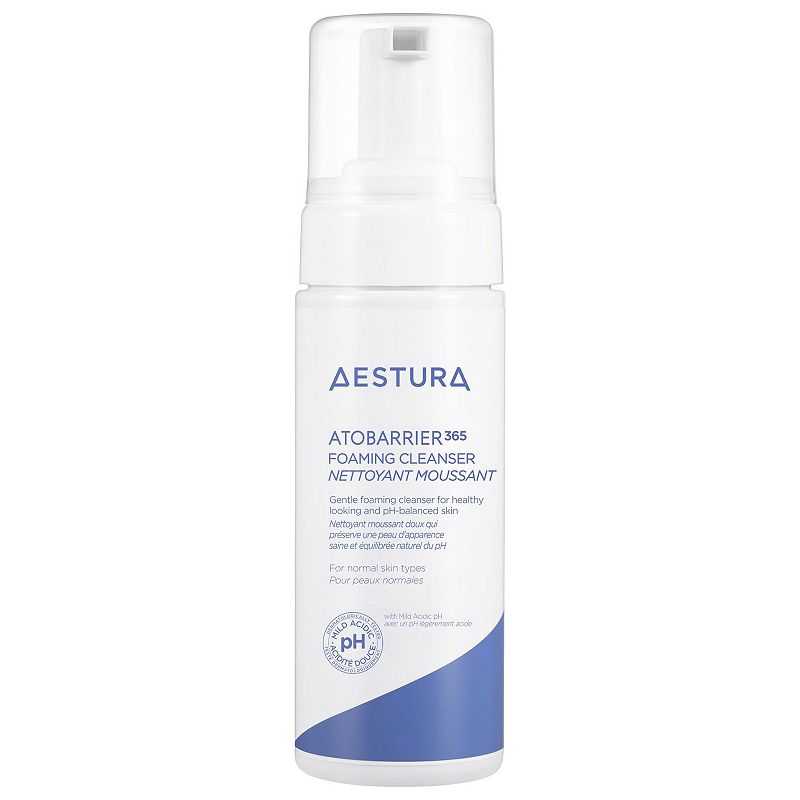
AESTURA ATOBARRIER365 Gentle pH-Balancing Foaming Cleanser for Hydrating Sensitive Skin, Size: 5.07 FL Oz, White Vibez
Analysis updated August 2026 · How Scout scores
At a glance
Summary
This cleanser features a range of beneficial ingredients such as glycerin, panthenol, ceramide NP, and sodium hyaluronate, which are known for their hydrating and skin-repairing properties. The formula avoids harsh surfactants like SLS and SLES, and does not contain synthetic fragrances or parabens, making it suitable for sensitive skin. However, the presence of some processed ingredients and the overall processing level slightly limit its score.
Key ingredients 28
PanthenolVery Good
Panthenol, also known as provitamin B5, is a moisturizing agent that helps to improve skin hydration and elasticity. It is soothing and can aid in skin repair.
Risks
Panthenol is generally safe, but in rare cases, it may cause mild skin irritation.
Benefits
Panthenol enhances skin hydration and has anti-inflammatory properties that can soothe irritated skin.
GlycerinGood
Glycerin is a well-known humectant that attracts moisture to the skin, helping to maintain hydration. It is non-irritating and suitable for sensitive skin types.
Risks
There are minimal risks associated with glycerin, though it may cause slight irritation in very rare cases.
Benefits
Glycerin helps to keep the skin hydrated and can improve the skin barrier function.
Ceramide NPGood
Ceramide NP is a lipid that helps to restore the skin barrier and retain moisture. It is essential for maintaining healthy skin structure.
Risks
Ceramide NP is considered safe with no significant risks reported.
Benefits
It strengthens the skin barrier and helps to prevent moisture loss, improving overall skin health.
Sodium HyaluronateGood
Sodium Hyaluronate is a form of hyaluronic acid that provides intense hydration by attracting and holding water in the skin. It is highly effective in reducing dryness and improving skin texture.
Risks
There are minimal risks, though it may cause slight irritation in very sensitive individuals.
Benefits
It significantly boosts skin hydration and can help reduce the appearance of fine lines and wrinkles.
TocopherolGood
Tocopherol, or Vitamin E, is an antioxidant that helps protect the skin from free radical damage. It also has moisturizing properties.
Risks
Tocopherol is generally safe, but high concentrations may cause skin irritation in sensitive individuals.
Benefits
It provides antioxidant protection and helps to maintain skin moisture levels.
Decyl GlucosideGood
Beneficial ingredient — whole-food or functional value in this product class.
Risks
Considered safe with minimal risk of irritation.
Benefits
Provides gentle cleansing suitable for sensitive skin.
WaterNeutral
Water is used as a solvent in cosmetic formulations, helping to dissolve other ingredients. It is essential for the formulation but does not provide direct skin benefits.
Risks
There are no risks associated with water in cosmetic formulations.
Benefits
Water acts as a base for the formulation, allowing other ingredients to be effectively delivered to the skin.
SorbitolNeutral
Sorbitol is a sugar alcohol used as a humectant and thickener in cosmetics. It helps to retain moisture in the skin.
Risks
Sorbitol is generally safe, but excessive use may lead to skin irritation.
Benefits
It helps to keep the skin hydrated by attracting moisture.
PropanediolNeutral
Propanediol is a glycol used as a solvent and skin-conditioning agent. It enhances the absorption of other ingredients.
Risks
Propanediol is considered safe, though it may cause mild irritation in sensitive skin.
Benefits
It improves the texture of formulations and enhances ingredient penetration.
Caprylyl/Capryl GlucosideNeutral
Caprylyl/Capryl Glucoside is a mild surfactant derived from sugar and fatty alcohols. It is used for its cleansing properties.
Risks
It is generally safe, but may cause mild irritation in sensitive individuals.
Benefits
Provides gentle cleansing without stripping the skin of natural oils.
Coco-GlucosideNeutral
Coco-Glucoside is a mild, non-ionic surfactant derived from coconut oil and glucose. It is used for its gentle cleansing properties.
Risks
It is considered safe, with minimal risk of irritation.
Benefits
Offers gentle cleansing suitable for sensitive skin.
Disodium CocoamphodiacetateNeutral
Disodium Cocoamphodiacetate is a mild surfactant used to enhance the foaming properties of cleansers. It is derived from coconut oil.
Risks
Generally safe, but may cause mild irritation in sensitive skin.
Benefits
Improves the texture and foaming ability of cleansing products.
Disodium Cocoyl GlutamateNeutral
Disodium Cocoyl Glutamate is a mild surfactant derived from coconut oil and glutamic acid. It is used for its gentle cleansing properties.
Risks
Considered safe with minimal risk of irritation.
Benefits
Provides gentle cleansing suitable for sensitive skin.
Sodium ChlorideNeutral
Sodium Chloride, or table salt, is used as a thickening agent in cosmetic formulations. It helps to adjust the viscosity of products.
Risks
Generally safe, but high concentrations may cause skin irritation.
Benefits
Helps to improve the texture and consistency of formulations.
BetaineNeutral
Betaine is a naturally derived humectant that helps to maintain skin hydration. It is known for its soothing properties.
Risks
Considered safe with minimal risk of irritation.
Benefits
Helps to keep the skin hydrated and soothes irritation.
Citric AcidNeutral
Citric Acid is used to adjust the pH of cosmetic formulations. It also has mild exfoliating properties.
Risks
High concentrations may cause skin irritation, especially in sensitive skin.
Benefits
Helps to maintain the stability and effectiveness of formulations.
Sodium MetaphosphateNeutral
Sodium Metaphosphate is used as a stabilizer and water softener in cosmetic formulations. It helps to improve product stability.
Risks
Considered safe with minimal risk of irritation.
Benefits
Enhances the stability and performance of formulations.
EthylhexylglycerinNeutral
Ethylhexylglycerin is used as a preservative and skin-conditioning agent. It helps to enhance the efficacy of other preservatives.
Risks
Generally safe, but may cause mild irritation in sensitive skin.
Benefits
Improves the preservation and conditioning properties of formulations.
Zinc ChlorideNeutral
Zinc Chloride is used as an astringent and antimicrobial agent in cosmetics. It helps to tighten the skin and reduce microbial growth.
Risks
High concentrations may cause skin irritation.
Benefits
Provides antimicrobial benefits and helps to tighten the skin.
MannitolNeutral
Mannitol is a sugar alcohol used as a humectant and stabilizer in cosmetics. It helps to retain moisture in the skin.
Risks
Generally safe, but excessive use may lead to skin irritation.
Benefits
Helps to keep the skin hydrated by attracting moisture.
Cetyl-Pg Hydroxyethyl PalmitamideNeutral
Cetyl-Pg Hydroxyethyl Palmitamide is used as a skin-conditioning agent. It helps to improve the texture and feel of the skin.
Risks
Considered safe with minimal risk of irritation.
Benefits
Enhances the smoothness and softness of the skin.
Stearic AcidNeutral
Stearic Acid is a fatty acid used as an emulsifier and thickener in cosmetics. It helps to stabilize formulations.
Risks
Generally safe, but high concentrations may cause skin irritation.
Benefits
Improves the texture and stability of formulations.
Hydrogenated LecithinNeutral
Hydrogenated Lecithin is used as an emulsifier and skin-conditioning agent. It helps to improve the texture and hydration of the skin.
Risks
Considered safe with minimal risk of irritation.
Benefits
Enhances the hydration and smoothness of the skin.
SilicaNeutral
Silica is used as an absorbent and anti-caking agent in cosmetics. It helps to improve the texture and feel of products.
Risks
Generally safe, but inhalation of fine particles may pose respiratory risks.
Benefits
Improves the texture and stability of formulations.
CholesterolNeutral
Cholesterol is used as a skin-conditioning agent and emollient. It helps to maintain the skin barrier and improve hydration.
Risks
Considered safe with minimal risk of irritation.
Benefits
Enhances the skin barrier and improves moisture retention.
SphingolipidsNeutral
Sphingolipids are used as skin-conditioning agents that help to maintain the skin barrier. They are essential for healthy skin structure.
Risks
Considered safe with minimal risk of irritation.
Benefits
Strengthens the skin barrier and improves overall skin health.
Hydroxypropyl MethylcelluloseNeutral
Hydroxypropyl Methylcellulose is used as a thickener and film-former in cosmetics. It helps to improve the texture and stability of formulations.
Risks
Considered safe with minimal risk of irritation.
Benefits
Enhances the texture and consistency of formulations.
MaltitolBad
A sugar alcohol used to label products sugar-free. It still raises blood sugar — roughly half as much as table sugar — and commonly causes bloating and digestive upset at the amounts found in bars and candy.
Risks
Generally safe, but excessive use may lead to skin irritation.
Benefits
Helps to keep the skin hydrated by attracting moisture.
Get the full breakdown in the Scout appTake Scout shopping
Scan any product to see lab results, healthy alternatives, and your personalized analysis.
Download on theApp Store GET IT ONGoogle PlayAmazon pricing & content
Amazon price as of . Product prices and availability are accurate as of the date/time indicated and are subject to change. Any price and availability information displayed on Amazon.com at the time of purchase will apply to the purchase of this product.
CERTAIN CONTENT THAT APPEARS ON THIS SITE COMES FROM AMAZON. THIS CONTENT IS PROVIDED “AS IS” AND IS SUBJECT TO CHANGE OR REMOVAL AT ANY TIME.