
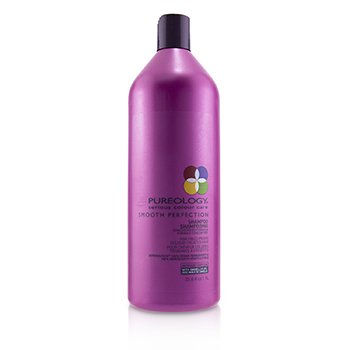

Pureology Smooth Perfection Shampoo 1000ml/33.8oz
Analysis updated August 2026 · How Scout scores
At a glance
Summary
This shampoo contains beneficial ingredients like sodium cocoyl isethionate and decyl glucoside, which are gentle surfactants derived from coconut oil, as well as moisturizing agents like shea butter and sesame oil. However, it also includes non-water-soluble silicones such as dimethicone and amodimethicone, which can cause buildup on hair, and synthetic fragrance, which may lead to irritation. The presence of sodium chloride as a thickener and several preservatives further impacts its overall ingredient safety and processing level.
Key ingredients 53
Sodium Cocoyl IsethionateVery Good
Sodium Cocoyl Isethionate is a gentle surfactant derived from coconut oil. It is known for its mildness and ability to cleanse without stripping natural oils. This makes it suitable for sensitive skin and hair.
Benefits
Provides gentle cleansing and maintains the natural moisture balance of hair.
Butyrospermum Parkii ButterVery Good
Butyrospermum Parkii Butter, or shea butter, is known for its moisturizing and conditioning properties. It is rich in vitamins and fatty acids, making it beneficial for hair health. It helps to nourish and protect hair from damage.
Benefits
Deeply moisturizes and conditions hair, providing nourishment and protection.
Decyl GlucosideGood
Decyl Glucoside is a mild, non-ionic surfactant derived from glucose and coconut oil. It is known for its gentle cleansing properties and is suitable for sensitive skin. It is biodegradable and considered environmentally friendly.
Benefits
Provides gentle cleansing and is environmentally friendly.
Coconut AcidGood
Coconut Acid is derived from coconut oil and is used for its cleansing and conditioning properties. It helps to maintain the natural moisture balance of the hair. It is generally considered safe and beneficial for hair care.
Benefits
Helps to cleanse and condition hair while maintaining moisture balance.
Sesamum Indicum Seed OilGood
Sesamum Indicum Seed Oil, or sesame oil, is used for its moisturizing and conditioning properties. It is rich in antioxidants and essential fatty acids. It helps to nourish and protect hair.
Benefits
Moisturizes and conditions hair, providing nourishment and protection.
Camellia Oleifera Seed OilGood
Camellia Oleifera Seed Oil is used for its moisturizing and conditioning properties. It is rich in antioxidants and essential fatty acids. It helps to nourish and protect hair.
Benefits
Moisturizes and conditions hair, providing nourishment and protection.
GlycerinGood
Glycerin is a humectant that helps to retain moisture in the hair and skin. It is derived from natural sources and is considered safe for use in cosmetics. It helps to improve the texture and feel of the product.
Benefits
Helps to retain moisture and improve product texture.
TocopherolGood
Tocopherol, or Vitamin E, is an antioxidant that helps to protect hair from damage. It is used for its moisturizing and conditioning properties. It helps to nourish and protect hair.
Benefits
Protects hair from damage and provides nourishment and conditioning.
Helianthus Annuus Seed ExtractGood
Helianthus Annuus Seed Extract, or sunflower seed extract, is used for its moisturizing and conditioning properties. It is rich in vitamins and fatty acids, making it beneficial for hair health. It helps to nourish and protect hair.
Benefits
Moisturizes and conditions hair, providing nourishment and protection.
Hydrolyzed Vegetable Protein Pg-Propyl SilanetriolGood
Hydrolyzed Vegetable Protein Pg-Propyl Silanetriol is used for its strengthening and conditioning properties. It helps to improve hair elasticity and reduce breakage. It is generally considered safe for use in cosmetics.
Benefits
Strengthens hair and reduces breakage, improving elasticity.
Pelargonium Graveolens Flower OilGood
Pelargonium Graveolens Flower Oil, or geranium oil, is used for its fragrance and conditioning properties. It is known for its soothing and balancing effects on the scalp. It is generally considered safe for use in cosmetics.
Benefits
Provides fragrance and conditioning, with soothing effects on the scalp.
Ascorbic AcidGood
Ascorbic Acid, or Vitamin C, is an antioxidant that helps to protect hair from damage. It is used for its conditioning and brightening properties. It helps to nourish and protect hair.
Benefits
Protects hair from damage and provides conditioning and brightening effects.
WaterNeutral
Water is a common solvent used in cosmetic formulations. It helps to dissolve other ingredients and provides a base for the product. It does not have any direct benefits or risks in this context.
Benefits
Water acts as a solvent and helps in the application of the product.
Disodium Laureth SulfosuccinateNeutral
Disodium Laureth Sulfosuccinate is a mild surfactant used for its cleansing properties. It is less irritating than traditional sulfates. It helps in creating a lather and removing dirt and oil.
Risks
May cause mild irritation in very sensitive individuals.
Benefits
Provides effective cleansing with reduced irritation compared to harsher sulfates.
Sodium Lauryl SulfoacetateNeutral
Sodium Lauryl Sulfoacetate is a mild surfactant that helps in foaming and cleansing. It is considered less irritating than traditional sulfates. It is often used in formulations for sensitive skin.
Risks
May cause mild irritation in sensitive individuals.
Benefits
Offers gentle cleansing and foaming properties.
Glycol DistearateNeutral
Glycol Distearate is used as an opacifying agent and to give a pearlescent appearance. It also acts as a skin conditioning agent. It is generally considered safe for use in cosmetics.
Benefits
Enhances the appearance and texture of the product.
Cocamidopropyl BetaineNeutral
Cocamidopropyl Betaine is a surfactant derived from coconut oil. It is used to increase the foaming capacity of cleansing products. It is generally considered mild and safe for use.
Risks
May cause mild irritation in sensitive individuals.
Benefits
Enhances foaming and cleansing properties of the product.
Glycereth-26Neutral
Glycereth-26 is a humectant that helps to retain moisture in the hair and skin. It is derived from glycerin and is considered safe for use in cosmetics. It helps to improve the texture and feel of the product.
Benefits
Helps to retain moisture and improve product texture.
Sodium HydroxideNeutral
Sodium Hydroxide is used to adjust the pH of cosmetic products. It is a strong base and must be used in small amounts to avoid irritation. It is generally considered safe when used appropriately.
Risks
Can cause irritation if used in high concentrations.
Benefits
Helps to maintain the desired pH level of the product.
Sodium IsethionateNeutral
Sodium Isethionate is a surfactant used for its cleansing properties. It is derived from isethionic acid and is considered mild. It helps to create a creamy lather and cleanse the hair.
Benefits
Provides mild cleansing and helps create a creamy lather.
Citric AcidNeutral
Citric Acid is used to adjust the pH of cosmetic products. It is a natural acid found in citrus fruits and is generally considered safe. It helps to maintain the stability and effectiveness of the product.
Risks
Can cause mild irritation in sensitive individuals.
Benefits
Helps to adjust pH and maintain product stability.
PPG-5-Ceteth-20Neutral
PPG-5-Ceteth-20 is an emulsifying agent used to blend oil and water-based ingredients. It helps to improve the texture and consistency of the product. It is generally considered safe for use in cosmetics.
Benefits
Improves texture and consistency of the product.
Polyquaternium-7Neutral
Polyquaternium-7 is a conditioning agent used to improve the texture and feel of hair. It helps to reduce static and enhance manageability. It is generally considered safe for use in hair care products.
Benefits
Improves hair texture and reduces static.
Polyquaternium-10Neutral
Polyquaternium-10 is a conditioning polymer that helps to improve hair texture and manageability. It is used to reduce static and enhance the feel of hair. It is generally considered safe for use in cosmetics.
Benefits
Enhances hair texture and reduces static.
Sodium ChlorideNeutral
Standard formulation ingredient — neither beneficial nor harmful at typical use.
Risks
Can cause dryness and irritation of the scalp.
Benefits
Used to thicken the product and improve texture.
Coco-BetaineNeutral
Coco-Betaine is a surfactant derived from coconut oil. It is used to enhance the foaming and cleansing properties of shampoos. It is generally considered mild and safe for use.
Risks
May cause mild irritation in sensitive individuals.
Benefits
Enhances foaming and cleansing properties of the product.
PEG-55 Propylene Glycol OleateNeutral
PEG-55 Propylene Glycol Oleate is an emulsifier used to blend oil and water-based ingredients. It helps to improve the texture and consistency of the product. It is generally considered safe for use in cosmetics.
Benefits
Improves texture and consistency of the product.
CarbomerNeutral
Carbomer is used as a thickening agent in cosmetic formulations. It helps to stabilize and improve the texture of the product. It is generally considered safe for use in cosmetics.
Benefits
Improves texture and stability of the product.
C11-15 Pareth-7Neutral
C11-15 Pareth-7 is an emulsifying agent used to blend oil and water-based ingredients. It helps to improve the texture and consistency of the product. It is generally considered safe for use in cosmetics.
Benefits
Improves texture and consistency of the product.
Benzoic AcidNeutral
Benzoic Acid is used as a preservative in cosmetic products. It helps to prevent the growth of bacteria and mold. It is generally considered safe for use in cosmetics.
Risks
May cause mild irritation in sensitive individuals.
Benefits
Prevents microbial growth and extends product shelf life.
Butylene GlycolNeutral
Butylene Glycol is used as a humectant and solvent in cosmetics. It helps to retain moisture and improve the texture of the product. It is generally considered safe for use in cosmetics.
Risks
May cause mild irritation in sensitive individuals.
Benefits
Helps to retain moisture and improve product texture.
Laureth-9Neutral
Laureth-9 is used as an emulsifier and surfactant in cosmetic formulations. It helps to blend oil and water-based ingredients and improve texture. It is generally considered safe for use in cosmetics.
Benefits
Improves texture and consistency of the product.
C12-13 Pareth-23Neutral
C12-13 Pareth-23 is an emulsifying agent used to blend oil and water-based ingredients. It helps to improve the texture and consistency of the product. It is generally considered safe for use in cosmetics.
Benefits
Improves texture and consistency of the product.
C12-13 Pareth-3Neutral
C12-13 Pareth-3 is an emulsifying agent used to blend oil and water-based ingredients. It helps to improve the texture and consistency of the product. It is generally considered safe for use in cosmetics.
Benefits
Improves texture and consistency of the product.
Trideceth-12Neutral
Trideceth-12 is an emulsifying agent used to blend oil and water-based ingredients. It helps to improve the texture and consistency of the product. It is generally considered safe for use in cosmetics.
Benefits
Improves texture and consistency of the product.
Salicylic AcidNeutral
Salicylic Acid is used for its exfoliating properties and to help with dandruff control. It helps to remove dead skin cells and reduce scalp flakiness. It is generally considered safe for use in cosmetics.
Risks
May cause irritation in sensitive individuals.
Benefits
Helps to exfoliate the scalp and reduce dandruff.
Magnesium NitrateNeutral
Magnesium Nitrate is used as a stabilizer in cosmetic formulations. It helps to maintain the stability and effectiveness of the product. It is generally considered safe for use in cosmetics.
Benefits
Helps to stabilize the product and maintain effectiveness.
Benzophenone-4Neutral
Benzophenone-4 is used as a UV filter in cosmetic products. It helps to protect hair from UV damage and color fading. It is generally considered safe for use in cosmetics.
Risks
May cause mild irritation in sensitive individuals.
Benefits
Protects hair from UV damage and color fading.
Magnesium ChlorideNeutral
Magnesium Chloride is used as a stabilizer in cosmetic formulations. It helps to maintain the stability and effectiveness of the product. It is generally considered safe for use in cosmetics.
Benefits
Helps to stabilize the product and maintain effectiveness.
CI 15510Neutral
CI 15510 is a colorant used to impart color to cosmetic products. It is generally considered safe for use in cosmetics. It helps to enhance the appearance of the product.
Benefits
Enhances the appearance of the product with color.
CI 14700Neutral
CI 14700 is a colorant used to impart color to cosmetic products. It is generally considered safe for use in cosmetics. It helps to enhance the appearance of the product.
Benefits
Enhances the appearance of the product with color.
Sodium Lauroyl SarcosinateBad
Processed additive flagged under Scout's ingredient doctrine.
Risks
May cause mild irritation in some individuals.
Benefits
Provides gentle cleansing and is suitable for sensitive skin.
Divinyldimethicone/Dimethicone CopolymerBad
Dimethicone is a silicone-based polymer used for its smoothing properties. It can cause buildup on hair over time, leading to brittleness. It is not water-soluble, which can make it difficult to remove.
Risks
Can cause buildup on hair, leading to potential brittleness and dullness.
Benefits
Provides a smooth, silky feel to hair.
ParfumBad
Parfum, or fragrance, is used to impart scent to the product. It can contain a mixture of various chemicals, some of which may cause irritation or allergic reactions. The exact composition is often undisclosed, leading to concerns about potential allergens.
Risks
Potential for allergic reactions and irritation due to undisclosed chemical composition.
Benefits
Provides a pleasant scent to the product.
AmodimethiconeBad
Amodimethicone is a silicone-based conditioning agent. It can cause buildup on hair over time, leading to potential brittleness. It is not water-soluble, which can make it difficult to remove.
Risks
Can cause buildup on hair, leading to potential brittleness and dullness.
Benefits
Provides conditioning and smoothness to hair.
Propylene GlycolBad
Processed additive flagged under Scout's ingredient doctrine.
Risks
May cause mild irritation in sensitive individuals.
Benefits
Helps to retain moisture and improve product texture.
Sodium BenzoateBad
Synthetic preservative that can form benzene in the presence of vitamin C.
Risks
May cause mild irritation in sensitive individuals.
Benefits
Prevents microbial growth and extends product shelf life.
PhenoxyethanolBad
Phenoxyethanol is used as a preservative in cosmetic products. It can cause irritation and allergic reactions in some individuals. It is generally considered safe in low concentrations.
Risks
Potential for irritation and allergic reactions.
Benefits
Prevents microbial growth and extends product shelf life.
Benzyl AlcoholBad
Benzyl Alcohol is used as a preservative and solvent in cosmetics. It can cause irritation and dryness, especially in sensitive individuals. It is generally considered safe in low concentrations.
Risks
Can cause irritation and dryness, especially in sensitive individuals.
Benefits
Prevents microbial growth and acts as a solvent.
MethylchloroisothiazolinoneBad
Methylchloroisothiazolinone is used as a preservative in cosmetic products. It can cause allergic reactions and irritation in some individuals. It is generally considered safe in low concentrations.
Risks
Potential for allergic reactions and irritation.
Benefits
Prevents microbial growth and extends product shelf life.
Sorbic AcidBad
Processed additive flagged under Scout's ingredient doctrine.
Risks
May cause mild irritation in sensitive individuals.
Benefits
Prevents microbial growth and extends product shelf life.
Potassium SorbateBad
Synthetic preservative — flagged in daily-use products.
Risks
May cause mild irritation in sensitive individuals.
Benefits
Prevents microbial growth and extends product shelf life.
MethylisothiazolinoneVery Bad
Methylisothiazolinone is used as a preservative in cosmetic products. It can cause allergic reactions and irritation in some individuals. It is generally considered safe in low concentrations.
Risks
Potential for allergic reactions and irritation.
Benefits
Prevents microbial growth and extends product shelf life.
Get the full breakdown in the Scout appTake Scout shopping
Scan any product to see lab results, healthy alternatives, and your personalized analysis.
Download on theApp Store GET IT ONGoogle Play