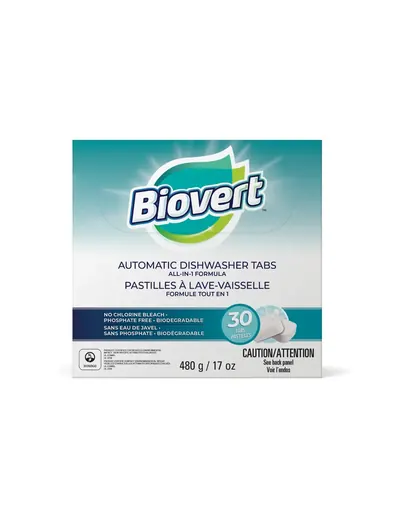
Bio-Vert Dishwasher Tablets
At a glance
Summary
Bio-Vert Dishwasher Tablets contain a mix of ingredients that are generally safe for indoor use and have a moderate environmental impact. The product includes biodegradable components like sodium citrate and citric acid, which are beneficial for cleaning and reducing mineral deposits. However, the presence of polyethylene glycol and non-ionic surfactants, which are synthetic, slightly lowers the score due to potential environmental concerns.
Key ingredients 13
Sodium CitrateGood
Sodium citrate is a salt derived from citric acid, commonly used as a water softener in cleaning products. It helps to prevent mineral deposits on dishes and enhances the effectiveness of detergents. It is biodegradable and considered safe for the environment.
Risks
There are minimal risks associated with sodium citrate in cleaning products.
Benefits
It is effective in softening water and improving cleaning performance without harmful environmental impact.
Citric AcidNeutral
Common acidulant and preservative — safe at typical use levels, neither beneficial nor harmful.
Risks
Citric acid can cause mild skin irritation if in direct contact with skin.
Benefits
It is effective in removing mineral deposits and enhancing the cleaning power of detergents while being safe for the environment.
Sodium CarbonateNeutral
Sodium carbonate, also known as washing soda, is used to soften water and enhance the cleaning power of detergents. It is a common ingredient in cleaning products due to its ability to remove grease and stains. It is generally considered safe and effective for household cleaning.
Risks
Direct contact with sodium carbonate can cause skin and eye irritation.
Benefits
It effectively softens water and boosts the cleaning power of detergents.
Sodium SulfateNeutral
Sodium sulfate is a filler used in detergents to help distribute the active ingredients evenly. It is a naturally occurring mineral and is considered safe for use in cleaning products. It does not contribute to the cleaning action but helps in the formulation of the product.
Risks
There are minimal risks associated with sodium sulfate in cleaning products.
Benefits
It helps in the even distribution of active ingredients in the detergent.
Sodium ChlorideNeutral
Sodium chloride, or table salt, is used in cleaning products as a thickening agent and to help stabilize the formula. It is a natural mineral and is considered safe for use in household products. It does not have a direct cleaning function but supports the overall formulation.
Risks
There are minimal risks associated with sodium chloride in cleaning products.
Benefits
It helps stabilize the formula and acts as a thickening agent.
Sodium Carbonate PeroxideNeutral
Sodium carbonate peroxide is a bleaching agent that releases hydrogen peroxide when dissolved in water. It is used in cleaning products for its stain-removing and whitening properties. It is considered a safer alternative to chlorine bleach.
Risks
Direct contact can cause irritation to skin and eyes.
Benefits
It effectively removes stains and whitens without the harshness of chlorine bleach.
Polyethylene GlycolNeutral
Polyethylene glycol is used as a dispersing agent in cleaning products to help dissolve and distribute other ingredients. It is a synthetic polymer that is generally considered safe for use in household products. It does not have a direct cleaning function but aids in the formulation.
Risks
There are minimal risks associated with polyethylene glycol in cleaning products.
Benefits
It helps in the dispersion and distribution of ingredients in the product.
TAEDNeutral
TAED (tetraacetylethylenediamine) is used as a bleach activator in cleaning products to enhance the effectiveness of peroxide-based bleaches. It is considered safe and effective for use in household cleaning. It helps improve the stain-removing power of detergents.
Risks
There are minimal risks associated with TAED in cleaning products.
Benefits
It enhances the effectiveness of peroxide-based bleaches, improving stain removal.
Sodium PolyacrylateNeutral
Sodium polyacrylate is used as a water-absorbing agent in cleaning products to help control moisture. It is a synthetic polymer that is considered safe for use in household products. It does not have a direct cleaning function but aids in moisture control.
Risks
There are minimal risks associated with sodium polyacrylate in cleaning products.
Benefits
It helps control moisture and improve the stability of the product.
SorbitolNeutral
Sorbitol is used as a humectant in cleaning products to help retain moisture and prevent drying out. It is a sugar alcohol that is considered safe for use in household products. It does not have a direct cleaning function but aids in maintaining product consistency.
Risks
There are minimal risks associated with sorbitol in cleaning products.
Benefits
It helps retain moisture and maintain the consistency of the product.
Sodium DisilicateNeutral
Sodium disilicate is used as a builder in cleaning products to enhance the effectiveness of surfactants. It helps to soften water and improve the cleaning power of detergents. It is considered safe for use in household cleaning products.
Risks
Direct contact can cause irritation to skin and eyes.
Benefits
It enhances the cleaning power of detergents by softening water.
Non-Ionic SurfactantsNeutral
Non-ionic surfactants are used in cleaning products for their ability to break down grease and dirt. They are generally considered milder and less irritating than ionic surfactants. They are effective in cleaning without leaving residues.
Risks
There are minimal risks associated with non-ionic surfactants in cleaning products.
Benefits
They effectively clean without leaving residues and are generally milder than ionic surfactants.
EnzymesNeutral
Standard formulation ingredient — neither beneficial nor harmful at typical use.
Risks
There are minimal risks associated with enzymes in cleaning products.
Benefits
They enhance cleaning performance by breaking down specific stains and are environmentally friendly.
Get the full breakdown in the Scout appTake Scout shopping
Scan any product to see lab results, healthy alternatives, and your personalized analysis.