
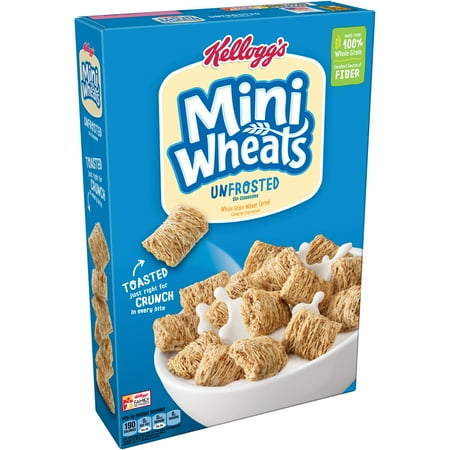


Kellogg's Mini-Wheats Cereal Bite Size Unfrosted 18oz
Analysis updated May 2026 · How Scout scores
At a glance
Summary
This cereal is made primarily from whole grain wheat, which is a minimally processed ingredient rich in dietary fiber and essential nutrients. The product is fortified with vitamins and minerals, enhancing its nutritional profile. However, the presence of BHT, a synthetic preservative, slightly detracts from its overall healthiness, although its impact is minimal given the otherwise clean ingredient list.
Key ingredients 10
Whole grain wheatVery Good
Whole grain wheat is a minimally processed ingredient rich in dietary fiber. It provides essential nutrients such as B vitamins and minerals. The use of whole grains supports digestive health and may reduce the risk of chronic diseases.
Benefits
Rich in dietary fiber, which supports digestive health and helps maintain healthy blood sugar levels. Provides essential nutrients like B vitamins and minerals.
NiacinamideGood
Niacinamide is a form of vitamin B3 used to fortify foods and support metabolic health. It plays a crucial role in energy production and DNA repair. Fortification ensures adequate intake of this essential nutrient.
Benefits
Supports energy production and DNA repair, contributing to overall metabolic health.
Vitamin B6Good
Vitamin B6 is an essential nutrient that supports brain health and immune function. It is added to foods to ensure adequate intake and prevent deficiencies. This vitamin is crucial for neurotransmitter synthesis and homocysteine metabolism.
Benefits
Supports brain health, immune function, and neurotransmitter synthesis.
Vitamin B2Good
Vitamin B2, or riboflavin, is essential for energy production and cellular function. It is added to foods to prevent deficiencies and support overall health. Riboflavin also acts as an antioxidant, protecting cells from oxidative damage.
Benefits
Supports energy production and acts as an antioxidant, protecting cells from oxidative damage.
Vitamin B1Good
Vitamin B1, or thiamin, is crucial for carbohydrate metabolism and nerve function. It is added to foods to ensure adequate intake and prevent deficiencies. Thiamin supports energy production and nervous system health.
Benefits
Supports carbohydrate metabolism and nerve function, contributing to energy production and nervous system health.
Zinc oxideGood
Zinc oxide is a form of zinc used to fortify foods and support immune function. It is essential for enzyme function and cellular metabolism. Fortification helps prevent zinc deficiency, which can impair immune response.
Risks
Excessive zinc intake can interfere with copper absorption, but this is unlikely from fortified foods alone.
Benefits
Supports immune function and is essential for enzyme function and cellular metabolism.
Vitamin B12Good
Vitamin B12 is essential for red blood cell formation and neurological function. It is added to foods to prevent deficiencies, especially in populations at risk. B12 is crucial for DNA synthesis and maintaining healthy nerve cells.
Benefits
Supports red blood cell formation and neurological function, crucial for DNA synthesis and nerve health.
Reduced ironNeutral
Standard formulation ingredient — neither beneficial nor harmful at typical use.
Risks
Excessive iron intake can lead to toxicity, but this is rare from fortified foods alone.
Benefits
Supports oxygen transport in the blood and helps prevent iron deficiency anemia.
Folic acidNeutral
Standard formulation ingredient — neither beneficial nor harmful at typical use.
Risks
Excessive intake may mask vitamin B12 deficiency, but this is rare with normal consumption.
Benefits
Prevents neural tube defects and supports DNA synthesis and cell division.
BHTBad
BHT is a synthetic antioxidant used to preserve freshness in foods. It is controversial due to potential health concerns, including its classification as a possible carcinogen. While it helps extend shelf life, its safety in food products is debated.
Risks
Potential health concerns include its classification as a possible carcinogen and links to other health issues when consumed in large amounts.
Processing
Unprocessed or Minimally Processed Foods
Get the full breakdown in the Scout appTake Scout shopping
Scan any product to see lab results, healthy alternatives, and your personalized analysis.
Download on theApp Store GET IT ONGoogle Play