
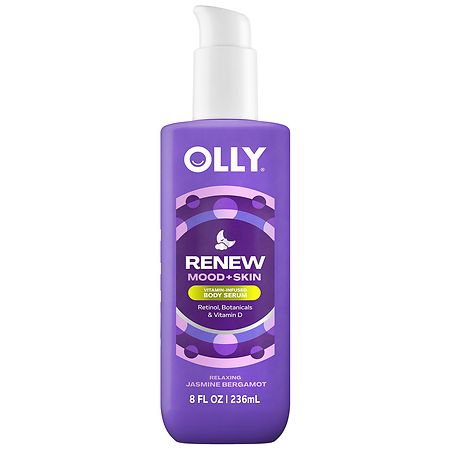
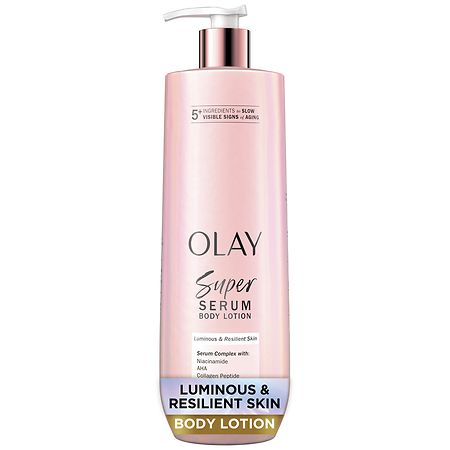
OLLY Renew Body Serum Lotion Repairs Skin Barrier & Soothe Stress Jasmine Bergamot 8 oz
Analysis updated July 2026 · How Scout scores
At a glance
Summary
This body serum lotion contains beneficial ingredients such as niacinamide, squalane, aloe vera, and chamomile extract, which are known for their skin-soothing and barrier-repairing properties. However, the presence of synthetic fragrance and dimethicone, along with phenoxyethanol as a preservative, slightly lowers its score due to potential irritation and synthetic content. The product is moderately processed, which also impacts its overall rating.
Key ingredients 37
Cocos Nucifera OilVery Good
Coconut oil is a natural emollient that provides deep hydration and nourishment to the skin. It is rich in fatty acids and has antimicrobial properties. It is well-tolerated and beneficial for dry skin.
Risks
It may cause breakouts in acne-prone skin due to its comedogenic nature.
Benefits
It provides deep hydration and has antimicrobial properties.
SqualaneVery Good
Squalane is a highly effective emollient and natural antioxidant. It helps to hydrate and protect the skin barrier. It is non-comedogenic and suitable for all skin types.
Risks
There are minimal risks associated with this ingredient.
Benefits
It hydrates and protects the skin barrier, and is suitable for all skin types.
PanthenolVery Good
Panthenol, also known as provitamin B5, is a humectant that attracts moisture to the skin. It helps to improve skin hydration and reduce inflammation. It is well-tolerated and beneficial for sensitive skin.
Risks
There are minimal risks associated with this ingredient.
Benefits
It improves skin hydration and reduces inflammation.
TocopherolVery Good
Tocopherol, or Vitamin E, is a powerful antioxidant that helps to protect the skin from free radical damage. It also provides moisturizing benefits and supports skin barrier function. It is well-tolerated and beneficial for most skin types.
Risks
There are minimal risks associated with this ingredient.
Benefits
It protects the skin from free radical damage and provides moisturizing benefits.
Aloe Barbadensis Leaf JuiceVery Good
Aloe Vera is known for its soothing and hydrating properties. It helps to calm irritated skin and provides moisture. It is well-tolerated and beneficial for sensitive skin.
Risks
There are minimal risks associated with this ingredient.
Benefits
It soothes and hydrates the skin, making it beneficial for sensitive skin.
Calendula Officinalis Flower ExtractVery Good
Calendula Extract is known for its soothing and anti-inflammatory properties. It helps to calm irritated skin and promote healing. It is beneficial for sensitive and reactive skin types.
Risks
There are minimal risks associated with this ingredient.
Benefits
It soothes irritated skin and promotes healing.
Chamomilla Recutita Flower ExtractVery Good
Chamomile Extract is known for its calming and anti-inflammatory properties. It helps to soothe irritated skin and reduce redness. It is beneficial for sensitive and reactive skin types.
Risks
There are minimal risks associated with this ingredient.
Benefits
It soothes irritated skin and reduces redness.
Caprylic/Capric TriglycerideGood
Caprylic/Capric Triglyceride is an emollient derived from coconut oil and glycerin. It helps to moisturize and replenish the skin. It is generally well-tolerated and non-irritating.
Risks
There are minimal risks associated with this ingredient, though it may cause mild irritation in very sensitive individuals.
Benefits
It provides moisturizing benefits and helps to improve skin texture.
Cetearyl OlivateGood
Cetearyl Olivate is an emulsifier derived from olive oil. It helps to blend oil and water components in the product. It is known for its moisturizing properties and is generally well-tolerated.
Risks
There are minimal risks associated with this ingredient.
Benefits
It provides moisturizing benefits and helps to stabilize the product formulation.
NiacinamideGood
Niacinamide is a form of Vitamin B3 that is known for its skin-soothing and anti-inflammatory properties. It helps to improve skin texture and reduce the appearance of pores. It is well-tolerated and beneficial for most skin types.
Risks
There are minimal risks, though overuse may cause mild irritation.
Benefits
It improves skin texture, reduces inflammation, and enhances the skin barrier.
Sorbitan OlivateGood
Sorbitan Olivate is an emulsifier derived from olive oil. It helps to blend oil and water components in the product. It is known for its moisturizing properties and is generally well-tolerated.
Risks
There are minimal risks associated with this ingredient.
Benefits
It provides moisturizing benefits and helps to stabilize the product formulation.
GlycerinGood
Glycerin is a humectant that attracts moisture to the skin. It helps to improve skin hydration and maintain the skin barrier. It is well-tolerated and beneficial for all skin types.
Risks
There are minimal risks associated with this ingredient.
Benefits
It improves skin hydration and helps maintain the skin barrier.
Dipotassium GlycyrrhizateGood
Dipotassium Glycyrrhizate is derived from licorice root and is known for its anti-inflammatory and soothing properties. It helps to calm irritated skin and reduce redness. It is beneficial for sensitive and reactive skin types.
Risks
There are minimal risks associated with this ingredient.
Benefits
It calms irritated skin and reduces redness, making it beneficial for sensitive skin.
Sodium HyaluronateGood
Sodium Hyaluronate is a form of hyaluronic acid that provides intense hydration to the skin. It helps to retain moisture and improve skin elasticity. It is well-tolerated and beneficial for all skin types.
Risks
There are minimal risks associated with this ingredient.
Benefits
It provides intense hydration and improves skin elasticity.
Retinyl PalmitateGood
Retinyl Palmitate is a form of Vitamin A that helps to improve skin texture and reduce signs of aging. It promotes cell turnover and enhances skin radiance. It is beneficial for improving skin tone and texture.
Risks
It may cause mild irritation or sensitivity, especially in high concentrations.
Benefits
It improves skin texture and reduces signs of aging.
Ascorbic AcidGood
Ascorbic Acid, or Vitamin C, is a powerful antioxidant that helps to brighten the skin and reduce signs of aging. It promotes collagen production and enhances skin radiance. It is beneficial for improving skin tone and texture.
Risks
There are minimal risks, though it may cause mild irritation in sensitive skin.
Benefits
It brightens the skin and reduces signs of aging.
WaterNeutral
Water is a common solvent used in cosmetics to dissolve other ingredients. It helps in the application and absorption of the product. It does not have any direct benefits or risks.
Risks
There are no significant risks associated with water in cosmetics.
Benefits
Water helps in the application and absorption of the product.
PropanediolNeutral
Propanediol is a glycol that acts as a solvent and humectant in cosmetics. It helps to improve the texture and spreadability of the product. It is generally considered safe for use in cosmetics.
Risks
There are minimal risks, though it may cause mild irritation in sensitive skin.
Benefits
It helps to improve the texture and spreadability of the product.
Cetearyl AlcoholNeutral
Cetearyl Alcohol is a fatty alcohol used as an emollient and thickener in cosmetics. It helps to soften the skin and stabilize emulsions. It is generally considered safe and non-irritating.
Risks
There are minimal risks associated with this ingredient.
Benefits
It helps to soften the skin and stabilize the product formulation.
Potassium Cetyl PhosphateNeutral
Potassium Cetyl Phosphate is an emulsifying agent used to stabilize cosmetic formulations. It helps to blend oil and water components in the product. It is generally considered safe for use in cosmetics.
Risks
There are minimal risks associated with this ingredient.
Benefits
It helps to stabilize the product formulation.
Hydroxystearic AcidNeutral
Hydroxystearic Acid is a fatty acid used as a thickener and emulsifier in cosmetics. It helps to stabilize formulations and improve texture. It is generally considered safe for use in cosmetics.
Risks
There are minimal risks associated with this ingredient.
Benefits
It helps to stabilize formulations and improve texture.
EthylhexylglycerinNeutral
Ethylhexylglycerin is a preservative and skin-conditioning agent. It helps to enhance the efficacy of other preservatives and provides mild moisturizing benefits. It is generally considered safe for use in cosmetics.
Risks
There are minimal risks associated with this ingredient.
Benefits
It enhances the efficacy of preservatives and provides mild moisturizing benefits.
GlucomannanNeutral
Glucomannan is a polysaccharide used as a thickener and emulsifier in cosmetics. It helps to stabilize formulations and improve texture. It is generally considered safe for use in cosmetics.
Risks
There are minimal risks associated with this ingredient.
Benefits
It helps to stabilize formulations and improve texture.
Lactic AcidNeutral
Standard formulation ingredient — neither beneficial nor harmful at typical use.
Risks
It may cause mild irritation or sensitivity, especially in high concentrations.
Benefits
It exfoliates and improves skin texture, promoting a more even skin tone.
Stearic AcidNeutral
Stearic Acid is a fatty acid used as a thickener and emulsifier in cosmetics. It helps to stabilize formulations and improve texture. It is generally considered safe for use in cosmetics.
Risks
There are minimal risks associated with this ingredient.
Benefits
It helps to stabilize formulations and improve texture.
Palmitic AcidNeutral
Palmitic Acid is a fatty acid used as an emollient and thickener in cosmetics. It helps to soften the skin and stabilize formulations. It is generally considered safe for use in cosmetics.
Risks
There are minimal risks associated with this ingredient.
Benefits
It helps to soften the skin and stabilize formulations.
PantolactoneNeutral
Pantolactone is a lactone used as a conditioning agent in cosmetics. It helps to improve the texture and feel of the product. It is generally considered safe for use in cosmetics.
Risks
There are minimal risks associated with this ingredient.
Benefits
It helps to improve the texture and feel of the product.
Xanthan GumNeutral
Xanthan Gum is a polysaccharide used as a thickener and stabilizer in cosmetics. It helps to improve the texture and consistency of the product. It is generally considered safe for use in cosmetics.
Risks
There are minimal risks associated with this ingredient.
Benefits
It helps to improve the texture and consistency of the product.
ErgocalciferolNeutral
Ergocalciferol, or Vitamin D2, is used in cosmetics for its skin-conditioning properties. It helps to support skin health and improve texture. It is generally considered safe for use in cosmetics.
Risks
There are minimal risks associated with this ingredient.
Benefits
It supports skin health and improves texture.
CyanocobalaminNeutral
Cyanocobalamin, or Vitamin B12, is used in cosmetics for its skin-conditioning properties. It helps to support skin health and improve texture. It is generally considered safe for use in cosmetics.
Risks
There are minimal risks associated with this ingredient.
Benefits
It supports skin health and improves texture.
ParfumBad
Parfum, or fragrance, is used to impart scent to the product. It is a common cause of allergic reactions and skin irritation. The exact composition is often undisclosed, leading to potential unknown risks.
Risks
It can cause allergic reactions and skin irritation.
Benefits
It provides a pleasant scent to the product.
DimethiconeBad
Occlusive silicone film-former — flagged under clean-beauty doctrine.
Risks
There are minimal risks, though it may cause buildup on the skin with prolonged use.
Benefits
It provides a smooth application and helps to lock in moisture.
PhenoxyethanolBad
Phenoxyethanol is a preservative used to prevent microbial growth in cosmetics. It is associated with skin irritation and allergic reactions in some individuals. It is considered a moderate risk ingredient.
Risks
It can cause skin irritation and allergic reactions.
Benefits
It helps to preserve the product by preventing microbial growth.
GeraniolBad
Geraniol is a fragrance component that can cause allergic reactions and skin irritation. It is a known allergen and is often listed separately due to its potential to cause contact dermatitis. It is considered a moderate risk ingredient.
Risks
It can cause allergic reactions and skin irritation.
Benefits
It provides a floral scent to the product.
Hexyl CinnamalBad
Hexyl Cinnamal is a fragrance component that can cause allergic reactions and skin irritation. It is a known allergen and is often listed separately due to its potential to cause contact dermatitis. It is considered a moderate risk ingredient.
Risks
It can cause allergic reactions and skin irritation.
Benefits
It provides a floral scent to the product.
LimoneneBad
Limonene is a fragrance component that can cause allergic reactions and skin irritation. It is a known allergen and is often listed separately due to its potential to cause contact dermatitis. It is considered a moderate risk ingredient.
Risks
It can cause allergic reactions and skin irritation.
Benefits
It provides a citrus scent to the product.
LinaloolBad
Linalool is a fragrance component that can cause allergic reactions and skin irritation. It is a known allergen and is often listed separately due to its potential to cause contact dermatitis. It is considered a moderate risk ingredient.
Risks
It can cause allergic reactions and skin irritation.
Benefits
It provides a floral scent to the product.
Get the full breakdown in the Scout appTake Scout shopping
Scan any product to see lab results, healthy alternatives, and your personalized analysis.
Download on theApp Store GET IT ONGoogle PlayAmazon pricing & content
Amazon price as of . Product prices and availability are accurate as of the date/time indicated and are subject to change. Any price and availability information displayed on Amazon.com at the time of purchase will apply to the purchase of this product.
CERTAIN CONTENT THAT APPEARS ON THIS SITE COMES FROM AMAZON. THIS CONTENT IS PROVIDED “AS IS” AND IS SUBJECT TO CHANGE OR REMOVAL AT ANY TIME.