
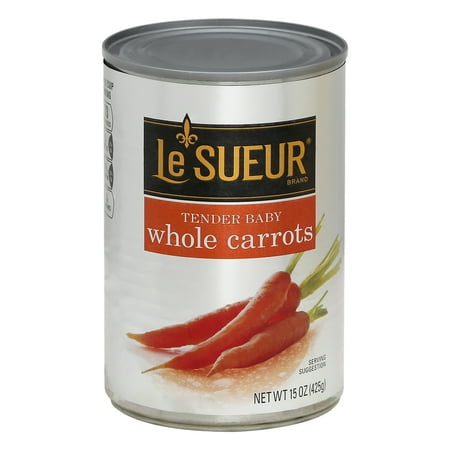

Le Sueur Whole Tender Baby Carrots Shelf-Stable 15 oz Can
Analysis updated July 2026 · How Scout scores
At a glance
Summary
This product consists of carrots, which are a nutritious vegetable rich in vitamins and minerals, but it also contains added sugar and salt. The presence of refined sugar contributes empty calories and can lead to metabolic issues if consumed excessively. While the ingredient list is relatively short, the product is processed, which limits its score potential.
Key ingredients 5
CarrotsGood
Carrots are a nutrient-rich vegetable providing essential vitamins and minerals. They are particularly high in beta-carotene, which the body converts to vitamin A, supporting eye health. As a whole food, they offer dietary fiber and antioxidants.
Benefits
Rich in beta-carotene and fiber, supporting eye health and digestion. Contains antioxidants that may reduce the risk of chronic diseases.
WaterNeutral
Water is used as a solvent and carrier in canned foods. It helps maintain the moisture and texture of the product. As a neutral ingredient, it does not contribute additional nutrients or risks.
See more about Water →SaltNeutral
Salt is used to enhance flavor and preserve the product. It is a common additive in processed foods, providing sodium which is essential for fluid balance and nerve function. However, excessive sodium intake can lead to hypertension.
Risks
Excessive sodium intake may increase the risk of high blood pressure and cardiovascular diseases.
Benefits
Provides essential sodium for maintaining fluid balance and nerve function.
Calcium ChlorideNeutral
Calcium chloride is used as a firming agent in canned vegetables. It helps maintain the texture and structural integrity of the carrots. It is generally recognized as safe when used in food processing.
Benefits
Helps maintain the firmness and texture of canned vegetables.
SugarBad
Refined sugar is added to enhance the sweetness of the product. It provides empty calories without essential nutrients, which can contribute to weight gain and metabolic issues. Excessive consumption is linked to increased risk of chronic diseases.
Risks
High intake of refined sugar can lead to obesity, type 2 diabetes, and heart disease.
Processing
Processed Foods
Get the full breakdown in the Scout appTake Scout shopping
Scan any product to see lab results, healthy alternatives, and your personalized analysis.
Download on theApp Store GET IT ONGoogle Play