
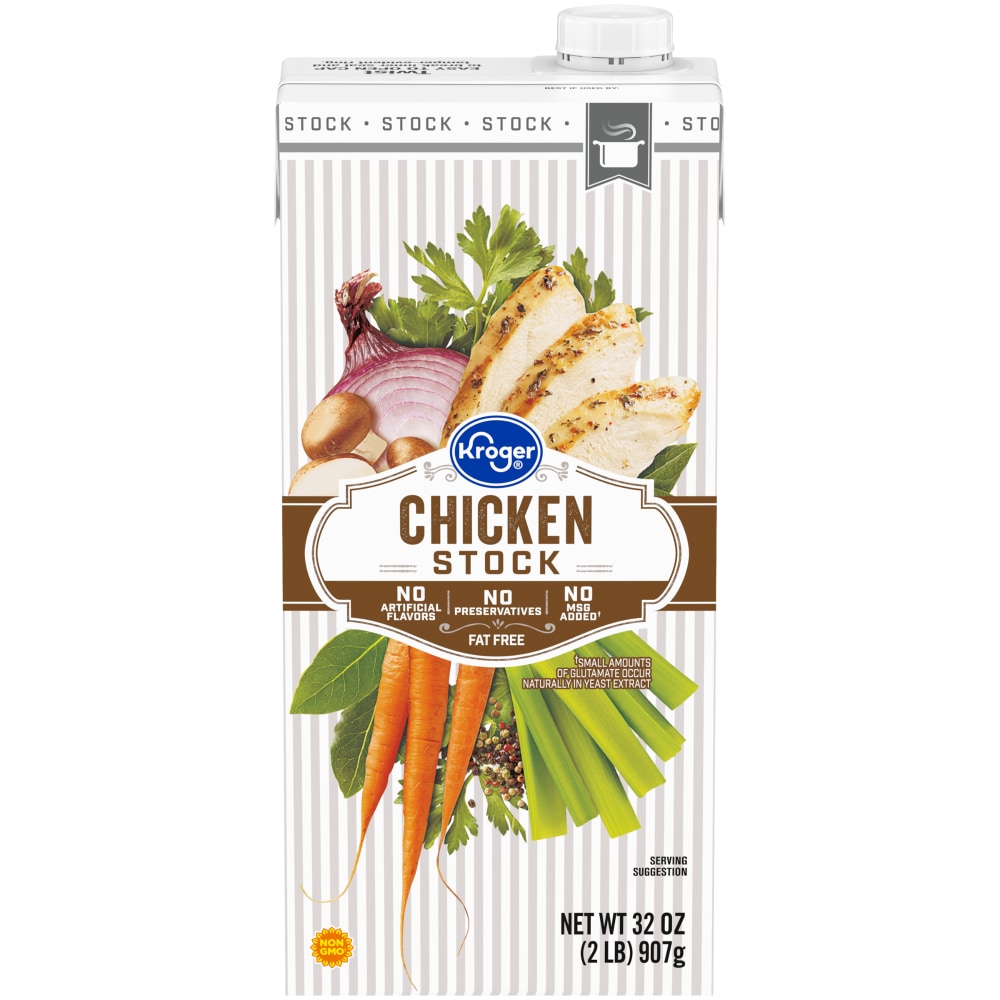


At a glance
Summary
This chicken stock is ultra-processed, which limits its potential health score. While it contains beneficial ingredients like chicken stock that provide protein and minerals, it also includes 'natural flavors', which are often highly processed and lack transparency. The presence of these additives and the processing level contribute to a moderate rating.
Key ingredients 8
Chicken StockGood
Chicken stock is a flavorful liquid made by simmering chicken bones and vegetables. It provides protein and minerals, contributing to the nutritional value of the product. It is a natural source of collagen and amino acids.
Risks
Potential allergen for individuals with poultry allergies.
Benefits
Rich in protein and minerals, supporting joint health and providing essential nutrients.
TurmericGood
Beneficial ingredient — whole-food or functional value in this product class.
Benefits
Contains curcumin, which has potential anti-inflammatory properties.
WaterNeutral
Water is a neutral ingredient used as a base in many food products. It does not provide any nutritional value but is essential for dissolving other ingredients. It is generally safe and poses no health risks.
See more about Water →SaltNeutral
Salt is used to enhance flavor and preserve food. It is a common culinary ingredient but does not provide significant nutritional benefits. Excessive consumption can lead to health issues such as hypertension.
Risks
High sodium intake may increase the risk of hypertension and cardiovascular diseases.
Onion PowderNeutral
Onion powder is a dehydrated form of onion used for flavoring. It retains some of the nutritional properties of fresh onions but in a concentrated form. It is generally safe and adds flavor without significant health risks.
Benefits
Provides flavor and some antioxidants found in fresh onions.
Vegetable Juice ConcentrateNeutral
Vegetable juice concentrate is used for flavor and color, derived from vegetables like carrot, celery, and onion. It retains some nutrients but is more processed than whole vegetables. It is generally safe and adds flavor and color.
Benefits
Provides some vitamins and minerals from the original vegetables.
Natural FlavorsBad
Natural flavors are additives used to enhance taste, but their exact composition is often undisclosed. They can contain a variety of compounds, some of which may be highly processed. Lack of transparency can be a concern for consumers with allergies or sensitivities.
Risks
Potential allergen risk due to undisclosed ingredients and processing methods.
Yeast ExtractBad
Concentrated glutamate source — MSG-adjacent flavor enhancer.
Risks
May cause reactions in individuals sensitive to glutamates.
Benefits
Enhances flavor and provides some B vitamins.
Processing
Ultra-Processed Foods
Get the full breakdown in the Scout appTake Scout shopping
Scan any product to see lab results, healthy alternatives, and your personalized analysis.
Download on theApp Store GET IT ONGoogle Play