
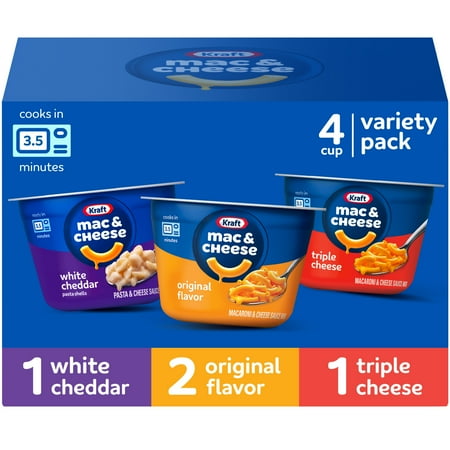


Kraft Mac and Cheese 4 Cups for Easy Dinner or Dinner Sides Variety Pack No Artificial Flavors Preservatives or Dyes 8.1 oz
Summary
This product contains several beneficial ingredients such as durum flour, whey, and milk, which contribute positively to its nutritional profile. However, it is a processed food with the inclusion of 'natural flavor', which lacks transparency and may pose concerns for individuals with sensitivities. The processing level and presence of this additive limit the overall healthiness of the product.
At a glance
Key ingredients 15
Wheat flourNeutral
Wheat flour is a staple ingredient in many pasta products, providing carbohydrates as a primary energy source. It is refined, which means it lacks the fiber and nutrients found in whole grain alternatives. While it is a common ingredient, it does not offer significant nutritional benefits beyond basic energy provision.
Risks
Refined wheat flour can contribute to blood sugar spikes and lacks fiber, which is important for digestive health.
Benefits
Provides carbohydrates that serve as a quick energy source.
Durum flourGood
Durum flour is a high-protein wheat flour used in pasta making, known for its firm texture and high gluten content. It provides a better protein profile compared to regular wheat flour. This makes it a preferred choice for pasta, offering a more satisfying texture and nutritional profile.
Risks
May cause gluten-related issues for individuals with celiac disease or gluten sensitivity.
Benefits
High in protein and provides a firm texture ideal for pasta dishes.
NiacinGood
Niacin, also known as vitamin B3, is an essential nutrient that supports metabolism and energy production. It is often added to enriched flours to replace nutrients lost during processing. This fortification helps prevent deficiencies and supports overall health.
Benefits
Supports energy metabolism and helps maintain healthy skin and nerves.
Ferrous sulfateNeutral
Ferrous sulfate is an iron supplement added to enriched foods to prevent iron deficiency anemia. It is a common fortification in processed foods to ensure adequate iron intake. While beneficial for preventing deficiencies, it does not provide additional health benefits beyond iron supplementation.
Risks
Excessive intake can lead to gastrointestinal issues and iron overload.
Benefits
Helps prevent iron deficiency anemia by supplementing dietary iron.
Thiamin mononitrateGood
Thiamin mononitrate is a form of vitamin B1 used to fortify foods, essential for energy metabolism and nerve function. It is added to enriched flours to replace nutrients lost during processing. This fortification helps maintain adequate nutrient levels in the diet.
Benefits
Supports energy metabolism and proper nerve function.
RiboflavinGood
Riboflavin, or vitamin B2, is an essential nutrient that plays a key role in energy production and cellular function. It is added to enriched flours to ensure adequate intake. This fortification helps prevent deficiencies and supports overall health.
Benefits
Supports energy production and helps maintain healthy skin and eyes.
Folic acidGood
Folic acid is a synthetic form of vitamin B9 used to fortify foods, crucial for DNA synthesis and cell division. It is added to enriched flours to prevent neural tube defects in developing fetuses. This fortification is particularly important for pregnant women and supports overall health.
Benefits
Essential for DNA synthesis and cell division, particularly important during pregnancy.
WheyGood
Whey is a high-quality protein derived from milk, rich in essential amino acids. It is easily digestible and supports muscle repair and growth. This makes it a beneficial ingredient in cheese sauce mixes for its nutritional profile.
Risks
May cause allergic reactions in individuals with dairy allergies.
Benefits
Provides high-quality protein that supports muscle repair and growth.
Cheese cultureNeutral
Cheese culture is used in the fermentation process to develop flavor and texture in cheese products. It is a natural component of cheese making and does not pose significant health concerns. While it contributes to the product's flavor, it does not offer additional nutritional benefits.
Benefits
Contributes to the development of flavor and texture in cheese products.
MilkGood
Milk is a natural source of calcium, protein, and essential vitamins, contributing to bone health and overall nutrition. It is a key ingredient in cheese sauce mixes, providing creaminess and nutritional value. This makes it a beneficial component of the product.
Risks
May cause allergic reactions in individuals with lactose intolerance or dairy allergies.
Benefits
Rich in calcium and protein, supporting bone health and providing essential nutrients.
SaltNeutral
Salt is used as a seasoning and preservative in food products, enhancing flavor. While necessary in small amounts, excessive consumption can lead to health issues such as hypertension. It is a common ingredient in processed foods for flavor enhancement.
Risks
Excessive salt intake can contribute to high blood pressure and cardiovascular issues.
Benefits
Enhances flavor and acts as a preservative in food products.
Modified food starchNeutral
Modified food starch is used as a thickening agent in processed foods, improving texture and stability. It is derived from starches like corn or potatoes and undergoes chemical modification. While it serves a functional purpose, it does not provide significant nutritional benefits.
Benefits
Improves texture and stability in processed foods.
ButtermilkGood
Buttermilk is a fermented dairy product that adds tangy flavor and creaminess to foods. It contains probiotics that can support gut health and digestion. This makes it a beneficial ingredient in cheese sauce mixes for its flavor and potential health benefits.
Risks
May cause allergic reactions in individuals with lactose intolerance or dairy allergies.
Benefits
Contains probiotics that support gut health and digestion.
Natural flavorBad
Natural flavor is a catch-all term for flavoring agents derived from natural sources, but the exact composition is often undisclosed. This lack of transparency can be concerning for individuals with allergies or sensitivities. While it enhances flavor, it does not provide nutritional benefits.
Risks
Lack of transparency can pose risks for individuals with allergies or sensitivities.
Benefits
Enhances flavor in food products.
AnnattoNeutral
Annatto is a natural coloring agent derived from the seeds of the achiote tree, used to impart a yellow or orange hue to foods. It is considered safe and does not pose significant health risks. While it provides color, it does not offer additional nutritional benefits.
Benefits
Provides natural coloring to food products.
Processing
Processed Foods
Get the full breakdown in the Scout app
Scan any product to see lab results, healthy alternatives, and your personalized analysis.
Download on theApp Store