
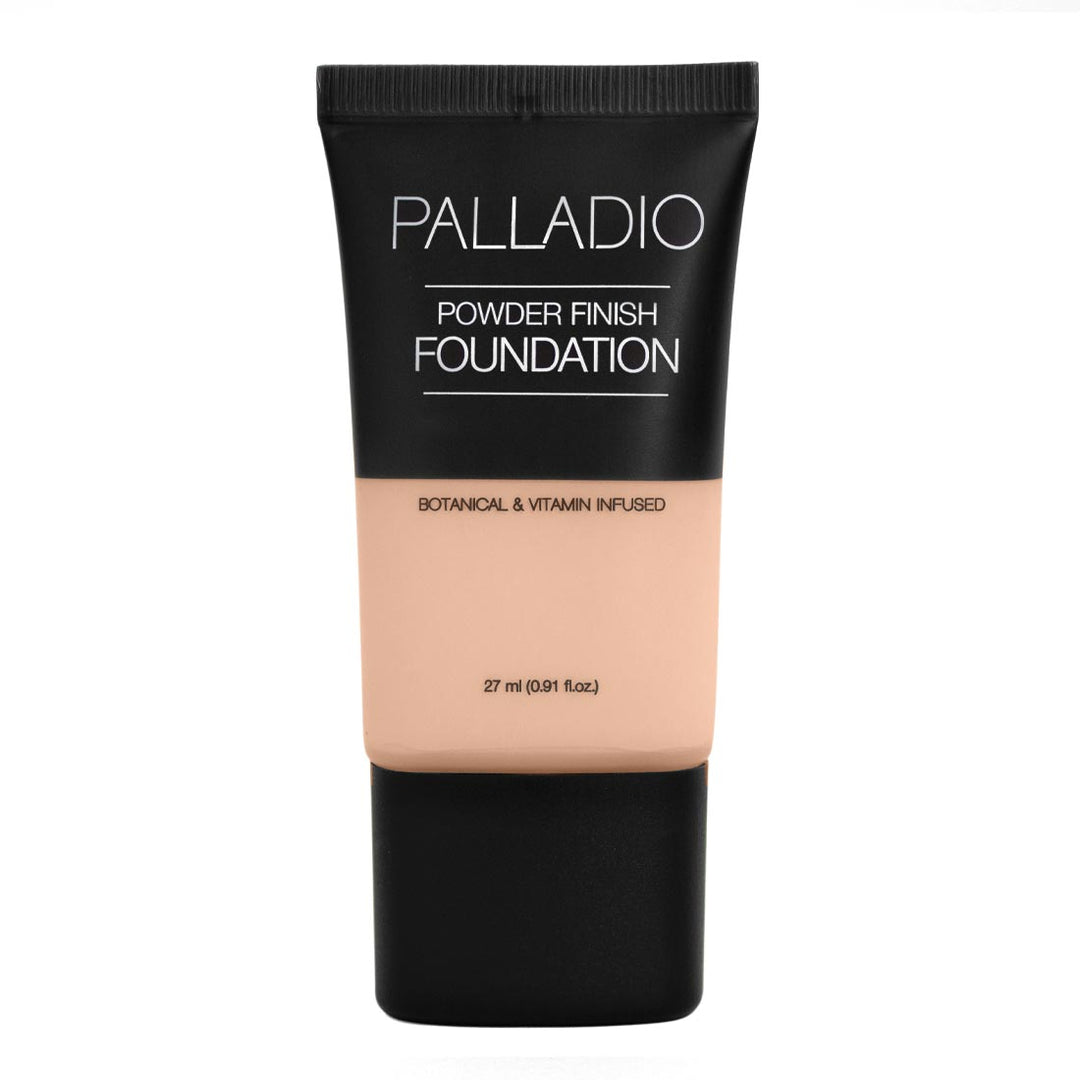
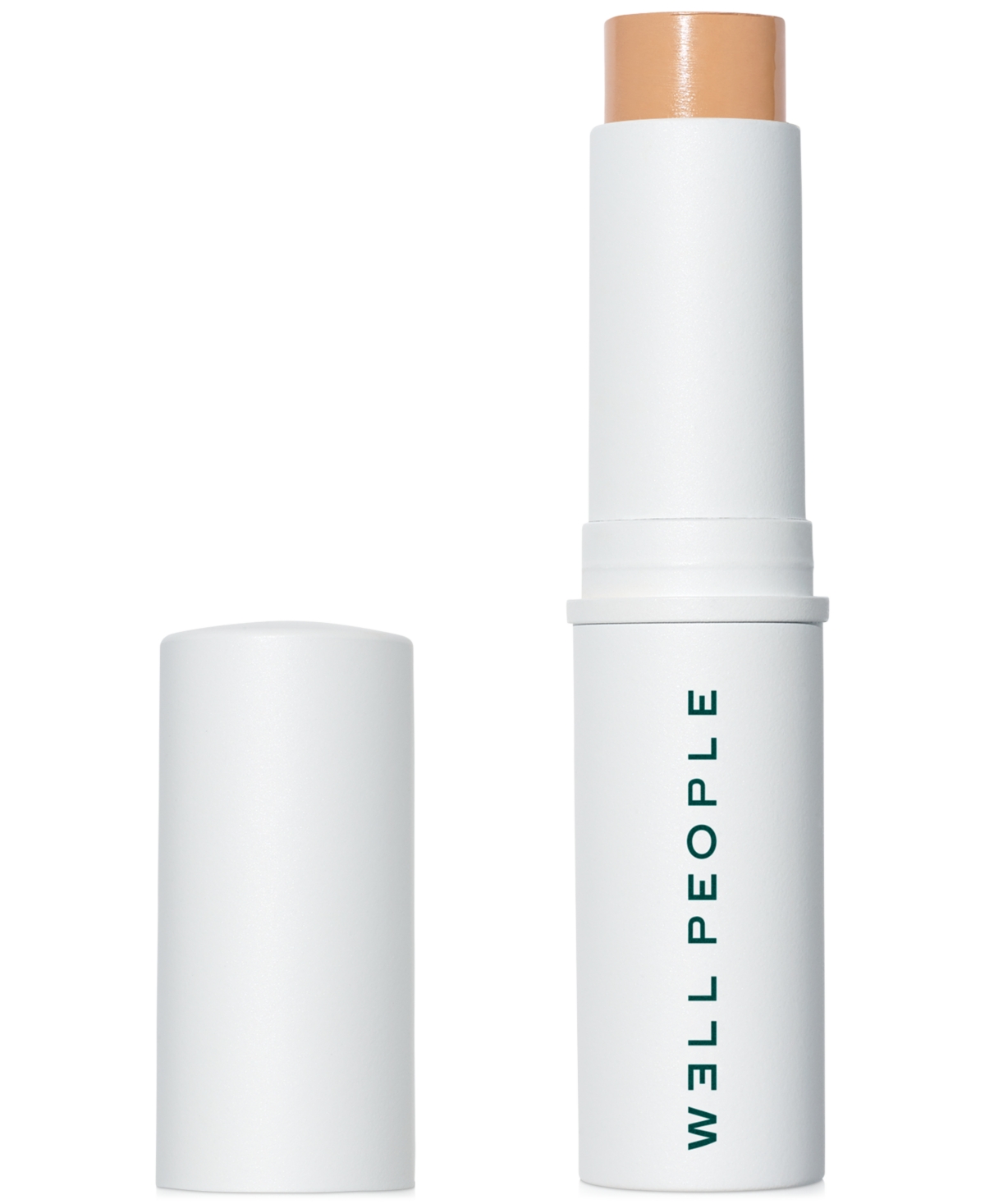
PALLADIO OIL-FREE ( PFF05 CREAMY NATURAL ) HERBAL FOUNDATION - 27 ML
Analysis updated August 2026 · How Scout scores
At a glance
Summary
This foundation contains several beneficial ingredients such as glycerin, aloe vera, chamomile extract, and green tea extract, which provide moisturizing, soothing, and antioxidant benefits. However, the presence of phenoxyethanol, a preservative that can cause irritation in some individuals, slightly lowers the score. The product has a balanced formulation with mostly safe ingredients, but the inclusion of a moderate-risk preservative affects its overall rating.
Key ingredients 38
Aloe Barbadensis ExtractVery Good
Aloe Barbadensis Extract is known for its soothing and moisturizing properties. It helps to calm irritated skin and provide hydration. It is a beneficial ingredient for sensitive and dry skin types.
Risks
There are minimal risks, though some individuals may experience allergic reactions.
Benefits
It provides soothing and moisturizing properties, calming irritated skin.
Anthemis Nobilis Flower ExtractVery Good
Anthemis Nobilis Flower Extract, also known as chamomile extract, is known for its anti-inflammatory and soothing properties. It helps to calm and soothe irritated skin. It is beneficial for sensitive skin types.
Risks
There are minimal risks, though some individuals may experience allergic reactions.
Benefits
It provides anti-inflammatory and soothing properties, calming irritated skin.
Camellia Sinensis Leaf ExtractVery Good
Camellia Sinensis Leaf Extract, also known as green tea extract, is rich in antioxidants and has anti-inflammatory properties. It helps to protect the skin from environmental damage and reduce redness. It is beneficial for all skin types.
Risks
There are minimal risks, though some individuals may experience allergic reactions.
Benefits
It provides antioxidant and anti-inflammatory properties, protecting the skin from damage.
Carthamus Tinctorius (Safflower) Seed OilVery Good
Carthamus Tinctorius Seed Oil is a natural oil rich in fatty acids and vitamins. It helps to moisturize and nourish the skin, improving its texture and appearance. It is beneficial for dry and sensitive skin types.
Risks
There are minimal risks, though some individuals may experience allergic reactions.
Benefits
It provides moisturizing and nourishing properties, improving skin texture and appearance.
Limnanthes Alba (Meadowfoam) Seed OilVery Good
Limnanthes Alba Seed Oil is a natural oil known for its moisturizing and antioxidant properties. It helps to hydrate and protect the skin, improving its texture and appearance. It is beneficial for all skin types.
Risks
There are minimal risks, though some individuals may experience allergic reactions.
Benefits
It provides moisturizing and antioxidant properties, hydrating and protecting the skin.
Magnesium Ascorbyl PhosphateVery Good
Magnesium Ascorbyl Phosphate is a stable form of Vitamin C used for its antioxidant and brightening properties. It helps to protect the skin from environmental damage and improve skin tone. It is beneficial for all skin types.
Risks
There are minimal risks, though some individuals may experience irritation.
Benefits
It provides antioxidant and brightening properties, protecting the skin and improving skin tone.
TocopherolVery Good
Tocopherol, also known as Vitamin E, is an antioxidant that helps to protect the skin from environmental damage. It provides moisturizing and anti-aging benefits. It is beneficial for all skin types.
Risks
There are minimal risks, though some individuals may experience irritation.
Benefits
It provides antioxidant and moisturizing properties, protecting the skin and offering anti-aging benefits.
GlycerinGood
Glycerin is a humectant that attracts moisture to the skin, making it a popular ingredient in skincare. It helps to maintain skin hydration and improve skin barrier function. It is well-tolerated and beneficial for most skin types.
Risks
There are minimal risks, though excessive use can lead to a sticky feeling on the skin.
Benefits
Glycerin helps to maintain skin hydration and improve skin barrier function.
Tocopheryl AcetateGood
Tocopheryl Acetate is a stable form of Vitamin E used for its antioxidant and moisturizing properties. It helps to protect the skin from environmental damage and improve skin texture. It is beneficial for all skin types.
Risks
There are minimal risks, though some individuals may experience irritation.
Benefits
It provides antioxidant and moisturizing properties, protecting the skin and improving texture.
Water (Aqua, Eau)Neutral
Water is a common solvent used in cosmetics to dissolve other ingredients. It helps in the application and absorption of the product. It does not have any direct benefits or risks associated with its use in cosmetics.
Risks
There are no significant risks associated with water in cosmetics.
Benefits
Water helps in the application and absorption of the product.
Hydrogenated PolyisobuteneNeutral
Hydrogenated Polyisobutene is used as an emollient and moisturizer in cosmetics. It provides a smooth application and helps to lock in moisture. It is generally considered safe for use in cosmetics.
Risks
There are minimal risks associated with its use, primarily related to potential skin irritation in sensitive individuals.
Benefits
It acts as an emollient, providing a smooth application and helping to lock in moisture.
Cetyl PEG/PPG-10/1 DimethiconeNeutral
This ingredient is a silicone-based compound used for its conditioning and smoothing properties. It helps to create a silky texture and improve spreadability. It is generally considered safe for use in cosmetics.
Risks
There are minimal risks, primarily related to potential buildup on the skin.
Benefits
It provides conditioning and smoothing properties, creating a silky texture.
IsododecaneNeutral
Isododecane is used as an emollient and solvent, providing a lightweight feel and quick-drying finish. It helps to improve the spreadability of the product. It is generally considered safe for use in cosmetics.
Risks
There are minimal risks associated with its use.
Benefits
It provides a lightweight feel and quick-drying finish, improving spreadability.
Disteardimonium HectoriteNeutral
Disteardimonium Hectorite is used as a thickening agent and stabilizer in cosmetics. It helps to maintain the consistency and stability of the product. It is generally considered safe for use in cosmetics.
Risks
There are minimal risks associated with its use.
Benefits
It helps to maintain the consistency and stability of the product.
Polyglyceryl-4 IsostearateNeutral
This ingredient is an emulsifier that helps to blend oil and water-based ingredients. It improves the texture and stability of the product. It is generally considered safe for use in cosmetics.
Risks
There are minimal risks associated with its use.
Benefits
It helps to blend oil and water-based ingredients, improving texture and stability.
Sodium ChlorideNeutral
Sodium Chloride is used as a thickening agent and to adjust the viscosity of the product. It is a common ingredient in cosmetics and is generally considered safe. It can cause irritation in high concentrations.
Risks
Potential irritation in high concentrations.
Benefits
It helps to adjust the viscosity of the product.
Aluminum HydroxideNeutral
Aluminum Hydroxide is used as a thickening agent and to improve the opacity of the product. It is generally considered safe for use in cosmetics. There are minimal risks associated with its use.
Risks
There are minimal risks associated with its use.
Benefits
It helps to improve the opacity and thickness of the product.
Butylene GlycolNeutral
Butylene Glycol is used as a humectant and solvent in cosmetics. It helps to retain moisture and improve the texture of the product. It is generally considered safe, though it can cause irritation in sensitive skin.
Risks
Potential skin irritation in sensitive individuals.
Benefits
It helps to retain moisture and improve the texture of the product.
Caprylyl MethiconeNeutral
Caprylyl Methicone is a silicone-based compound used for its conditioning and smoothing properties. It helps to create a lightweight feel and improve spreadability. It is generally considered safe for use in cosmetics.
Risks
There are minimal risks, primarily related to potential buildup on the skin.
Benefits
It provides conditioning and smoothing properties, creating a lightweight feel.
Cetearyl Dimethicone/Vinyl Dimethicone CrosspolymerNeutral
This ingredient is used as a thickening agent and to improve the texture of the product. It helps to create a smooth and silky feel. It is generally considered safe for use in cosmetics.
Risks
There are minimal risks associated with its use.
Benefits
It helps to improve the texture of the product, creating a smooth and silky feel.
Citric AcidNeutral
Citric Acid is used to adjust the pH of cosmetics and as a preservative. It helps to maintain the stability and effectiveness of the product. It is generally considered safe, though it can cause irritation in sensitive skin.
Risks
Potential skin irritation in sensitive individuals.
Benefits
It helps to adjust the pH and maintain the stability of the product.
EthylhexylglycerinNeutral
Ethylhexylglycerin is used as a preservative and skin conditioning agent in cosmetics. It helps to improve the shelf life of the product and provide a smooth feel. It is generally considered safe for use in cosmetics.
Risks
There are minimal risks associated with its use.
Benefits
It helps to improve the shelf life of the product and provide a smooth feel.
HDI/Trimethylol Hexyllactone CrosspolymerNeutral
This ingredient is used as a film-forming agent and to improve the texture of the product. It helps to create a smooth and even application. It is generally considered safe for use in cosmetics.
Risks
There are minimal risks associated with its use.
Benefits
It helps to improve the texture of the product, creating a smooth and even application.
HydroxyacetophenoneNeutral
Hydroxyacetophenone is used as an antioxidant and preservative in cosmetics. It helps to protect the product from degradation and improve its shelf life. It is generally considered safe for use in cosmetics.
Risks
There are minimal risks associated with its use.
Benefits
It helps to protect the product from degradation and improve its shelf life.
SilicaNeutral
Silica is used as an absorbent and to improve the texture of cosmetics. It helps to control oil and provide a matte finish. It is generally considered safe for use in cosmetics.
Risks
There are minimal risks associated with its use.
Benefits
It helps to control oil and provide a matte finish.
Sorbitan SesquioleateNeutral
Sorbitan Sesquioleate is used as an emulsifier to blend oil and water-based ingredients. It improves the texture and stability of the product. It is generally considered safe for use in cosmetics.
Risks
There are minimal risks associated with its use.
Benefits
It helps to blend oil and water-based ingredients, improving texture and stability.
Synthetic FluorphlogopiteNeutral
Synthetic Fluorphlogopite is used as a filler and to improve the texture of cosmetics. It provides a smooth and silky feel. It is generally considered safe for use in cosmetics.
Risks
There are minimal risks associated with its use.
Benefits
It provides a smooth and silky feel, improving the texture of the product.
TriethoxycaprylylsilaneNeutral
Triethoxycaprylylsilane is used as a binding agent and to improve the texture of cosmetics. It helps to create a smooth and even application. It is generally considered safe for use in cosmetics.
Risks
There are minimal risks associated with its use.
Benefits
It helps to improve the texture of the product, creating a smooth and even application.
Vinyl Dimethicone/Methicone Silsesquioxane CrosspolymerNeutral
This ingredient is used as a film-forming agent and to improve the texture of cosmetics. It helps to create a smooth and even application. It is generally considered safe for use in cosmetics.
Risks
There are minimal risks associated with its use.
Benefits
It helps to improve the texture of the product, creating a smooth and even application.
1,2-HexanediolNeutral
1,2-Hexanediol is used as a solvent and preservative in cosmetics. It helps to improve the texture and stability of the product. It is generally considered safe for use in cosmetics.
Risks
There are minimal risks associated with its use.
Benefits
It helps to improve the texture and stability of the product.
Titanium Dioxide (CI 77891)Neutral
Titanium Dioxide is used as a pigment and UV filter in cosmetics. It helps to provide coverage and protect the skin from UV radiation. It is generally considered safe for use in cosmetics.
Risks
There are minimal risks associated with its use.
Benefits
It provides coverage and protects the skin from UV radiation.
Iron Oxides (CI 77491, CI 77492, and CI 77499)Neutral
Iron Oxides are used as pigments in cosmetics to provide color. They are stable and generally considered safe for use. They do not have significant benefits or risks associated with their use.
Risks
There are minimal risks associated with their use.
Benefits
They provide color to the product.
Propylene GlycolBad
Processed additive flagged under Scout's ingredient doctrine.
Risks
Potential skin irritation in sensitive individuals.
Benefits
It helps to retain moisture and improve the texture of the product.
DimethiconeBad
Occlusive silicone film-former — flagged under clean-beauty doctrine.
Risks
There are minimal risks, primarily related to potential buildup on the skin.
Benefits
It provides smoothing and conditioning properties, reducing water loss.
Disodium EDTABad
Processed additive flagged under Scout's ingredient doctrine.
Risks
There are minimal risks associated with its use.
Benefits
It helps to improve the stability and shelf life of the product.
PhenoxyethanolBad
Phenoxyethanol is used as a preservative in cosmetics to prevent microbial growth. It is effective but can cause irritation and allergic reactions in some individuals. It is considered a moderate risk ingredient in cosmetics.
Risks
Potential irritation and allergic reactions in sensitive individuals.
Benefits
It helps to prevent microbial growth, extending the shelf life of the product.
Potassium SorbateBad
Synthetic preservative — flagged in daily-use products.
Risks
Potential irritation in sensitive individuals.
Benefits
It helps to prevent the growth of mold and yeast, extending the shelf life of the product.
Sodium BenzoateBad
Synthetic preservative that can form benzene in the presence of vitamin C.
Risks
Potential irritation in sensitive individuals.
Benefits
It helps to prevent microbial growth, extending the shelf life of the product.
Get the full breakdown in the Scout appTake Scout shopping
Scan any product to see lab results, healthy alternatives, and your personalized analysis.
Download on theApp Store GET IT ONGoogle Play