
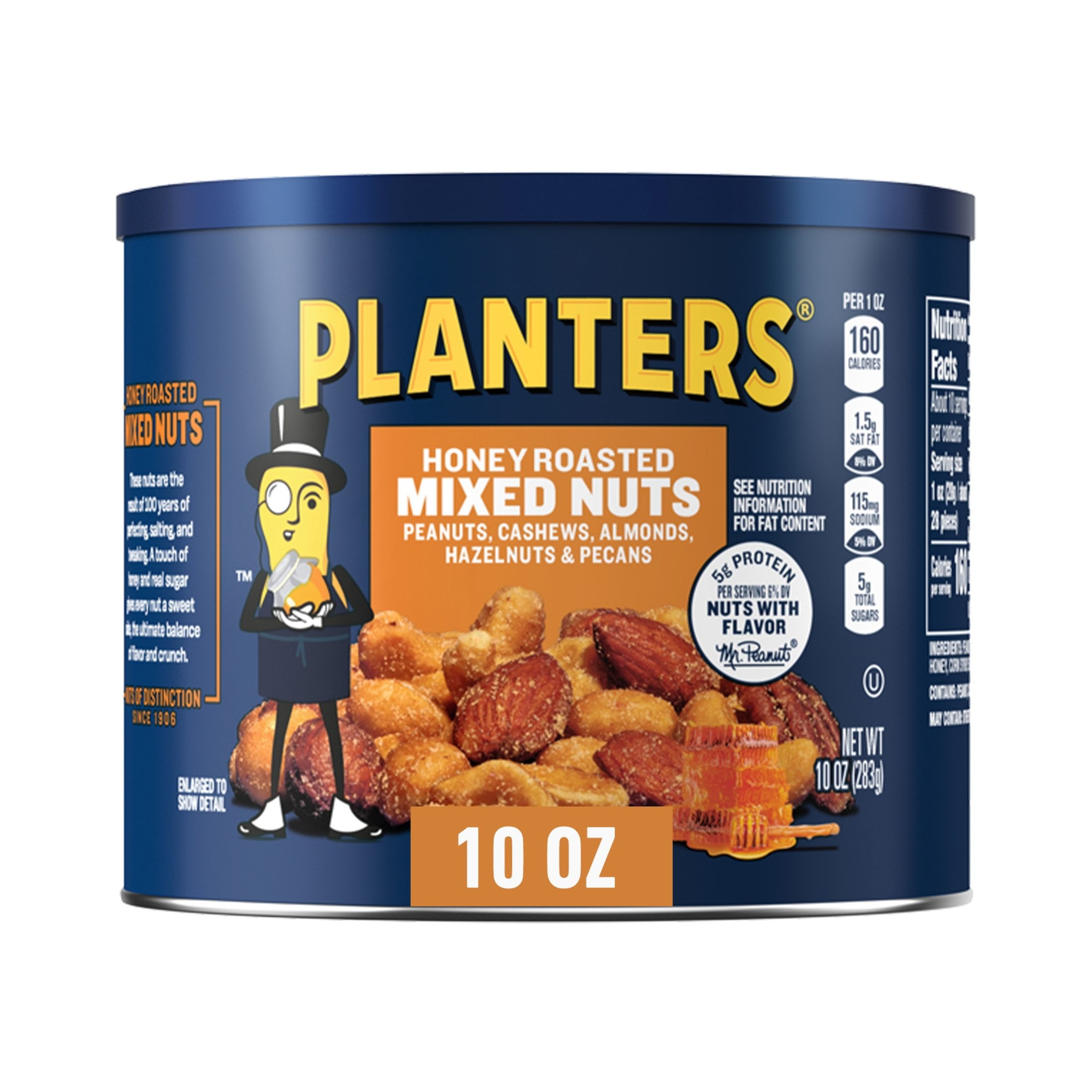




Planters Honey Roasted Mixed Nuts
Analysis updated July 2026 · How Scout scores
At a glance
Summary
This product contains a mix of nuts, which are beneficial due to their healthy fats, protein, and antioxidants. However, the addition of sugar and corn syrup introduces refined sugars that can lead to metabolic issues and blood sugar spikes. The presence of these processed sweeteners and the overall processing level limit the healthiness of the product.
Key ingredients 11
AlmondsVery Good
Almonds are an excellent source of vitamin E and healthy fats. They provide fiber and protein, supporting heart health and satiety. Almonds also contain antioxidants that may reduce oxidative stress.
Risks
Almonds can be allergenic and should be consumed in moderation due to their high calorie content.
Benefits
Rich in vitamin E and healthy fats, almonds support heart health and skin health. They also provide fiber and protein, promoting satiety and digestive health.
PeanutsGood
Peanuts are a good source of protein and healthy fats. They contain essential nutrients like niacin and folate. Peanuts also provide antioxidants that may support heart health.
Risks
Peanuts can be a common allergen and may cause severe allergic reactions in sensitive individuals.
Benefits
Rich in protein and healthy fats, peanuts support muscle growth and heart health. They also contain antioxidants that may reduce inflammation.
CashewsGood
Cashews are rich in monounsaturated fats and provide essential minerals like magnesium and zinc. They are a good source of plant-based protein. Cashews also contain antioxidants that may support overall health.
Risks
Cashews can cause allergic reactions in some individuals and should be consumed in moderation due to their calorie density.
Benefits
Cashews provide healthy fats and essential minerals that support bone health and immune function. They are also a good source of plant-based protein.
HazelnutsGood
Hazelnuts are rich in monounsaturated fats and provide vitamin E and magnesium. They support heart health and have antioxidant properties. Hazelnuts also offer dietary fiber, promoting digestive health.
Risks
Hazelnuts can cause allergic reactions in some individuals.
Benefits
Rich in healthy fats and antioxidants, hazelnuts support heart health and reduce inflammation. They also provide fiber, promoting digestive health.
PecansGood
Pecans are high in healthy fats and provide essential nutrients like manganese and thiamine. They have antioxidant properties that support heart health. Pecans also offer dietary fiber, aiding in digestion.
Risks
Pecans can be allergenic and should be consumed in moderation due to their calorie density.
Benefits
Rich in healthy fats and antioxidants, pecans support heart health and reduce inflammation. They also provide fiber, promoting digestive health.
HoneyGood
Traditional whole-food sweetener with trace enzymes and antioxidants.
Risks
Excessive consumption of honey can contribute to weight gain and blood sugar spikes.
Benefits
Honey provides antioxidants and has antibacterial properties. It is a natural alternative to refined sugar.
Sea SaltGood
Sea salt is a natural source of sodium and trace minerals. It is less processed than table salt and can enhance flavor. Sea salt provides essential electrolytes that support hydration.
Risks
Excessive sodium intake can lead to high blood pressure and cardiovascular issues.
Benefits
Sea salt provides essential minerals and supports electrolyte balance. It is a natural alternative to refined table salt.
Xanthan GumNeutral
Xanthan gum is a common food additive used as a thickening agent. It is derived from fermented sugars and is generally recognized as safe. Xanthan gum can improve texture and stability in food products.
Risks
In large amounts, xanthan gum may cause digestive discomfort in some individuals.
Benefits
Xanthan gum improves the texture and stability of food products. It is widely used in gluten-free baking.
SugarBad
Refined sugar is a source of empty calories and can contribute to weight gain and metabolic issues. It lacks essential nutrients and can lead to blood sugar spikes. Excessive consumption of sugar is linked to various health problems.
Risks
High intake of refined sugar can increase the risk of obesity, type 2 diabetes, and heart disease.
Corn SyrupBad
Corn syrup is a processed sweetener that can contribute to high calorie intake and blood sugar spikes. It lacks nutritional value and is often used in processed foods. Excessive consumption is linked to metabolic issues.
Risks
High intake of corn syrup can increase the risk of obesity and type 2 diabetes.
Peanut OilBad
Processed additive flagged under Scout's ingredient doctrine.
Risks
Peanut oil can contribute to high calorie intake and may cause allergic reactions in sensitive individuals.
Benefits
Peanut oil provides monounsaturated fats that support heart health. It is stable at high temperatures, making it suitable for cooking.
Processing
Processed Foods
Get the full breakdown in the Scout appTake Scout shopping
Scan any product to see lab results, healthy alternatives, and your personalized analysis.
Download on theApp Store GET IT ONGoogle PlayAmazon pricing & content
Amazon price as of . Product prices and availability are accurate as of the date/time indicated and are subject to change. Any price and availability information displayed on Amazon.com at the time of purchase will apply to the purchase of this product.
CERTAIN CONTENT THAT APPEARS ON THIS SITE COMES FROM AMAZON. THIS CONTENT IS PROVIDED “AS IS” AND IS SUBJECT TO CHANGE OR REMOVAL AT ANY TIME.