
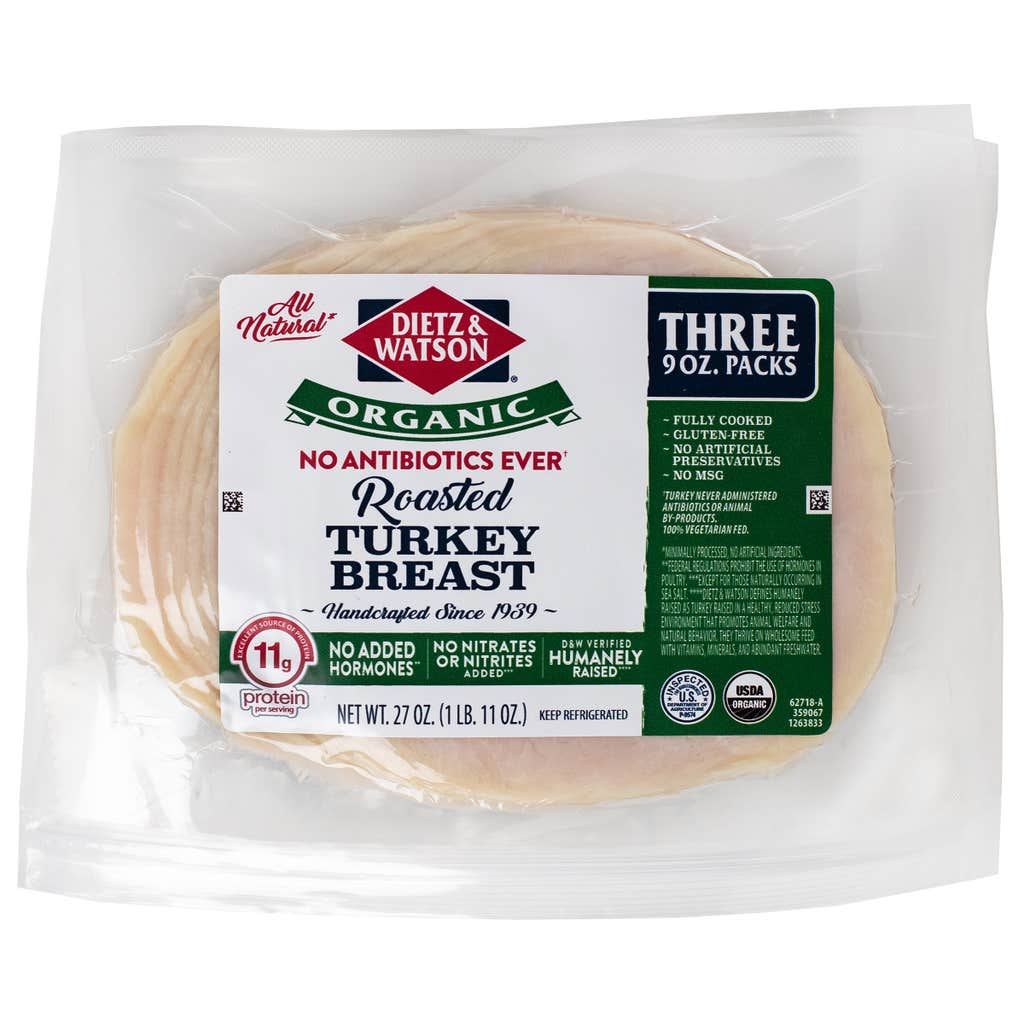


BLACK FOREST SMOKED TURKEY BREAST
Analysis updated September 2026 · How Scout scores
At a glance
Summary
This product is ultra-processed, which limits its potential health score. While it contains beneficial ingredients like turkey breast and sea salt, it also includes sodium phosphate and sodium nitrite, which are synthetic additives associated with potential health risks. The presence of these additives and the level of processing contribute to a lower score despite the product's lean protein content.
Key ingredients 11
Turkey breastGood
Turkey breast is a lean source of high-quality protein. It provides essential amino acids necessary for muscle repair and growth. As a minimally processed meat, it is a healthier option compared to processed meats.
Benefits
Rich in protein and low in fat, making it a healthy choice for maintaining muscle mass and supporting weight management.
Sea saltGood
Sea salt is a natural source of sodium and trace minerals. It is less processed than regular table salt, retaining more minerals. Its use enhances flavor without the need for artificial additives.
Risks
Excessive consumption of sodium can lead to high blood pressure and cardiovascular issues.
Benefits
Provides essential sodium and trace minerals that are important for maintaining fluid balance and nerve function.
WaterNeutral
Water is used as a basic ingredient to maintain moisture in the product. It does not contribute any nutritional value. Its presence is standard in many processed foods to enhance texture.
See more about Water →Potassium chlorideNeutral
Potassium chloride is used as a salt substitute to reduce sodium content. It provides potassium, an essential mineral for heart and muscle function. Its use can help balance sodium intake in processed foods.
Risks
Excessive intake can lead to hyperkalemia, especially in individuals with kidney issues.
Benefits
Helps reduce sodium intake while providing essential potassium for maintaining electrolyte balance.
Sodium ascorbateNeutral
Sodium ascorbate is a form of vitamin C used as an antioxidant to preserve color and flavor. It is less acidic than ascorbic acid, making it suitable for sensitive stomachs. It contributes to the vitamin C content of the product.
Benefits
Provides antioxidant properties and contributes to the vitamin C content, supporting immune function.
Natural hickory smoke flavoringNeutral
Natural hickory smoke flavoring is used to impart a smoky flavor to the product. It is derived from natural sources, providing an authentic taste. Its use is common in smoked meats to enhance flavor without direct smoking.
Benefits
Enhances flavor by providing a smoky taste without the need for direct smoking.
Spice extractsNeutral
Spice extracts are used to enhance flavor and aroma in processed foods. They are derived from natural spices, providing concentrated flavor without additional calories. Their use can improve the sensory profile of the product.
Benefits
Enhances flavor and aroma, contributing to the overall taste experience of the product.
Sodium phosphateBad
Sodium phosphate is used as a preservative and to retain moisture in processed meats. It is a synthetic additive that can contribute to an increased intake of phosphates. High phosphate levels can be harmful, especially for individuals with kidney issues.
Risks
Excessive intake of phosphates can lead to imbalances in calcium and phosphate levels, potentially affecting bone health.
Benefits
Helps maintain moisture and improve texture in processed meats.
Organic sugarBad
Processed additive flagged under Scout's ingredient doctrine.
Risks
Excessive sugar consumption can lead to weight gain and increased risk of metabolic disorders.
Benefits
Provides a natural source of sweetness with fewer processing chemicals compared to conventional sugar.
DextroseBad
Refined added sugar.
Risks
High intake of simple sugars can lead to spikes in blood sugar levels and contribute to metabolic disorders.
Benefits
Provides a quick source of energy due to its rapid absorption.
Sodium nitriteBad
Sodium nitrite is used as a preservative and color fixative in processed meats. It can form nitrosamines, which are potential carcinogens, especially when meats are cooked at high temperatures. Its use is controversial due to potential health risks.
Risks
Potential formation of nitrosamines, which are linked to an increased risk of cancer.
Benefits
Helps preserve the color and extend the shelf life of processed meats.
Processing
Ultra-Processed Foods
Get the full breakdown in the Scout appTake Scout shopping
Scan any product to see lab results, healthy alternatives, and your personalized analysis.
Download on theApp Store GET IT ONGoogle Play