
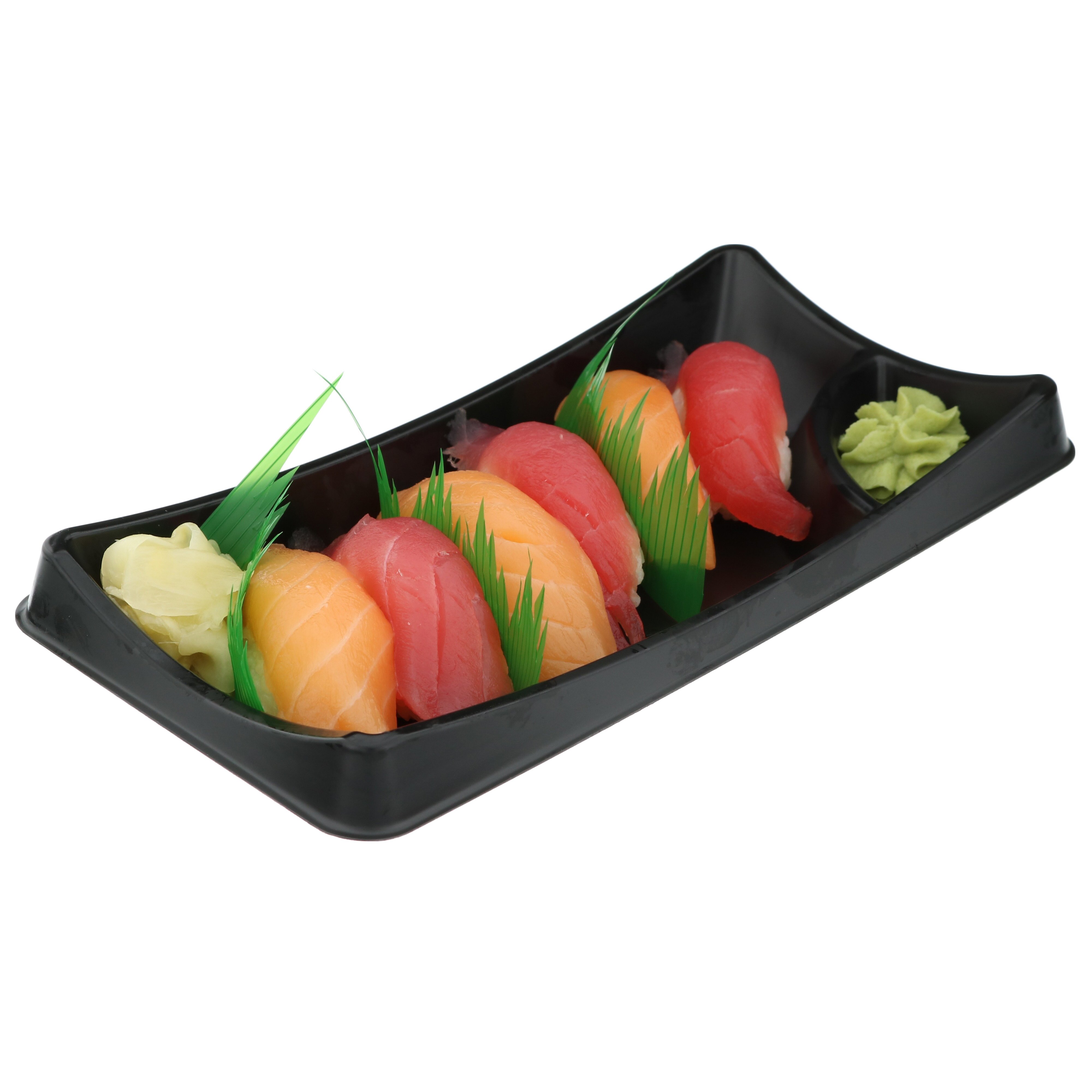
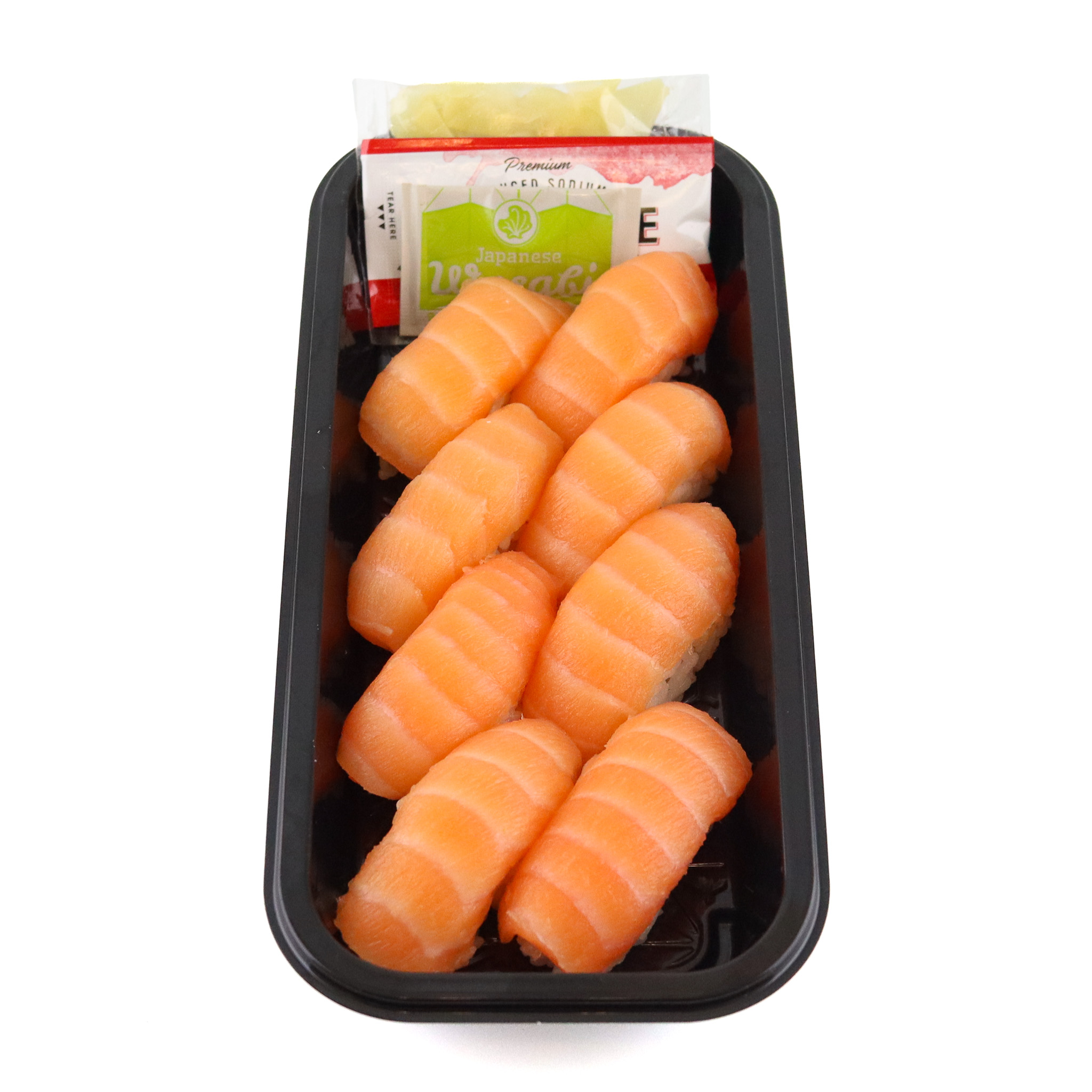


Sushiya Tuna and Salmon Nigiri
Analysis updated October 2026 · How Scout scores
At a glance
Summary
This product contains beneficial ingredients like turmeric and spirulina, which offer antioxidant and anti-inflammatory properties. However, it is a processed food with a moderate level of processing, which limits its score potential. The presence of farm-raised shrimp and added sugars in the sushi ginger also contribute to a lower score compared to minimally processed whole foods.
Key ingredients 8
TurmericGood
Turmeric is a spice known for its anti-inflammatory and antioxidant properties. It contains curcumin, which has been studied for its potential health benefits. It is often used in small amounts to add color and flavor.
Benefits
Contains curcumin, which has anti-inflammatory and antioxidant properties.
Spirulina PowderGood
Spirulina is a nutrient-dense algae rich in protein, vitamins, and minerals. It is known for its antioxidant and anti-inflammatory properties. Often used as a dietary supplement for its health benefits.
Benefits
Rich in protein, vitamins, and minerals with antioxidant and anti-inflammatory properties.
ShrimpNeutral
Shrimp is a good source of protein and essential nutrients like selenium and vitamin B12. Farm-raised shrimp may have concerns regarding environmental impact and potential antibiotic use. It is generally considered a healthy seafood option when sourced responsibly.
Risks
Potential risks include exposure to antibiotics and environmental pollutants if not sourced sustainably.
Benefits
Provides high-quality protein and essential nutrients such as selenium and vitamin B12.
SaltNeutral
Salt is used as a seasoning and preservative in many foods. It is essential for maintaining fluid balance and nerve function. However, excessive intake can lead to health issues such as hypertension.
Risks
Excessive consumption can contribute to high blood pressure and cardiovascular disease.
Benefits
Essential for maintaining fluid balance and proper nerve function.
Sushi GingerNeutral
Sushi ginger is typically pickled and used as a palate cleanser. It contains ginger, which has anti-inflammatory properties. The added sugar and salt in pickling may reduce its health benefits.
Risks
Contains added sugar and salt, which may be a concern for those monitoring their intake.
Benefits
Ginger has anti-inflammatory properties and can aid digestion.
WasabiNeutral
Wasabi is a spicy condiment made from horseradish and other ingredients. It provides a unique flavor and may have antimicrobial properties. The wasabi used in most products is often a mixture with horseradish and other additives.
Risks
May cause irritation to the digestive tract if consumed in large quantities.
Benefits
May have antimicrobial properties and adds a distinct flavor to dishes.
HorseradishNeutral
Horseradish is a root vegetable known for its pungent flavor. It contains compounds that may have antimicrobial and anti-inflammatory effects. It is often used in small amounts as a condiment.
Risks
Can cause irritation to the mouth and digestive tract if consumed in excess.
Benefits
May have antimicrobial and anti-inflammatory properties.
Corn FlourNeutral
Corn flour is used as a thickening agent in various foods. It is a refined carbohydrate with limited nutritional value. It is generally considered safe for consumption in moderate amounts.
Risks
Limited nutritional value as it is a refined carbohydrate.
Benefits
Provides texture and thickness to food products.
Processing
Processed Foods
Get the full breakdown in the Scout appTake Scout shopping
Scan any product to see lab results, healthy alternatives, and your personalized analysis.
Download on theApp Store GET IT ONGoogle Play