


At a glance
Summary
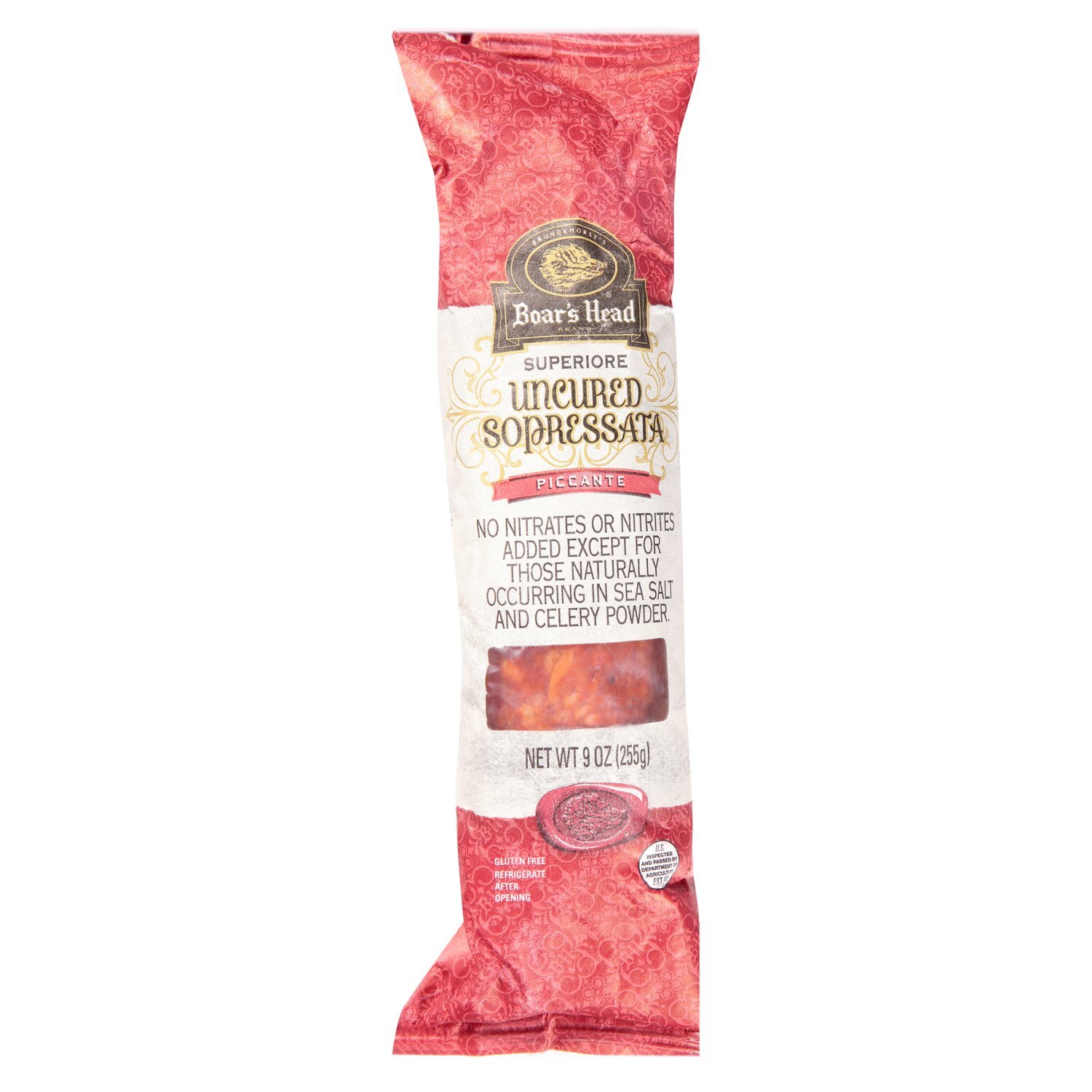
This sopressata dry sausage is ultra-processed, which limits its potential health score. It contains sodium nitrate, a preservative linked to health concerns, and natural flavoring, which lacks transparency. Despite having a relatively short ingredient list, the presence of these additives and its processing level impact its overall health rating.
Key ingredients 9
SpicesGood
Whole-food seasonings, antioxidant-bearing.
Risks
Potential for allergic reactions in sensitive individuals.
Benefits
May offer antioxidant benefits depending on the specific spices used.
PorkNeutral
Pork is a common protein source in sausages, providing essential amino acids. The quality of pork can vary based on the animal's diet and living conditions. Without specific quality indicators like 'grass-fed' or 'organic', it remains a neutral ingredient.
Risks
Potential risks include high saturated fat content and possible contamination if not properly cooked.
Benefits
Pork provides a good source of protein and essential nutrients like B vitamins and zinc.
SaltNeutral
Salt is used for flavoring and preservation in processed meats. It is a refined ingredient without the trace minerals found in unrefined salts. Excessive consumption can lead to health issues like hypertension.
Risks
High sodium intake is associated with increased risk of hypertension and cardiovascular diseases.
Benefits
Salt enhances flavor and acts as a preservative in processed foods.
White WineNeutral
White wine is used in small quantities for flavor enhancement in sausages. It undergoes fermentation, which can add complexity to the taste. The alcohol content is typically negligible after cooking.
Benefits
Adds flavor complexity to the product.
Sodium ErythorbateNeutral
Sodium erythorbate is used as a preservative and to maintain color in processed meats. It is a synthetic compound derived from erythorbic acid. It helps prevent oxidation and spoilage.
Benefits
Helps maintain color and freshness in processed meats.
Lactic Acid Starter CultureNeutral
Lactic acid starter cultures are used in fermentation to develop flavor and preserve the product. They promote the growth of beneficial bacteria. This process can enhance the safety and shelf-life of the sausage.
Benefits
Contributes to flavor development and preservation through fermentation.
DextroseBad
Refined added sugar.
Risks
Excessive consumption can lead to spikes in blood sugar and potential weight gain.
Benefits
Provides a quick source of energy due to its rapid absorption.
Sodium NitrateBad
Sodium nitrate is used as a preservative and color fixative in processed meats. It can convert to nitrites, which have been linked to health concerns. Excessive consumption of nitrates and nitrites is associated with an increased risk of certain cancers.
Risks
Linked to potential health risks such as increased cancer risk when consumed in large quantities.
Benefits
Helps preserve the product and maintain its color.
Natural FlavoringBad
Natural flavoring is a vague term that can encompass a wide range of substances. It lacks transparency, making it difficult to assess its health impact. The term 'natural' does not guarantee safety or health benefits.
Risks
Lack of transparency can mask potential allergens or undesirable additives.
Processing
Ultra-Processed Foods
Get the full breakdown in the Scout appTake Scout shopping
Scan any product to see lab results, healthy alternatives, and your personalized analysis.
Download on theApp Store GET IT ONGoogle Play