
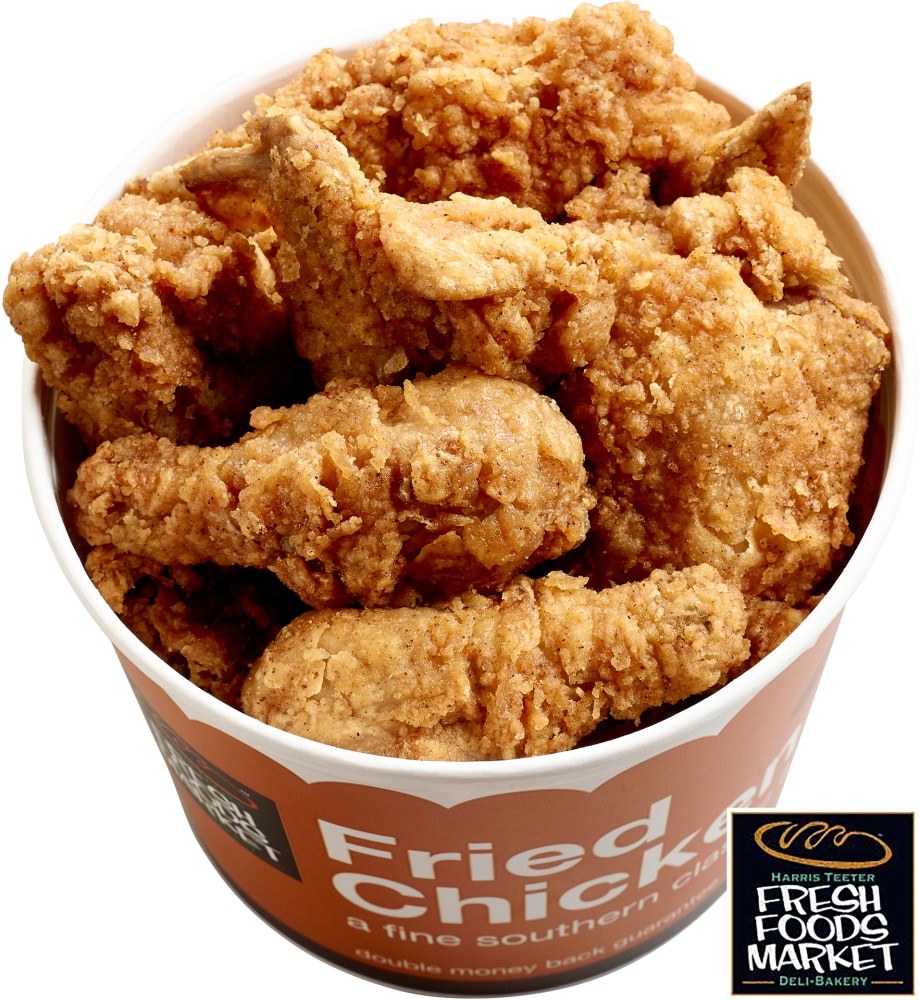



Harris Teeter Fresh Fried Chicken
Analysis updated August 2026 · How Scout scores
At a glance
Summary
This product contains chicken as a primary ingredient, which is a good source of protein. However, it is processed and includes soy flour, which is a less beneficial processed ingredient that can affect mineral absorption. The presence of wheat flour and other additives like silicon dioxide also contribute to its processed nature, limiting its score despite the presence of some beneficial components.
Key ingredients 10
ChickenGood
Chicken is a high-quality source of protein, providing essential amino acids necessary for muscle growth and repair. It is a versatile meat that can be prepared in various healthy ways. When sourced from pasture-raised or organic farms, it offers additional nutritional benefits.
Benefits
Rich in protein and essential nutrients, supporting muscle growth and overall health.
Garlic PowderGood
Concentrated whole-food seasoning.
Benefits
Adds flavor and may provide some antioxidant benefits.
WaterNeutral
Water is used as a solvent and processing aid in many food products. It does not contribute any calories or nutrients. Its presence is essential for maintaining moisture and texture in food products.
See more about Water →VinegarNeutral
Vinegar is often used as a flavoring agent and preservative in food products. It is made through the fermentation of ethanol by acetic acid bacteria. While it adds flavor, it does not provide significant nutritional benefits.
Risks
Excessive consumption may lead to digestive discomfort.
Benefits
May aid in flavor enhancement and preservation of food.
SaltNeutral
Salt is a common seasoning and preservative used in food products. It enhances flavor but excessive intake can lead to health issues such as hypertension. It is important to consume in moderation.
Risks
High sodium intake can contribute to hypertension and cardiovascular issues.
Benefits
Enhances flavor and acts as a preservative.
SpiceNeutral
Spices are used to enhance the flavor and aroma of food products. They can vary widely in type and nutritional content. While they add flavor, their nutritional impact is minimal in small quantities.
Benefits
Adds flavor and aroma to food.
Silicon DioxideNeutral
Silicon dioxide is used as an anti-caking agent in food products. It is generally recognized as safe and does not contribute to the nutritional profile of foods. Its primary function is to maintain product texture.
Benefits
Helps maintain texture and prevents clumping in food products.
Wheat FlourBad
Refined grain flour stripped of bran and germ.
Risks
May cause allergic reactions in individuals with gluten intolerance or celiac disease.
Benefits
Provides carbohydrates for energy.
Yeast ExtractBad
Concentrated glutamate source — MSG-adjacent flavor enhancer.
Risks
May cause reactions in individuals sensitive to glutamates.
Benefits
Enhances flavor profile of foods.
Soy FlourBad
Soy flour is a processed ingredient that can be used to enhance protein content in foods. It may contain anti-nutrients that affect mineral absorption. It is less beneficial compared to whole soy foods.
Risks
May cause allergic reactions and contains anti-nutrients that can affect mineral absorption.
Benefits
Provides plant-based protein and can enhance the nutritional profile of foods.
Processing
Processed Foods
Get the full breakdown in the Scout appTake Scout shopping
Scan any product to see lab results, healthy alternatives, and your personalized analysis.
Download on theApp Store GET IT ONGoogle Play