

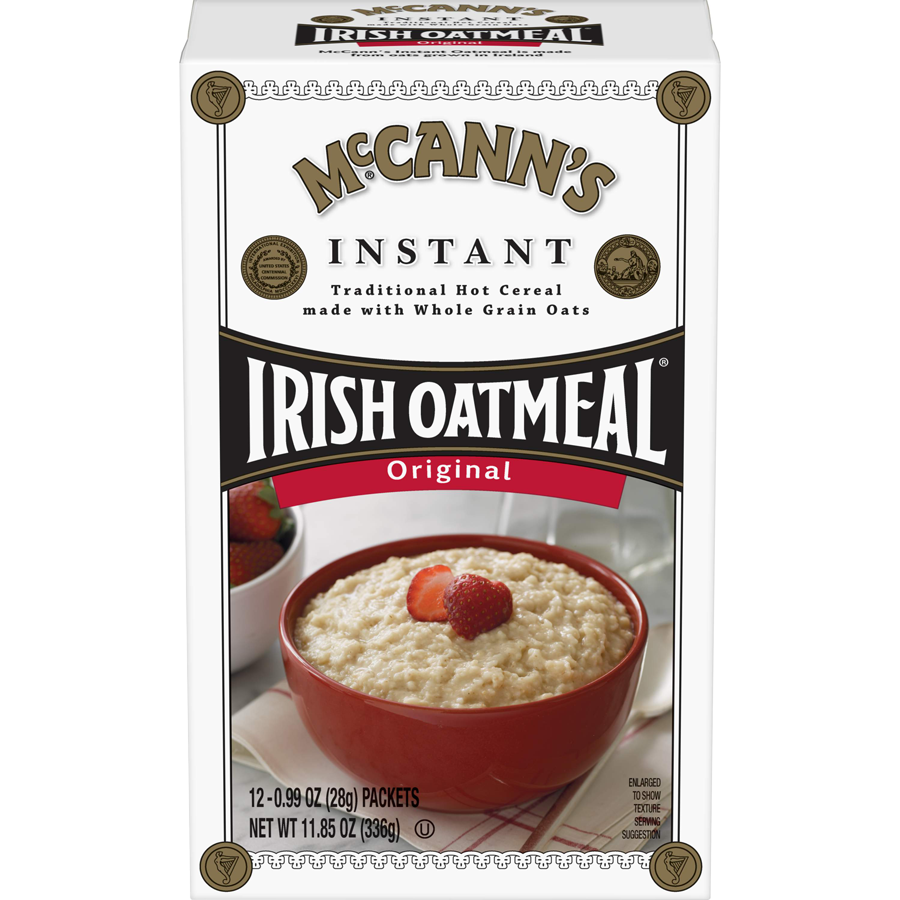
Mccann's Instant Irish Oatmeal
Analysis updated June 2026 · How Scout scores
At a glance
Summary
This instant oatmeal product contains whole grain rolled oats and oat flour, which are beneficial for their fiber and nutrient content. However, it is classified as ultra-processed due to the inclusion of additives like caramel color and guar gum. The presence of caramel color, which can contain potentially harmful contaminants, contributes to a lower score despite the nutritious base ingredients.
Key ingredients 13
Whole Grain Rolled Irish OatsGood
Whole grain rolled Irish oats are a nutritious source of complex carbohydrates and fiber. They are minimally processed, retaining most of their natural nutrients. Oats are known for their heart health benefits due to their beta-glucan content.
Benefits
Rich in fiber and beta-glucans, which can help lower cholesterol levels and support heart health.
Oat FlourGood
Oat flour is made from finely ground oats and provides a source of whole grains. It retains the nutritional benefits of oats, including fiber and essential nutrients. This ingredient supports digestive health and provides sustained energy.
Benefits
Provides fiber and essential nutrients, supporting digestive health and providing sustained energy.
NiacinamideGood
Vitamin B3 — evidence-backed skin and metabolic benefits.
Risks
High doses may cause flushing or liver issues.
Benefits
Supports energy metabolism and contributes to skin health.
Pyridoxine HydrochlorideGood
Beneficial ingredient — whole-food or functional value in this product class.
Risks
Excessive intake can lead to nerve damage.
Benefits
Supports protein metabolism and cognitive development.
RiboflavinGood
Essential B vitamin — beneficial micronutrient.
Benefits
Supports energy production and cellular function.
Calcium CarbonateNeutral
Calcium carbonate is used as a calcium supplement and food additive. It helps fortify foods with calcium, which is essential for bone health. However, excessive intake can lead to health issues such as kidney stones.
Risks
Excessive intake may lead to kidney stones or interfere with the absorption of other minerals.
Benefits
Provides a source of calcium, which is essential for maintaining healthy bones and teeth.
SaltNeutral
Salt is used to enhance flavor and as a preservative. It is a common ingredient in many foods but should be consumed in moderation. High sodium intake is associated with increased risk of hypertension.
Risks
High sodium intake can increase the risk of hypertension and cardiovascular diseases.
Benefits
Enhances flavor and acts as a preservative in food products.
Guar GumNeutral
Guar gum is a thickening agent derived from guar beans. It is used to improve texture and consistency in food products. While generally safe, it can cause digestive issues in sensitive individuals.
Risks
May cause digestive issues such as bloating or gas in sensitive individuals.
Benefits
Improves texture and consistency in food products.
Ferric PhosphateNeutral
Ferric phosphate is used as an iron supplement in fortified foods. It helps prevent iron deficiency anemia by providing a source of dietary iron. However, excessive iron intake can lead to toxicity.
Risks
Excessive iron intake can lead to toxicity and health issues such as liver damage.
Benefits
Provides a source of iron, which is essential for oxygen transport in the blood.
Vitamin A PalmitateNeutral
Vitamin A palmitate is a synthetic form of vitamin A used in food fortification. It supports vision and immune function. However, excessive intake can lead to toxicity and health issues.
Risks
Excessive intake can lead to vitamin A toxicity, causing liver damage and other health issues.
Benefits
Supports vision and immune function.
Thiamin MononitrateNeutral
Thiamin mononitrate is a form of vitamin B1 used in food fortification. It is essential for energy metabolism and nerve function. Generally safe with no significant risks at normal intake levels.
Benefits
Essential for energy metabolism and nerve function.
Folic AcidNeutral
Folic acid is a synthetic form of vitamin B9 used in food fortification. It is crucial for DNA synthesis and cell division. Excessive intake can mask vitamin B12 deficiency.
Risks
Excessive intake can mask vitamin B12 deficiency, leading to potential neurological issues.
Benefits
Crucial for DNA synthesis and cell division, supporting overall health.
Caramel ColorBad
Caramel color is a widely used food coloring that can contain contaminants like 4-MEI, which may pose health risks. It is often used in processed foods to enhance appearance. Some forms of caramel color have been linked to potential carcinogenic effects.
Risks
May contain 4-MEI, a potential carcinogen, and is associated with health concerns when consumed in large amounts.
Processing
Ultra-Processed Foods
Get the full breakdown in the Scout appTake Scout shopping
Scan any product to see lab results, healthy alternatives, and your personalized analysis.
Download on theApp Store GET IT ONGoogle PlayAmazon pricing & content
Amazon price as of . Product prices and availability are accurate as of the date/time indicated and are subject to change. Any price and availability information displayed on Amazon.com at the time of purchase will apply to the purchase of this product.
CERTAIN CONTENT THAT APPEARS ON THIS SITE COMES FROM AMAZON. THIS CONTENT IS PROVIDED “AS IS” AND IS SUBJECT TO CHANGE OR REMOVAL AT ANY TIME.