
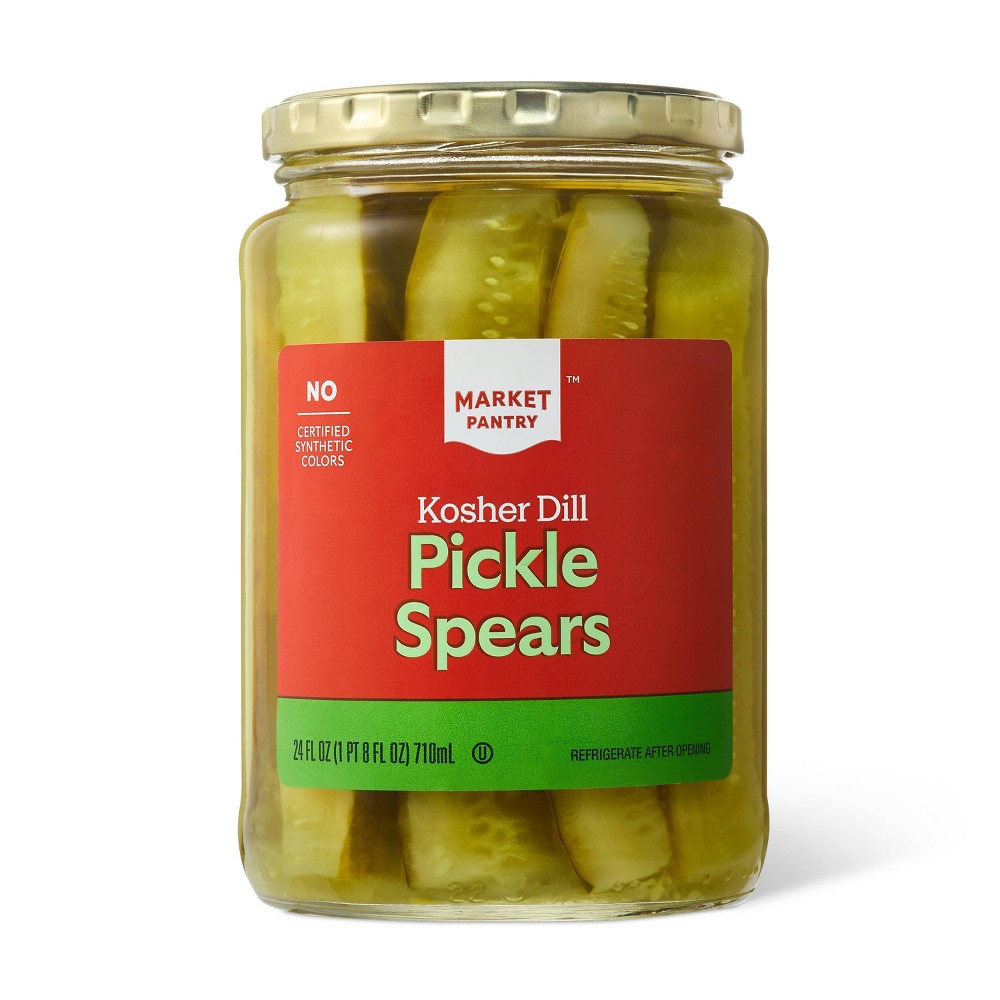

KOSHER DILL SPEARS, KOSHER DILL
Analysis updated September 2026 · How Scout scores
At a glance
Summary
This product is ultra-processed due to the inclusion of additives like polysorbate 80 and natural flavors, which are used to enhance texture and taste but may pose health concerns. While it contains beneficial ingredients such as cucumbers, vinegar, and sea salt, the presence of synthetic compounds and the high level of processing limit its health rating.
Key ingredients 8
CucumbersGood
Cucumbers are a low-calorie vegetable with high water content, making them hydrating and refreshing. They are a source of vitamins and antioxidants, contributing to overall health. Their natural state in this product is minimally processed, retaining most of their nutritional benefits.
Benefits
Rich in water and essential nutrients, cucumbers support hydration and provide antioxidants that may help reduce inflammation.
VinegarGood
Vinegar is a natural preservative that adds flavor and acidity to foods. It can aid digestion and has antimicrobial properties. The acetic acid in vinegar may also help regulate blood sugar levels.
Risks
Excessive consumption may lead to digestive discomfort due to its acidity.
Benefits
Provides antimicrobial properties and may aid in digestion and blood sugar regulation.
Sea saltGood
Sea salt is a natural source of sodium and trace minerals, enhancing flavor and preserving food. It is less processed than table salt, retaining more minerals. Its use in moderation can support electrolyte balance.
Risks
Excessive sodium intake can lead to high blood pressure and cardiovascular issues.
Benefits
Contains trace minerals and supports electrolyte balance when used in moderation.
TurmericGood
Beneficial ingredient — whole-food or functional value in this product class.
Benefits
Provides natural color and has potential anti-inflammatory properties.
WaterNeutral
Water is used as a base and solvent in food products, contributing to texture and consistency. It is essential for hydration but does not provide additional nutritional value in this context. Its presence is necessary for the pickling process.
Benefits
Essential for hydration and acts as a solvent in the pickling process.
Calcium chlorideNeutral
Calcium chloride is used as a firming agent in pickles, helping maintain texture. It is generally recognized as safe and does not significantly alter nutritional content. Its use is common in food preservation.
Benefits
Helps maintain the firmness and texture of pickled products.
Natural flavorsBad
Natural flavors are often used to enhance taste but lack transparency in their composition. They can contain a variety of compounds, some of which may not be beneficial. The lack of disclosure can be concerning for those with allergies or sensitivities.
Risks
Potential allergen risk due to undisclosed components and lack of transparency.
Benefits
Enhances flavor without adding calories.
Polysorbate 80Bad
Polysorbate 80 is an emulsifier used to improve texture and stability in foods. It is a synthetic compound that can cause digestive issues in sensitive individuals. Its use in processed foods is often criticized due to potential health concerns.
Risks
May cause digestive discomfort and allergic reactions in sensitive individuals.
Benefits
Improves texture and stability of food products.
Processing
Ultra-Processed Foods
Get the full breakdown in the Scout appTake Scout shopping
Scan any product to see lab results, healthy alternatives, and your personalized analysis.
Download on theApp Store GET IT ONGoogle Play