

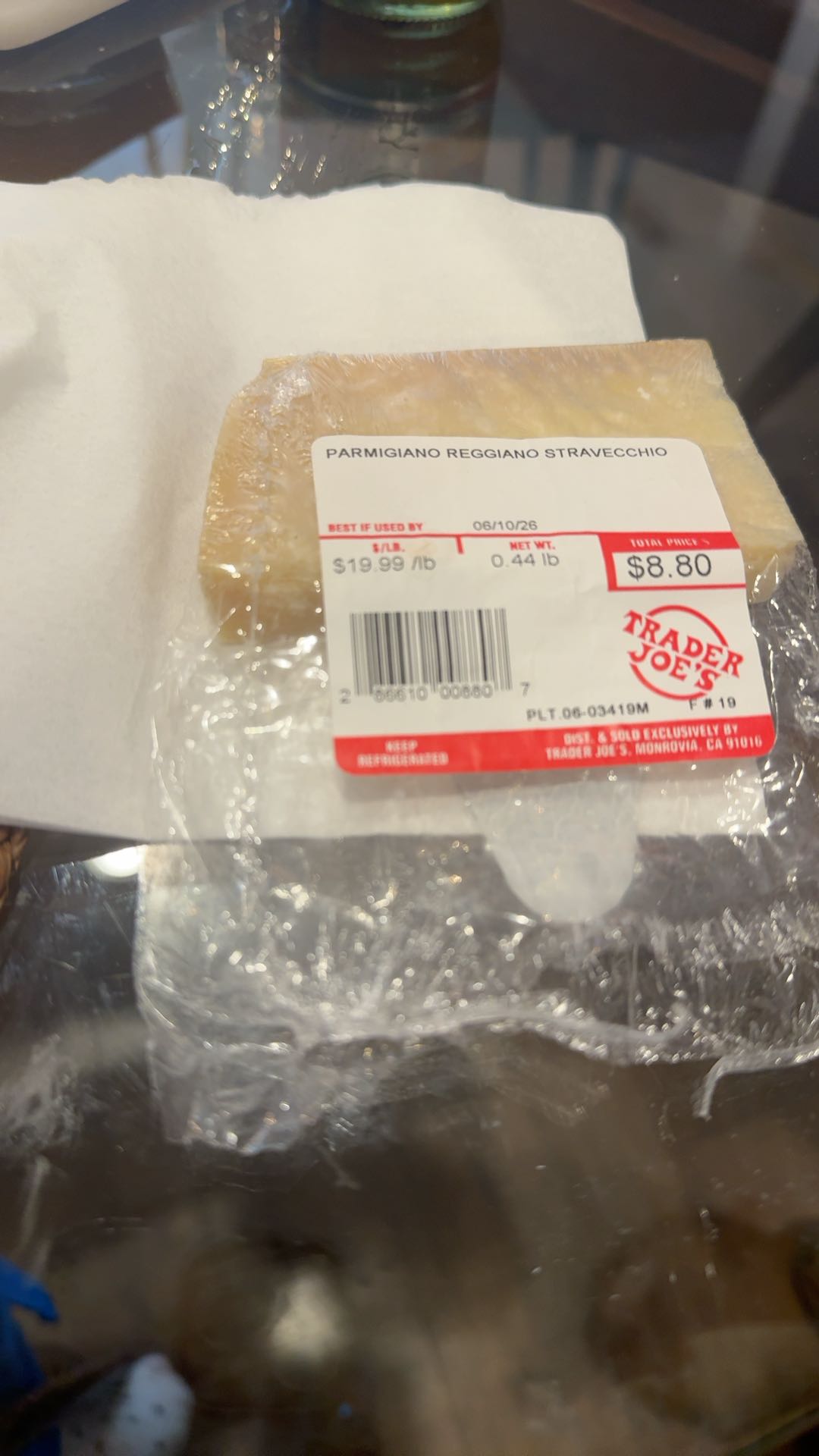


Parmigiano Reggiano Cheese
Analysis updated October 2026 · How Scout scores
At a glance
Summary
Parmigiano Reggiano Cheese is made from unpasteurized cow's milk, salt, and rennet, which are traditional ingredients for cheese production. This product is minimally processed and retains the natural enzymes and beneficial bacteria from the milk, contributing to its nutritional value and rich flavor. Despite being classified as processed, its clean ingredient list and traditional preparation method allow it to score highly within its category.
Key ingredients 3
Unpasteurized cow's milkGood
Unpasteurized cow's milk is a high-quality source of protein and essential nutrients. It retains natural enzymes and beneficial bacteria that may aid digestion. The milk is sourced from cows, which can provide a rich flavor profile and nutritional benefits.
Risks
Consumption of unpasteurized milk carries a risk of bacterial contamination, which can lead to foodborne illnesses.
Benefits
Rich in protein, calcium, and vitamins, supporting bone health and muscle function. Contains beneficial bacteria that may support gut health.
RennetGood
Beneficial ingredient — whole-food or functional value in this product class.
Benefits
Facilitates the cheese-making process by coagulating milk, allowing for the formation of curds. Essential for traditional cheese production.
SaltNeutral
Salt is used as a preservative and flavor enhancer in cheese production. It helps in the cheese aging process and contributes to the overall taste. While necessary in cheese making, excessive consumption of salt can lead to health issues.
Risks
High sodium intake can contribute to hypertension and cardiovascular diseases.
Benefits
Essential for the cheese aging process and enhances flavor. Provides sodium, an essential mineral for various bodily functions.
Processing
Processed Foods
Get the full breakdown in the Scout appTake Scout shopping
Scan any product to see lab results, healthy alternatives, and your personalized analysis.
Download on theApp Store GET IT ONGoogle Play