
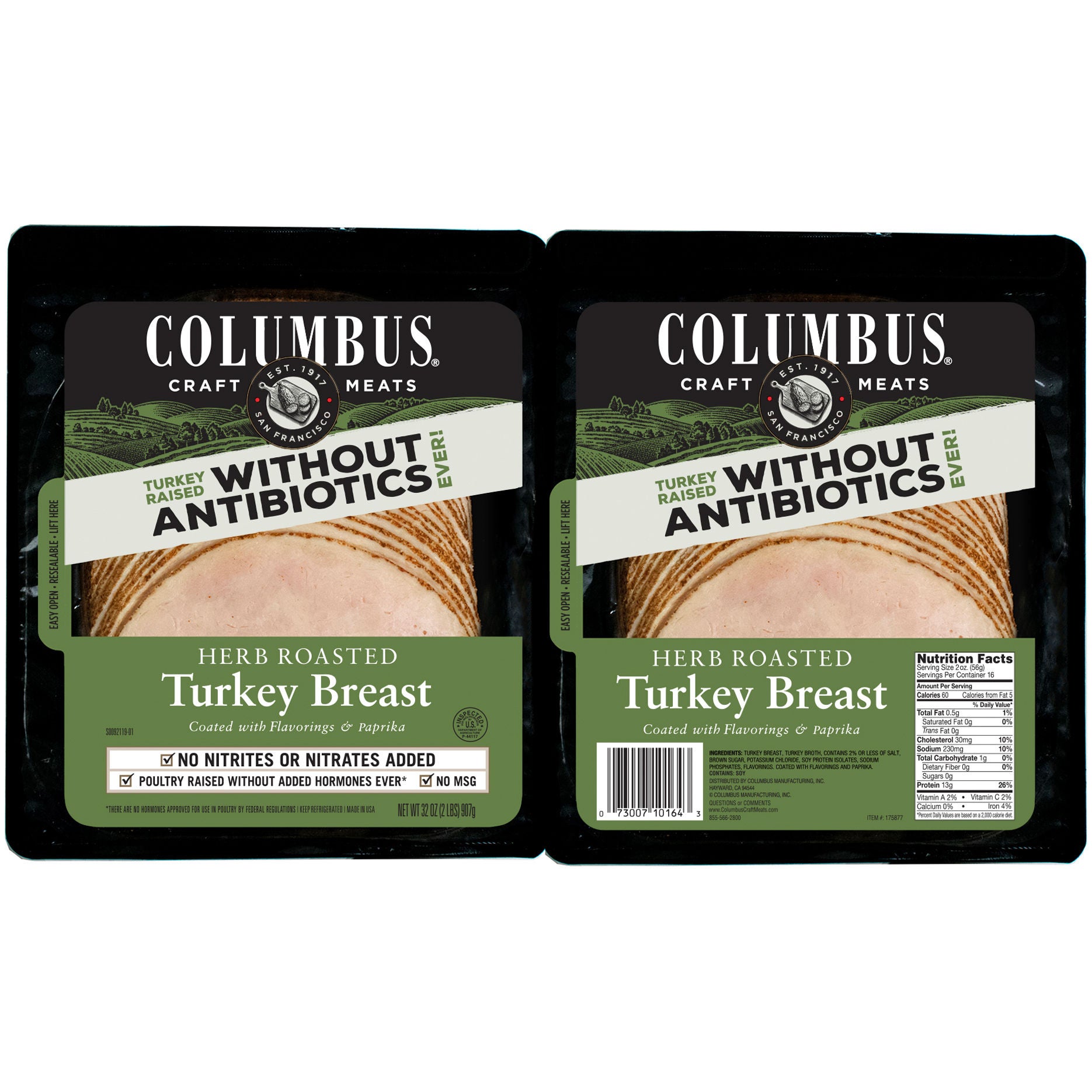
Herb, Roasted Turkey Breast
At a glance
Summary
This herb roasted turkey breast is a processed product with added sodium phosphates and flavorings, which are common in processed meats to enhance texture and taste but can contribute to high phosphorus intake and lack transparency. While it provides a good source of lean protein, the presence of these additives and its processing level limit its healthiness compared to minimally processed meats.
Key ingredients 8
Turkey BreastGood
Turkey breast is a high-quality source of lean protein, providing essential amino acids. It is minimally processed and typically free from additives when used in whole form. Compared to processed meats, it offers a cleaner nutritional profile.
Benefits
Rich in protein, which is essential for muscle repair and growth. Low in fat and carbohydrates, making it a healthy choice for various diets.
Turkey BrothNeutral
Turkey broth is used to enhance flavor and moisture in the product. It is typically made by simmering turkey bones and meat, which can add some nutrients. However, its nutritional contribution is minimal compared to the main protein source.
Benefits
May provide a small amount of minerals and flavor enhancement.
SaltNeutral
Salt is used as a seasoning and preservative in many processed foods. It is essential for flavor but can contribute to high sodium intake if consumed excessively. In this context, it is a standard ingredient without additional health benefits.
Risks
Excessive consumption can lead to high blood pressure and other cardiovascular issues.
Benefits
Enhances flavor and acts as a preservative.
Brown SugarNeutral
Brown sugar is used to add sweetness and enhance flavor. It is a refined sugar, which can contribute to calorie intake without providing significant nutrients. In small amounts, it is generally considered neutral in impact.
Risks
Excessive consumption can lead to weight gain and increased risk of metabolic disorders.
Benefits
Provides sweetness and flavor enhancement.
Potassium ChlorideNeutral
Potassium chloride is often used as a salt substitute to reduce sodium content. It can help maintain electrolyte balance but may have a metallic taste. It is generally safe in moderate amounts.
Risks
Excessive intake can lead to hyperkalemia, especially in individuals with kidney issues.
Benefits
Helps reduce sodium intake while maintaining flavor.
PaprikaNeutral
Paprika is a spice made from ground peppers, used for flavor and color. It is a natural ingredient with minimal processing. While it adds flavor, its nutritional impact is minor in small quantities.
Benefits
Adds flavor and color naturally without significant health concerns.
Sodium PhosphatesBad
Sodium phosphates are used as emulsifiers and preservatives in processed foods. They can contribute to high phosphorus intake, which may affect kidney health. Their use is common in processed meats to retain moisture and improve texture.
Risks
Excessive phosphorus intake can lead to imbalances in calcium and phosphorus levels, potentially affecting bone health.
Benefits
Helps retain moisture and improve texture in processed meats.
FlavoringsBad
Flavorings are often used to enhance taste but can be vague in terms of composition. They may contain artificial additives or allergens. The lack of transparency makes it difficult to assess their health impact.
Risks
Potential allergens or artificial additives may pose health risks to sensitive individuals.
Benefits
Enhances flavor, making the product more palatable.
Processing
Processed Foods
Get the full breakdown in the Scout appTake Scout shopping
Scan any product to see lab results, healthy alternatives, and your personalized analysis.
Are you Columbus? Fix an error Get the badge Get tested


