
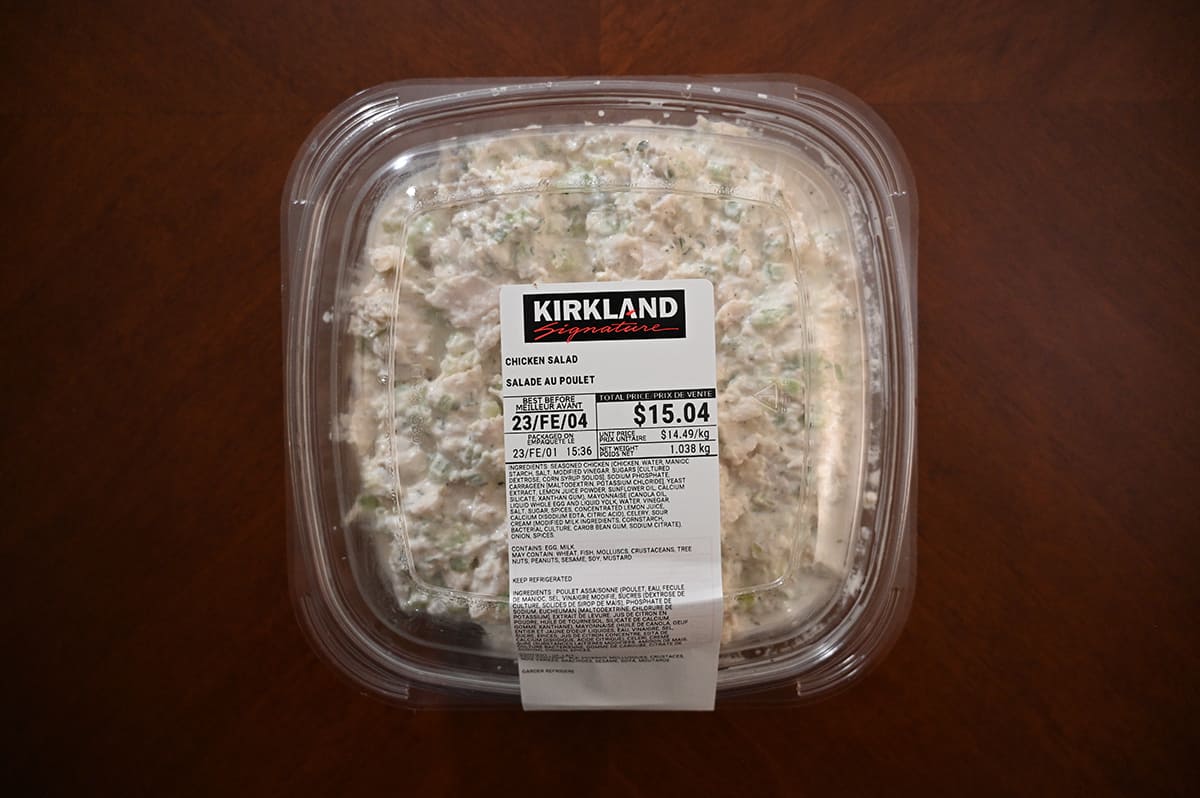


At a glance
Summary
This chicken salad contains processed ingredients such as sodium phosphate, which is used to retain moisture and improve texture but can affect kidney function in high amounts. The presence of modified starches also indicates a higher level of processing. While the product uses real chicken breast, the additives and processing level limit its healthiness compared to less processed options.
Key ingredients 7
Rotisserie chicken breastNeutral
Rotisserie chicken breast is a source of lean protein. It is typically seasoned and cooked, which can add sodium and other preservatives. The quality depends on the seasoning and cooking method used.
Risks
Potentially high sodium content due to seasoning.
Benefits
Provides a good source of protein essential for muscle maintenance and repair.
Chicken breast meatNeutral
Chicken breast meat is a lean protein source. It is cooked, which can affect nutrient retention. The quality is generally high if minimally processed.
Benefits
Rich in protein, supporting muscle growth and repair.
WaterNeutral
Water is used as a solvent and processing aid. It does not contribute any nutritional value. It is essential for hydration but does not impact the nutritional profile of the product.
See more about Water →SaltNeutral
Salt is used for flavor enhancement and preservation. It is a common additive in processed foods. Excessive consumption can lead to health issues like hypertension.
Risks
High sodium intake can increase the risk of hypertension and cardiovascular diseases.
Benefits
Enhances flavor and acts as a preservative.
Modified potato starchNeutral
Modified potato starch is used as a thickening agent. It is processed to improve its functional properties. It does not provide significant nutritional benefits.
Benefits
Improves texture and consistency in food products.
Modified tapioca starchNeutral
Modified tapioca starch is used as a thickener and stabilizer. It is processed to enhance its properties for food applications. It is generally considered safe but offers minimal nutritional value.
Benefits
Enhances texture and stability in processed foods.
Sodium phosphateBad
Sodium phosphate is used as a preservative and to retain moisture in meats. It is a processed additive that can affect kidney function in high amounts. Its use is common in processed foods to improve texture and shelf life.
Risks
Excessive intake may lead to imbalances in phosphate levels, affecting kidney health.
Benefits
Helps retain moisture and improve texture in processed meats.
Processing
Processed Foods
Get the full breakdown in the Scout appTake Scout shopping
Scan any product to see lab results, healthy alternatives, and your personalized analysis.
Download on theApp Store GET IT ONGoogle Play