
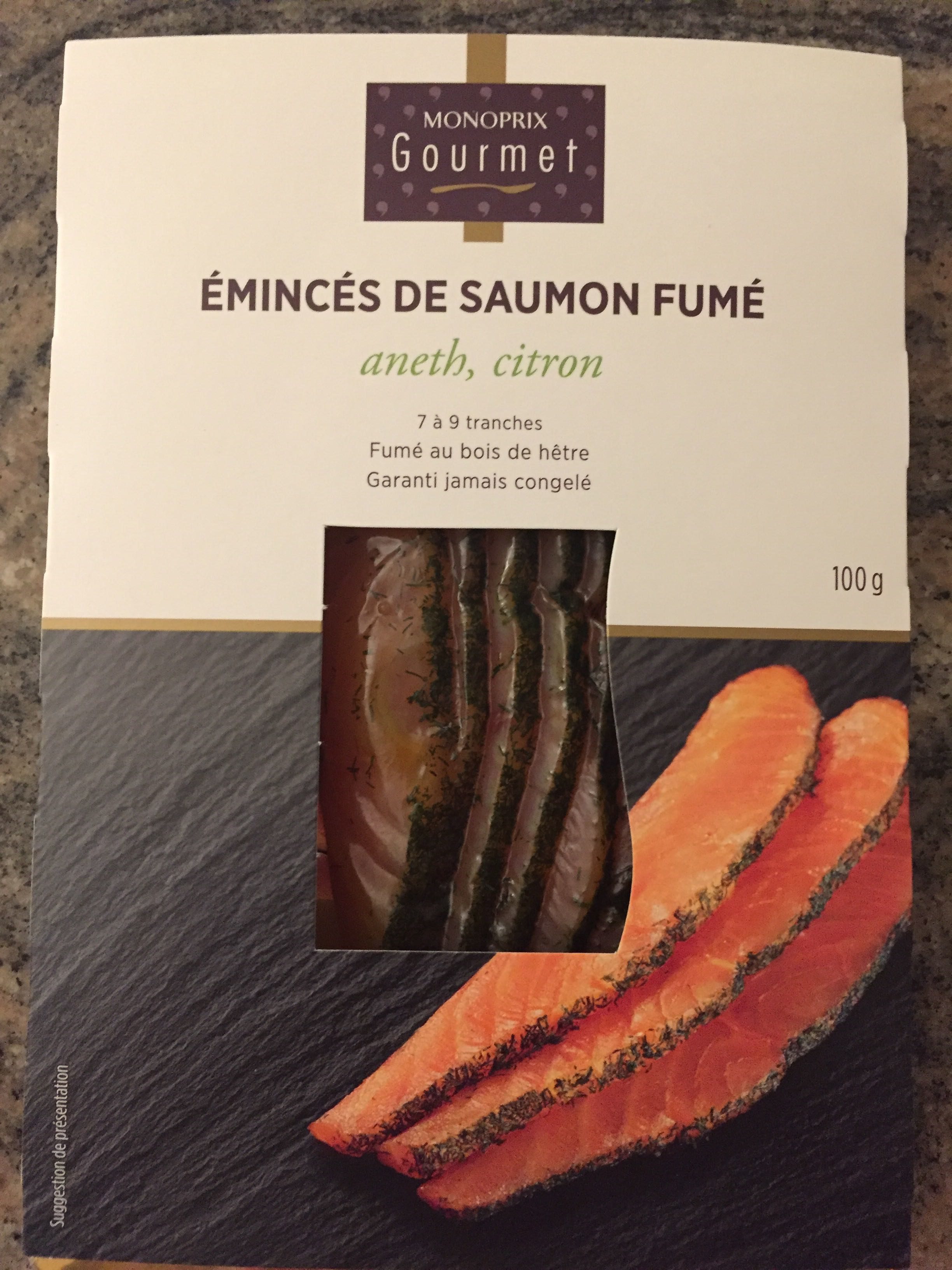


Gourmet - Émincés de saumon fumé, aneth et citron
Analysis updated September 2026 · How Scout scores
At a glance
Summary
This smoked salmon product contains high-quality ingredients like Atlantic salmon, dill, and lemon zest, which are beneficial for health due to their nutrient content and flavor. However, the presence of rapeseed oil, a processed seed oil, detracts from its overall healthiness due to potential inflammatory effects. The product's processing level also limits its score, despite the generally clean ingredient list.
Key ingredients 7
Atlantic salmonVery Good
Atlantic salmon is a high-quality source of protein and omega-3 fatty acids. It is beneficial for heart health and supports brain function. The fish is typically rich in essential nutrients like vitamin D and selenium.
Risks
Potential risks include contamination with heavy metals or pollutants if not sourced sustainably.
Benefits
Rich in omega-3 fatty acids that support cardiovascular health and reduce inflammation. Provides high-quality protein and essential nutrients like vitamin D.
DillGood
Dill is a flavorful herb that adds aroma and taste to dishes. It contains antioxidants and may have antimicrobial properties. Dill is often used in culinary applications for its fresh, tangy flavor.
Benefits
Contains antioxidants that may help reduce oxidative stress. Adds flavor without adding calories or unhealthy substances.
Lemon zestGood
Lemon zest adds a burst of citrus flavor and aroma to dishes. It contains essential oils and antioxidants. The zest is often used to enhance the taste and nutritional profile of foods.
Benefits
Rich in antioxidants and essential oils that may support immune function and provide a refreshing flavor.
SaltNeutral
Salt is used as a seasoning and preservative in foods. It is essential for maintaining fluid balance and nerve function. However, excessive intake can lead to health issues such as hypertension.
Risks
Excessive consumption can lead to high blood pressure and cardiovascular issues.
Benefits
Essential for maintaining fluid balance and proper nerve function.
VinegarNeutral
Vinegar is used as a preservative and flavor enhancer in foods. It can aid in digestion and has antimicrobial properties. The acidity of vinegar can help balance flavors in dishes.
Risks
Excessive consumption may lead to digestive discomfort or enamel erosion.
Benefits
May aid in digestion and has antimicrobial properties that can help preserve food.
Lime essential oilNeutral
Lime essential oil is used for its aromatic properties and flavor enhancement. It contains volatile compounds that provide a refreshing citrus aroma. The oil is typically used in small quantities to enhance flavor.
Benefits
Provides a refreshing citrus aroma and flavor that can enhance the sensory experience of foods.
Rapeseed oilVery Bad
Rapeseed oil, also known as canola oil, is a seed oil high in omega-6 fatty acids. It is heavily processed and may contribute to inflammation when consumed in excess. The extraction process often involves high heat and chemicals, which can degrade nutritional quality.
Risks
High omega-6 content may promote inflammation when consumed in excess.
Processing
Processed Foods
Get the full breakdown in the Scout appTake Scout shopping
Scan any product to see lab results, healthy alternatives, and your personalized analysis.
Download on theApp Store GET IT ONGoogle Play