
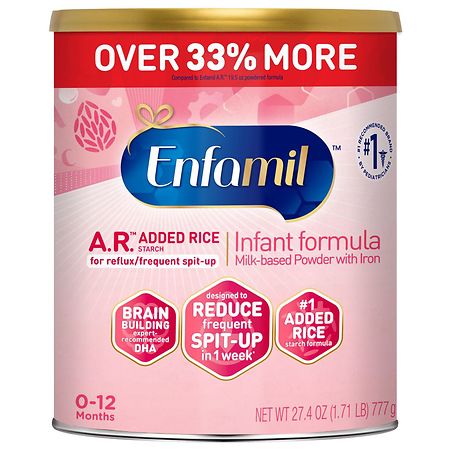



Enfamil A.R. Powder Infant Formula - 27.4oz
Analysis updated July 2026 · How Scout scores
At a glance
Summary
This infant formula contains beneficial ingredients such as nonfat milk, lactose, and prebiotics that support infant growth and development. However, the inclusion of vegetable oils, which can be high in omega-6 fatty acids and may promote inflammation, is a concern. The formula is also moderately processed, which is typical for infant formulas, but the presence of these oils and the processing level slightly detracts from its overall healthiness.
Key ingredients 10
GalactooligosaccharidesGood
Galactooligosaccharides are prebiotics that support the growth of beneficial gut bacteria in infants. They are derived from lactose and help promote a healthy digestive system. These prebiotics mimic the function of oligosaccharides found in breast milk.
Benefits
Promotes the growth of beneficial gut bacteria, supporting a healthy digestive system.
Mortierella Alpina OilGood
Mortierella alpina oil is a source of arachidonic acid (ARA), an omega-6 fatty acid important for brain and eye development in infants. It is produced through microbial fermentation, ensuring a consistent and safe supply. ARA is naturally present in breast milk and is crucial for infant development.
Benefits
Supports brain and eye development, mimicking the natural presence of ARA in breast milk.
Schizochytrium Sp. OilGood
Schizochytrium sp. oil is a source of docosahexaenoic acid (DHA), an omega-3 fatty acid essential for brain and eye development. It is derived from microalgae, providing a sustainable and vegetarian source of DHA. DHA is crucial for cognitive development and is naturally found in breast milk.
Benefits
Essential for cognitive development and eye health, providing a sustainable source of DHA.
Nonfat MilkNeutral
Standard formulation ingredient — neither beneficial nor harmful at typical use.
Benefits
Provides essential nutrients like calcium and protein crucial for bone development and overall growth.
Rice StarchNeutral
Rice starch is used as a thickening agent to help reduce spit-up in infants. It is a processed carbohydrate that provides texture and consistency to the formula. While it serves a functional purpose, it does not offer significant nutritional benefits.
Benefits
Helps improve the texture and consistency of the formula, potentially reducing spit-up.
LactoseNeutral
Standard formulation ingredient — neither beneficial nor harmful at typical use.
Benefits
Supports energy provision and calcium absorption, mimicking the natural composition of breast milk.
PolydextroseNeutral
Polydextrose is a synthetic polymer of glucose used as a fiber supplement and stabilizer in formulas. It is generally recognized as safe and can aid in digestive health by increasing stool bulk. However, it does not provide significant nutritional benefits.
Risks
Excessive consumption may cause gastrointestinal discomfort, but this is unlikely in infant formulas.
Benefits
May aid in digestive health by increasing stool bulk.
Calcium CarbonateNeutral
Standard formulation ingredient — neither beneficial nor harmful at typical use.
Benefits
Provides essential calcium for bone development and growth.
MaltodextrinBad
Processed additive flagged under Scout's ingredient doctrine.
Risks
High glycemic index may affect blood sugar levels, but this is less of a concern in infant formulas.
Benefits
Provides energy and improves the texture and stability of the formula.
Vegetable OilVery Bad
Vegetable oil, particularly when it includes palm olein, coconut oil, soy oil, and high oleic sunflower oil, can be high in omega-6 fatty acids, which may promote inflammation. The processing methods often involve high heat and chemicals, which can degrade the oil quality. These oils are often used as a cost-effective fat source but may not be the healthiest option for infants.
Risks
High omega-6 content may promote inflammation when consumed in excess.
Benefits
Provides a source of dietary fat necessary for energy and growth, though the quality of fat is a concern.
Processing
Ultra-Processed Foods
Get the full breakdown in the Scout appTake Scout shopping
Scan any product to see lab results, healthy alternatives, and your personalized analysis.
Download on theApp Store GET IT ONGoogle Play