
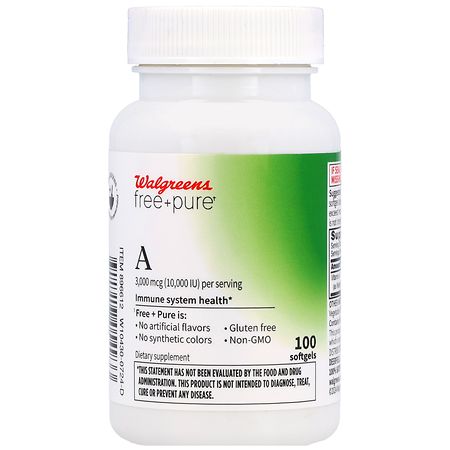

Walgreens Free & Pure A 3,000 mcg Softgels - 100.0 ea
Analysis updated August 2026 · How Scout scores
At a glance
Summary
This supplement contains beneficial ingredients such as retinyl palmitate and cod liver oil, which provide essential nutrients like vitamin A and omega-3 fatty acids. However, the inclusion of sunflower oil, a seed oil high in omega-6 fatty acids, is a concern due to its potential to promote inflammation. The product's formulation is relatively simple, but the presence of a processed seed oil impacts its overall healthfulness.
Key ingredients 5
Retinyl PalmitateGood
Retinyl palmitate is a beneficial form of vitamin A, essential for vision, immune function, and skin health. It is a preformed vitamin A, which is more readily absorbed by the body compared to beta-carotene. This ingredient supports overall health and wellness.
Risks
Excessive intake can lead to hypervitaminosis A, a condition caused by vitamin A toxicity.
Benefits
Essential for maintaining healthy vision, immune function, and skin health.
Cod Liver OilGood
Cod liver oil is a good source of omega-3 fatty acids and vitamins A and D, supporting heart, brain, and bone health. It is derived from the liver of cod fish and is known for its anti-inflammatory properties. This ingredient is beneficial for overall health due to its nutrient-rich profile.
Risks
Excessive consumption can lead to vitamin A toxicity and potential bleeding risks due to high omega-3 content.
Benefits
Rich in omega-3 fatty acids and vitamins A and D, supporting heart, brain, and bone health.
GelatinNeutral
Gelatin is a neutral ingredient commonly used as a gelling agent in supplements. It is derived from animal collagen and does not have significant health risks or benefits. Its role is primarily functional, providing structure to the softgel.
See more about Gelatin →Vegetable GlycerinNeutral
Vegetable glycerin is a neutral ingredient used as a humectant and sweetener. It is generally recognized as safe and does not pose significant health risks. It is derived from plant oils and is used to maintain moisture in the product.
See more about Vegetable Glycerin →Sunflower OilVery Bad
Sunflower oil is classified as very bad due to its high omega-6 fatty acid content, which can promote inflammation. It is a seed oil that is heavily processed, often using chemical solvents. This ingredient is not recommended for regular consumption due to its potential health risks.
Risks
High omega-6 content may promote inflammation when consumed in excess.
Processing
Processed Foods
Get the full breakdown in the Scout appTake Scout shopping
Scan any product to see lab results, healthy alternatives, and your personalized analysis.
Download on theApp Store GET IT ONGoogle Play