
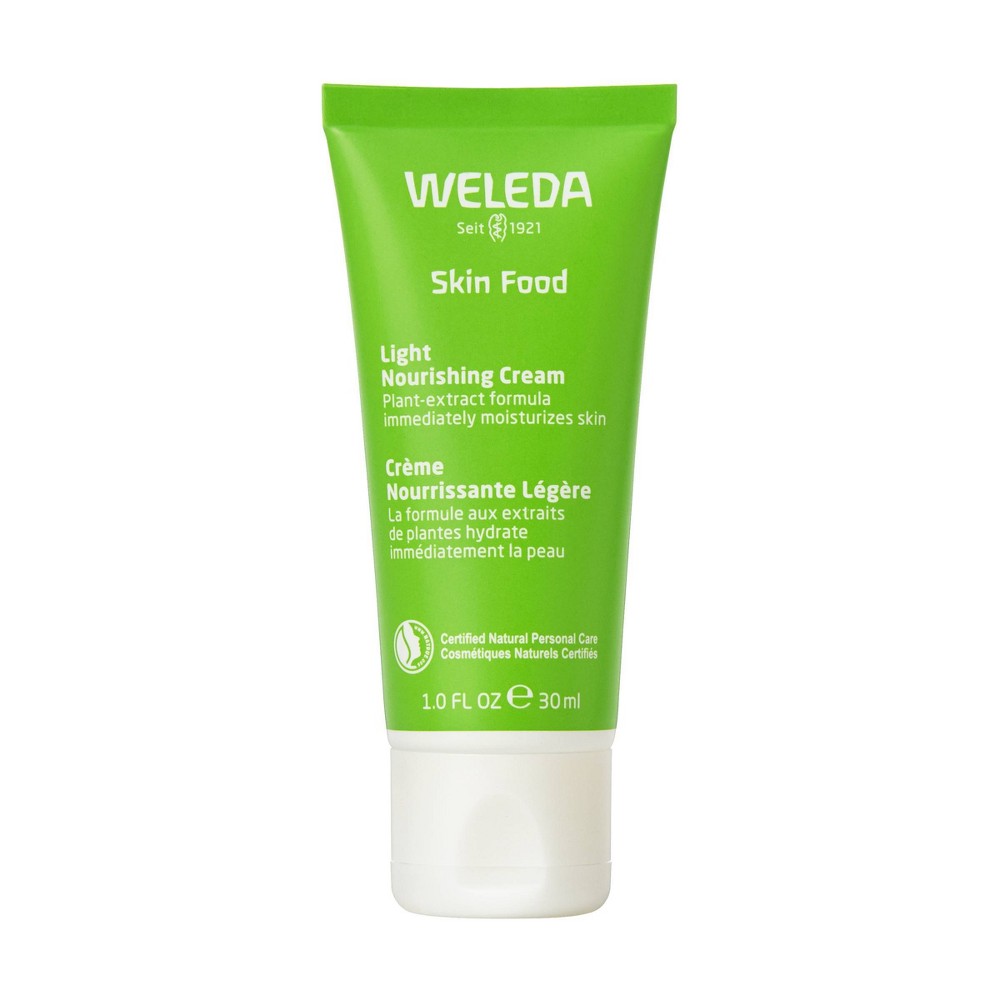

Weleda Skin Food Light Nourishing Cream - 1 fl oz: Paraben-Free, Whole Body, Chamomile, Normal to Dry Skin
Analysis updated August 2026 · How Scout scores
At a glance
Summary
This moisturizer contains beneficial natural ingredients like sunflower seed oil, glycerin, beeswax, and shea butter, which are known for their moisturizing and skin-nourishing properties. However, the presence of fragrance components such as limonene, linalool, and geraniol, which can cause skin irritation and sensitization, lowers its overall safety profile. The product is processed, which also impacts its score, but the inclusion of multiple beneficial botanicals helps balance the formulation.
Key ingredients 23
Helianthus Annuus Seed OilVery Good
Helianthus Annuus (Sunflower) Seed Oil is a natural oil rich in essential fatty acids and vitamin E. It is known for its emollient properties, which help to moisturize and soften the skin. It is well-tolerated by most skin types.
Risks
Rarely, it may cause allergic reactions in sensitive individuals.
Benefits
It provides antioxidant protection and helps maintain the skin's natural barrier.
BeeswaxVery Good
Beeswax is a natural wax produced by honeybees and is used in cosmetics for its emollient and thickening properties. It forms a protective barrier on the skin's surface, locking in moisture. It is well-tolerated and beneficial for dry skin.
Risks
May cause allergic reactions in individuals with bee allergies.
Benefits
It provides a protective barrier and helps retain skin moisture.
Theobroma Cacao Seed ButterVery Good
Theobroma Cacao (Cocoa) Seed Butter is a natural fat extracted from cocoa beans, known for its rich emollient properties. It deeply moisturizes and nourishes the skin, making it ideal for dry skin types. It also contains antioxidants that protect the skin.
Risks
Rarely, it may cause breakouts in acne-prone skin.
Benefits
It provides deep hydration and antioxidant protection.
Butyrospermum Parkii ButterVery Good
Butyrospermum Parkii (Shea) Butter is a natural fat extracted from the nuts of the shea tree. It is highly moisturizing and contains vitamins A and E, which promote skin health. It is widely used for its soothing and anti-inflammatory properties.
Risks
May cause allergic reactions in individuals with nut allergies.
Benefits
It deeply moisturizes and soothes the skin.
Chamomilla Recutita Flower ExtractVery Good
Chamomilla Recutita (Matricaria) Flower Extract is known for its soothing and anti-inflammatory properties. It is widely used in skincare to calm and soothe irritated skin. It is beneficial for sensitive and dry skin types.
Risks
Rarely, it may cause allergic reactions in sensitive individuals.
Benefits
It soothes and calms the skin, reducing redness and irritation.
Calendula Officinalis Flower ExtractVery Good
Calendula Officinalis Flower Extract is derived from the marigold flower and is known for its healing and anti-inflammatory properties. It is used in skincare to soothe and repair damaged skin. It is safe and beneficial for sensitive skin.
Risks
There are minimal risks associated with this ingredient.
Benefits
It promotes skin healing and reduces inflammation.
LanolinVery Good
Lanolin is a natural emollient derived from sheep's wool, known for its moisturizing and protective properties. It helps to lock in moisture and protect the skin from environmental damage. It is highly effective for dry and chapped skin.
Risks
May cause allergic reactions in individuals sensitive to wool.
Benefits
It provides deep hydration and forms a protective barrier on the skin.
GlycerinGood
Glycerin is a humectant that attracts moisture to the skin, helping to keep it hydrated. It is widely used in skincare for its ability to improve skin barrier function. It is generally safe and effective for all skin types.
Risks
There are minimal risks associated with glycerin, though it may cause irritation in very sensitive skin.
Benefits
It enhances skin hydration and smoothness.
Glyceryl Stearate CitrateGood
Glyceryl Stearate Citrate is an emulsifier that helps to blend oil and water components in formulations. It is derived from natural sources and is considered safe for use in cosmetics. It contributes to the smooth texture of the product.
Risks
There are no significant risks associated with this ingredient.
Benefits
It helps to stabilize the formulation and improve skin feel.
Viola Tricolor ExtractGood
Viola Tricolor Extract is derived from the wild pansy flower and is known for its soothing and anti-inflammatory properties. It is used in skincare for its ability to calm irritated skin. It is generally safe and beneficial for sensitive skin.
Risks
There are minimal risks associated with this ingredient.
Benefits
It soothes and calms irritated skin.
Rosmarinus Officinalis Leaf ExtractGood
Rosmarinus Officinalis (Rosemary) Leaf Extract is an antioxidant-rich botanical extract used in cosmetics for its skin-protective properties. It helps to combat free radicals and has antimicrobial benefits. It is generally safe for use in skincare.
Risks
May cause irritation in very sensitive skin.
Benefits
Provides antioxidant protection and antimicrobial benefits.
Glyceryl CaprylateGood
Glyceryl Caprylate is an emollient and co-emulsifier derived from natural sources. It helps to condition and soften the skin while also providing antimicrobial properties. It is considered safe and beneficial for skin health.
Risks
There are minimal risks associated with this ingredient.
Benefits
It conditions the skin and enhances product stability.
WaterNeutral
Water is a common solvent used in cosmetics to dissolve other ingredients. It helps in the application and absorption of the product. It does not provide direct benefits or risks.
Risks
There are no significant risks associated with water in cosmetics.
Benefits
Water helps in hydrating the skin by acting as a vehicle for other moisturizing ingredients.
AlcoholNeutral
Alcohol is used in cosmetics as a solvent and to enhance the absorption of other ingredients. It can have a drying effect on the skin if used in high concentrations. In this formulation, it is likely used in a controlled amount.
Risks
Excessive use can lead to skin dryness and irritation.
Benefits
It helps in the quick absorption of the product.
Cetearyl AlcoholNeutral
Standard formulation ingredient — neither beneficial nor harmful at typical use.
Risks
There are minimal risks, though it may cause irritation in very sensitive skin.
Benefits
It improves the texture and feel of the product.
Xanthan GumNeutral
Xanthan Gum is a polysaccharide used as a thickening and stabilizing agent in cosmetics. It helps to improve the texture and consistency of the product. It is generally safe and does not provide direct benefits or risks to the skin.
Risks
There are no significant risks associated with xanthan gum in cosmetics.
Benefits
It enhances the texture and stability of the formulation.
Lactic AcidNeutral
Standard formulation ingredient — neither beneficial nor harmful at typical use.
Risks
May cause irritation or sensitivity, especially in high concentrations.
Benefits
It exfoliates and hydrates the skin, improving texture and tone.
LimoneneBad
Limonene is a fragrance ingredient and solvent naturally found in citrus oils. It can cause skin irritation and sensitization, especially when oxidized. It is often used for its pleasant scent.
Risks
Potential for skin irritation and allergic reactions.
Benefits
Provides a fresh citrus scent to the product.
CarrageenanBad
Processed additive flagged under Scout's ingredient doctrine.
Risks
There are no significant risks associated with carrageenan in cosmetics.
Benefits
It helps to stabilize and thicken the product formulation.
LinaloolBad
Linalool is a fragrance component found in many essential oils, used for its pleasant floral scent. It can cause skin irritation and sensitization, especially when oxidized. It is often included in formulations for its aromatic properties.
Risks
Potential for skin irritation and allergic reactions.
Benefits
Provides a floral scent to the product.
GeraniolBad
Geraniol is a fragrance ingredient with a rose-like scent, commonly used in cosmetics. It can cause skin irritation and allergic reactions in sensitive individuals. It is included for its aromatic properties.
Risks
Potential for skin irritation and allergic reactions.
Benefits
Provides a rose-like scent to the product.
CitralBad
Citral is a fragrance component with a strong lemon scent, used in cosmetics for its aromatic properties. It can cause skin irritation and sensitization, particularly in sensitive skin. It is often included for its fresh citrus aroma.
Risks
Potential for skin irritation and allergic reactions.
Benefits
Provides a fresh lemon scent to the product.
FragranceVery Bad
Fragrance is used in cosmetics to impart a pleasant scent, but it can be a common cause of skin irritation and allergic reactions. It is often a mixture of various chemicals, some of which may be sensitizing. It is generally advised to avoid fragrance in products for sensitive skin.
Risks
Potential for skin irritation and allergic reactions.
Benefits
Provides a pleasant scent to the product.
Get the full breakdown in the Scout appTake Scout shopping
Scan any product to see lab results, healthy alternatives, and your personalized analysis.
Download on theApp Store GET IT ONGoogle PlayAmazon pricing & content
Amazon price as of . Product prices and availability are accurate as of the date/time indicated and are subject to change. Any price and availability information displayed on Amazon.com at the time of purchase will apply to the purchase of this product.
CERTAIN CONTENT THAT APPEARS ON THIS SITE COMES FROM AMAZON. THIS CONTENT IS PROVIDED “AS IS” AND IS SUBJECT TO CHANGE OR REMOVAL AT ANY TIME.