
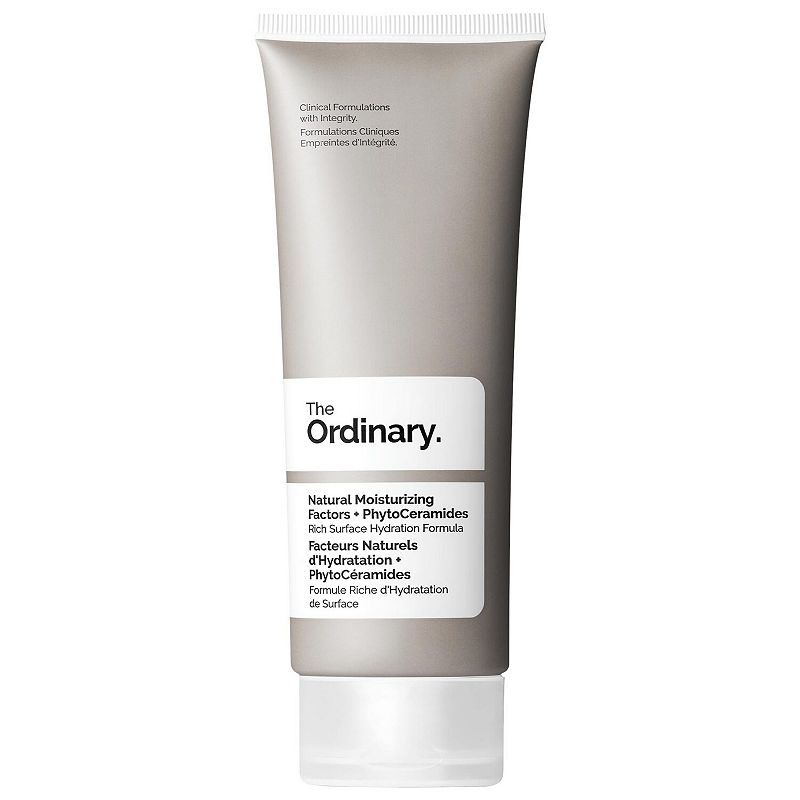



The Ordinary Moisturizing Factors + PhytoCeramides Rich Moisturizer - 3.38 fl oz - Ulta Beauty: Alcohol-Free, For Normal & Dry Skin
OrdinaryAnalysis updated August 2026 · How Scout scores
At a glance
Summary
This moisturizer contains beneficial ingredients like glycerin, sodium hyaluronate, and tocopherol, which provide excellent hydration and antioxidant benefits. However, the presence of triethanolamine and phenoxyethanol, which can cause skin irritation and have potential contamination concerns, slightly lowers its safety profile. The product is moderately processed, which also impacts its overall rating.
Key ingredients 46
Caprylic/capric TriglycerideGood
Caprylic/capric triglyceride is derived from coconut oil and glycerin. It is used as an emollient and helps to smooth and soften the skin. It is well-tolerated by most skin types.
Risks
Rarely, it may cause mild irritation in sensitive individuals.
Benefits
It provides a lightweight, non-greasy barrier of lubrication that helps to retain moisture in the skin.
GlycerinGood
Glycerin is a powerful humectant that attracts moisture to the skin. It is widely used in skincare for its hydrating properties. It is safe and effective for all skin types.
Risks
There are minimal risks associated with glycerin, though it may cause irritation if used in high concentrations.
Benefits
It helps to maintain the skin's moisture balance and improves skin barrier function.
Sodium HyaluronateGood
Sodium hyaluronate is a salt form of hyaluronic acid, known for its excellent hydrating properties. It can hold up to 1000 times its weight in water, making it a superior moisturizer. It is suitable for all skin types and helps to plump and hydrate the skin.
Risks
There are no significant risks associated with sodium hyaluronate.
Benefits
It provides intense hydration, reduces the appearance of fine lines, and improves skin texture.
GlycineGood
Beneficial ingredient — whole-food or functional value in this product class.
Risks
There are minimal risks associated with glycine in skincare.
Benefits
It supports skin hydration and helps to maintain a healthy skin barrier.
AllantoinGood
Allantoin is a skin-soothing agent known for its ability to calm and protect the skin. It helps to reduce irritation and support skin healing. It is safe and effective for all skin types.
Risks
There are no significant risks associated with allantoin.
Benefits
It soothes irritated skin and promotes a healthy skin barrier.
Linoleic AcidGood
Linoleic acid is an essential fatty acid that helps to maintain the skin's barrier function. It is used in skincare for its moisturizing and anti-inflammatory properties. It is safe for use in cosmetic formulations.
Risks
There are minimal risks associated with linoleic acid in skincare.
Benefits
It helps to improve skin hydration and reduce inflammation.
TocopherolGood
Tocopherol, also known as Vitamin E, is an antioxidant that helps to protect the skin from free radical damage. It is used in skincare for its moisturizing and anti-aging properties. It is safe for use in cosmetic formulations.
Risks
There are no significant risks associated with tocopherol.
Benefits
It helps to improve skin hydration and reduce signs of aging.
Aqua (water)Neutral
Aqua is used as a solvent in cosmetic formulations. It helps dissolve other ingredients and provides hydration. It is a basic component in most skincare products.
Risks
There are no significant risks associated with water in cosmetics.
Benefits
Water helps in hydrating the skin and acts as a carrier for other beneficial ingredients.
Cetyl AlcoholNeutral
Cetyl alcohol is a fatty alcohol used as an emollient and thickening agent. It helps to stabilize and thicken formulations. It is generally considered safe for use in cosmetics.
Risks
In rare cases, it may cause skin irritation or allergic reactions.
Benefits
It helps to soften and smooth the skin, enhancing the texture of the product.
PropanediolNeutral
Propanediol is a glycol that functions as a solvent and humectant. It helps to improve the absorption of ingredients into the skin. It is considered safe for use in cosmetics.
Risks
It may cause mild irritation in sensitive skin types.
Benefits
It enhances the penetration of active ingredients and provides moisture to the skin.
Stearyl AlcoholNeutral
Stearyl alcohol is a fatty alcohol used as an emollient and thickener. It helps to stabilize and improve the texture of formulations. It is generally safe for use in cosmetics.
Risks
May cause mild irritation or allergic reactions in sensitive individuals.
Benefits
It provides a smooth, soft feel to the skin and helps to prevent moisture loss.
ArginineNeutral
Arginine is an amino acid that helps to improve skin hydration. It is used in formulations to support skin repair and regeneration. It is generally considered safe for use in cosmetics.
Risks
There are minimal risks associated with arginine in skincare.
Benefits
It supports collagen production and helps to maintain skin elasticity.
Aspartic AcidNeutral
Aspartic acid is an amino acid used in skincare for its hydrating properties. It helps to improve the skin's moisture retention. It is safe for use in cosmetic formulations.
Risks
There are no significant risks associated with aspartic acid.
Benefits
It helps to maintain skin hydration and supports the skin's natural repair processes.
AlanineNeutral
Alanine is an amino acid used for its skin-conditioning properties. It helps to improve skin hydration and texture. It is considered safe for use in cosmetics.
Risks
There are no significant risks associated with alanine.
Benefits
It helps to maintain skin moisture and supports skin health.
SerineNeutral
Serine is an amino acid that acts as a skin-conditioning agent. It helps to improve skin hydration and texture. It is safe for use in cosmetic formulations.
Risks
There are minimal risks associated with serine in skincare.
Benefits
It supports skin hydration and helps to maintain a healthy skin barrier.
ValineNeutral
Valine is an amino acid used for its skin-conditioning properties. It helps to improve skin hydration and texture. It is considered safe for use in cosmetics.
Risks
There are no significant risks associated with valine.
Benefits
It helps to maintain skin moisture and supports skin health.
IsoleucineNeutral
Isoleucine is an amino acid that acts as a skin-conditioning agent. It helps to improve skin hydration and texture. It is safe for use in cosmetic formulations.
Risks
There are minimal risks associated with isoleucine in skincare.
Benefits
It supports skin hydration and helps to maintain a healthy skin barrier.
ProlineNeutral
Proline is an amino acid used for its skin-conditioning properties. It helps to improve skin hydration and texture. It is considered safe for use in cosmetics.
Risks
There are no significant risks associated with proline.
Benefits
It helps to maintain skin moisture and supports skin health.
ThreonineNeutral
Threonine is an amino acid that acts as a skin-conditioning agent. It helps to improve skin hydration and texture. It is safe for use in cosmetic formulations.
Risks
There are minimal risks associated with threonine in skincare.
Benefits
It supports skin hydration and helps to maintain a healthy skin barrier.
HistidineNeutral
Histidine is an amino acid used for its skin-conditioning properties. It helps to improve skin hydration and texture. It is considered safe for use in cosmetics.
Risks
There are no significant risks associated with histidine.
Benefits
It helps to maintain skin moisture and supports skin health.
PhenylalanineNeutral
Phenylalanine is an amino acid that acts as a skin-conditioning agent. It helps to improve skin hydration and texture. It is safe for use in cosmetic formulations.
Risks
There are minimal risks associated with phenylalanine in skincare.
Benefits
It supports skin hydration and helps to maintain a healthy skin barrier.
MaltoseNeutral
Maltose is a sugar used as a humectant in skincare formulations. It helps to attract moisture to the skin. It is safe for use in cosmetics.
Risks
There are minimal risks associated with maltose in skincare.
Benefits
It supports skin hydration and helps to maintain a healthy skin barrier.
TrehaloseNeutral
Trehalose is a sugar used as a humectant and moisturizer in skincare. It helps to protect the skin from dehydration. It is safe for use in cosmetic formulations.
Risks
There are minimal risks associated with trehalose in skincare.
Benefits
It supports skin hydration and helps to maintain a healthy skin barrier.
Sodium PcaNeutral
Sodium PCA is a humectant derived from amino acids. It helps to attract moisture to the skin and improve hydration. It is considered safe for use in cosmetics.
Risks
There are no significant risks associated with sodium PCA.
Benefits
It helps to maintain skin hydration and improve skin texture.
PcaNeutral
PCA is a naturally occurring humectant that helps to attract moisture to the skin. It is used in skincare to improve hydration. It is safe for use in cosmetic formulations.
Risks
There are minimal risks associated with PCA in skincare.
Benefits
It supports skin hydration and helps to maintain a healthy skin barrier.
Sodium LactateNeutral
Sodium lactate is a salt derived from lactic acid, used as a humectant in skincare. It helps to attract moisture to the skin and improve hydration. It is considered safe for use in cosmetics.
Risks
There are no significant risks associated with sodium lactate.
Benefits
It helps to maintain skin hydration and improve skin texture.
UreaNeutral
Urea is a humectant and exfoliant used in skincare to improve hydration and skin texture. It helps to attract moisture to the skin. It is safe for use in cosmetic formulations.
Risks
There are minimal risks associated with urea in skincare.
Benefits
It supports skin hydration and helps to maintain a healthy skin barrier.
Oleic AcidNeutral
Oleic acid is a fatty acid used in skincare for its emollient properties. It helps to soften and smooth the skin. It is generally considered safe for use in cosmetics.
Risks
In high concentrations, it may cause irritation or disrupt the skin barrier.
Benefits
It provides moisture and helps to improve skin texture.
Phytosteryl Canola GlyceridesNeutral
Phytosteryl canola glycerides are derived from canola oil and used as emollients in skincare. They help to improve skin hydration and texture. They are considered safe for use in cosmetics.
Risks
There are minimal risks associated with phytosteryl canola glycerides in skincare.
Benefits
They provide moisture and help to maintain a healthy skin barrier.
Palmitic AcidNeutral
Palmitic acid is a fatty acid used as an emollient in skincare. It helps to soften and smooth the skin. It is generally considered safe for use in cosmetics.
Risks
In high concentrations, it may cause irritation or disrupt the skin barrier.
Benefits
It provides moisture and helps to improve skin texture.
Stearic AcidNeutral
Stearic acid is a fatty acid used as an emollient and thickener in skincare. It helps to stabilize formulations and improve texture. It is safe for use in cosmetics.
Risks
There are minimal risks associated with stearic acid in skincare.
Benefits
It provides moisture and helps to maintain a healthy skin barrier.
TrioleinNeutral
Triolein is a triglyceride used as an emollient in skincare. It helps to soften and smooth the skin. It is generally considered safe for use in cosmetics.
Risks
There are minimal risks associated with triolein in skincare.
Benefits
It provides moisture and helps to improve skin texture.
CarbomerNeutral
Carbomer is a thickening agent used in skincare to stabilize and improve the texture of formulations. It helps to create a smooth, gel-like consistency. It is considered safe for use in cosmetics.
Risks
There are minimal risks associated with carbomer in skincare.
Benefits
It helps to improve product texture and stability.
Isoceteth-20Neutral
Isoceteth-20 is an emulsifier used in skincare to improve texture and stability. It helps to blend oil and water-based ingredients. It is generally considered safe for use in cosmetics.
Risks
There are minimal risks associated with isoceteth-20 in skincare.
Benefits
It helps to improve product texture and stability.
Sodium ChlorideNeutral
Sodium chloride, or salt, is used as a thickening agent in skincare. It helps to improve the texture and stability of formulations. It is generally considered safe for use in cosmetics.
Risks
In high concentrations, it may cause irritation or dryness.
Benefits
It helps to improve product texture and stability.
Citric AcidNeutral
Citric acid is used in skincare as a pH adjuster and exfoliant. It helps to balance the pH of formulations and improve skin texture. It is considered safe for use in cosmetics.
Risks
In high concentrations, it may cause irritation or sensitivity.
Benefits
It helps to improve skin texture and maintain product stability.
Trisodium Ethylenediamine DisuccinateNeutral
Trisodium ethylenediamine disuccinate is a chelating agent used in skincare to improve product stability. It helps to bind metal ions and prevent product degradation. It is considered safe for use in cosmetics.
Risks
There are minimal risks associated with trisodium ethylenediamine disuccinate in skincare.
Benefits
It helps to improve product stability and extend shelf life.
Pentylene GlycolNeutral
Pentylene glycol is a humectant and solvent used in skincare to improve hydration and texture. It helps to enhance the absorption of active ingredients. It is considered safe for use in cosmetics.
Risks
There are minimal risks associated with pentylene glycol in skincare.
Benefits
It helps to improve skin hydration and enhance product performance.
Sodium HydroxideNeutral
Sodium hydroxide is used as a pH adjuster in skincare formulations. It helps to balance the pH of products. It is generally used in low concentrations to minimize risks.
Risks
In high concentrations, it can cause skin irritation or burns.
Benefits
It helps to maintain the stability and effectiveness of formulations.
ChlorphenesinNeutral
Chlorphenesin is a preservative used in skincare to prevent microbial growth. It helps to maintain product stability and safety. It is generally considered safe for use in cosmetics.
Risks
There are minimal risks associated with chlorphenesin in skincare.
Benefits
It helps to preserve the product and extend its shelf life.
GlucoseBad
Processed additive flagged under Scout's ingredient doctrine.
Risks
There are no significant risks associated with glucose.
Benefits
It helps to maintain skin hydration and improve skin texture.
FructoseBad
Processed additive flagged under Scout's ingredient doctrine.
Risks
There are no significant risks associated with fructose.
Benefits
It helps to maintain skin hydration and improve skin texture.
LecithinBad
Processed additive flagged under Scout's ingredient doctrine.
Risks
There are no significant risks associated with lecithin.
Benefits
It helps to maintain skin hydration and improve product texture.
Polysorbate 60Bad
Processed additive flagged under Scout's ingredient doctrine.
Risks
There are minimal risks associated with polysorbate 60 in skincare.
Benefits
It helps to improve product texture and stability.
TriethanolamineBad
Triethanolamine is used as a pH adjuster and emulsifier in skincare. It can cause skin irritation and has potential contamination concerns with nitrosamines. It is generally used in low concentrations to minimize risks.
Risks
It may cause skin irritation and has potential contamination concerns with nitrosamines.
Benefits
It helps to stabilize formulations and adjust pH levels.
PhenoxyethanolBad
Phenoxyethanol is a preservative used in skincare to prevent microbial growth. It can cause skin irritation and allergic reactions in some individuals. It is generally used in low concentrations to minimize risks.
Risks
It may cause skin irritation and allergic reactions in sensitive individuals.
Benefits
It helps to preserve the product and extend its shelf life.
Get the full breakdown in the Scout appTake Scout shopping
Scan any product to see lab results, healthy alternatives, and your personalized analysis.
Download on theApp Store GET IT ONGoogle PlayAmazon pricing & content
Amazon price as of . Product prices and availability are accurate as of the date/time indicated and are subject to change. Any price and availability information displayed on Amazon.com at the time of purchase will apply to the purchase of this product.
CERTAIN CONTENT THAT APPEARS ON THIS SITE COMES FROM AMAZON. THIS CONTENT IS PROVIDED “AS IS” AND IS SUBJECT TO CHANGE OR REMOVAL AT ANY TIME.