
Sourdough Half Loaf
Near you
Aldi is carried at Aldi stores. Find one within 25 miles.
At a glance
Summary
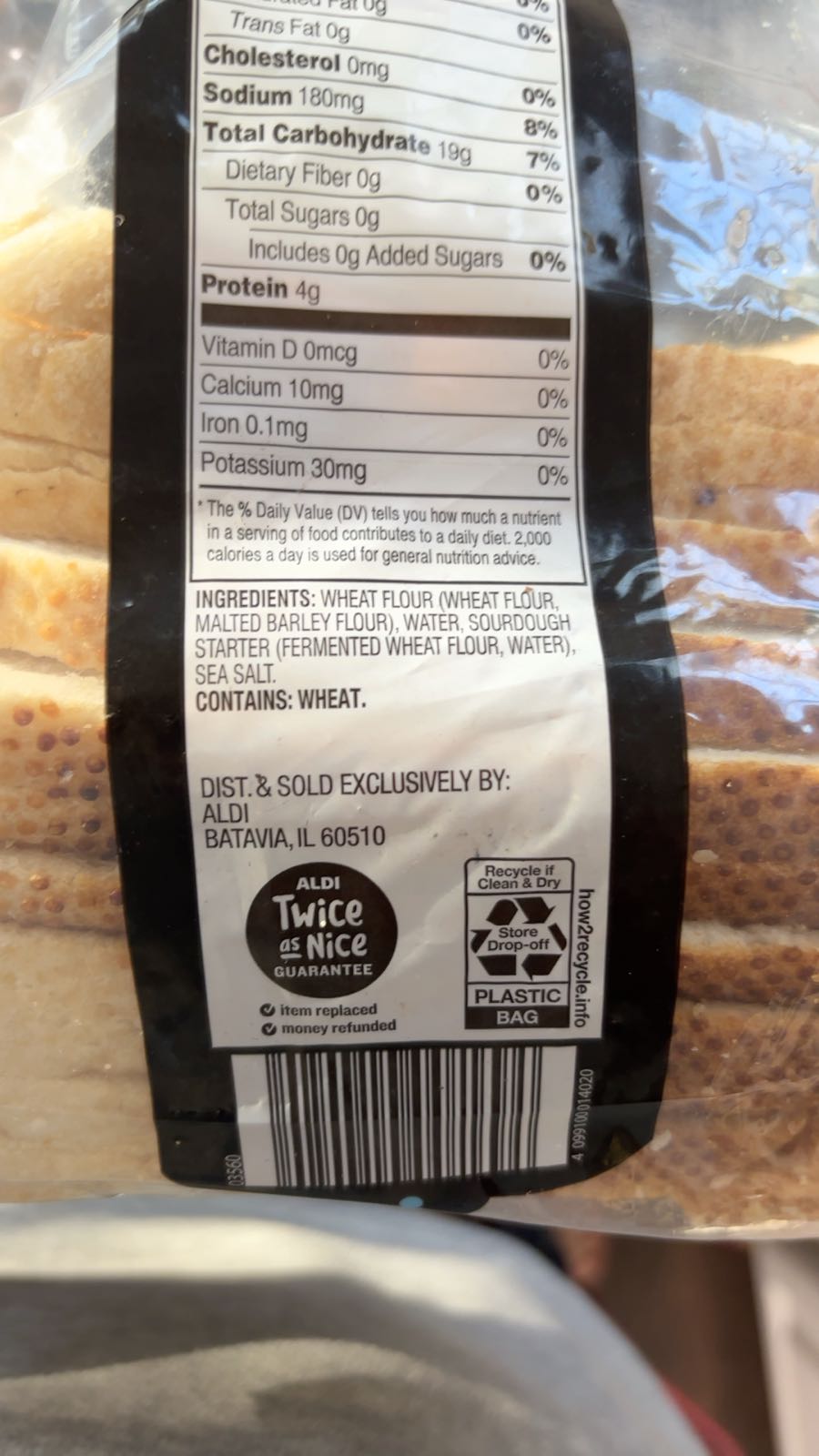
This sourdough bread is made with a simple ingredient list, featuring wheat flour, sourdough culture, and sea salt, which are all beneficial for health. The fermentation process of sourdough culture enhances nutrient bioavailability and reduces phytic acid, contributing to a lower glycemic index. However, as a processed food, it is subject to a score cap, but its clean label and absence of harmful additives support a higher rating within its category.
Key ingredients 6
Sourdough cultureGood
Sourdough culture is a natural leavening agent that enhances the flavor and digestibility of bread. It involves fermentation, which can increase the bioavailability of nutrients and reduce phytic acid. The fermentation process also contributes to a lower glycemic index compared to conventional bread.
Benefits
Improves digestibility and nutrient absorption due to fermentation. May have a lower glycemic impact compared to non-fermented bread.
Sea saltGood
Sea salt is a minimally processed salt that contains trace minerals. It enhances flavor and acts as a preservative in bread. Unlike refined table salt, it retains some beneficial minerals.
Risks
Excessive consumption of salt can lead to high blood pressure and cardiovascular issues.
Benefits
Provides essential sodium and trace minerals, enhancing flavor and acting as a natural preservative.
Wheat flourNeutral
Wheat flour is a staple ingredient in bread, providing structure and carbohydrates. It is a refined flour, which means it lacks the bran and germ, reducing its fiber and nutrient content. While it is a common ingredient, it may not be suitable for those with gluten sensitivities.
Risks
May cause issues for individuals with gluten intolerance or celiac disease.
Benefits
Provides carbohydrates for energy and is essential for the texture and structure of bread.
WaterNeutral
Water is a fundamental ingredient in bread, necessary for hydration and dough formation. It acts as a solvent for other ingredients and aids in the development of gluten. It is a neutral ingredient with no direct health impacts.
Benefits
Essential for dough formation and gluten development in bread.
Potato flourNeutral
Potato flour is used to enhance moisture retention and texture in bread. It is gluten-free and can add a slight sweetness to the product. While it provides some nutrients, it is primarily used for its functional properties in baking.
Benefits
Improves moisture retention and texture in baked goods.
EnzymesNeutral
Enzymes are added to improve dough handling and extend shelf life. They are naturally occurring proteins that catalyze biochemical reactions. In bread, they help break down starches and proteins, improving texture and volume.
Benefits
Enhances dough handling and extends shelf life by improving texture and volume.
Processing
Processed Foods
Get the full breakdown in the Scout appTake Scout shopping
Scan any product to see lab results, healthy alternatives, and your personalized analysis.
Are you Aldi? Fix an error Get the badge Get tested


